By JBizNews Desk
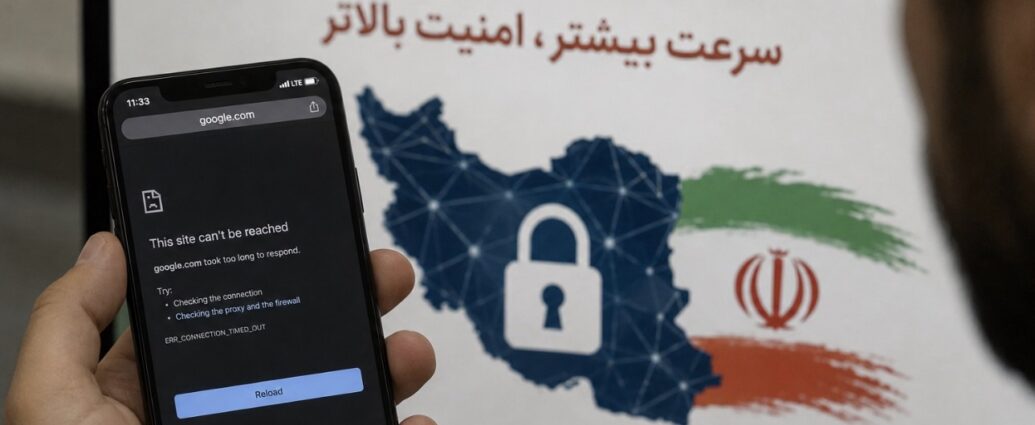
Iran’s government voted Tuesday to reconnect the country to the global internet — just days after a senior official publicly acknowledged that Tehran had already purchased Chinese technology designed to permanently control and restrict online access.
According to the Iranian state-affiliated Fars News Agency, Iran’s cyberspace steering body voted 9-3 to restore broader internet access after nearly three months of nationwide restrictions. The body is chaired by First Vice President Mohammad Reza Aref, and the decision now reportedly awaits final approval from the country’s leadership. The outlet Iran Focus separately reported the same account, citing an informed source familiar with the meeting.
If approved, the decision would end what monitoring organization NetBlocks has described as the longest ongoing nationwide internet blackout in the world.
Iran’s 90 million citizens have been largely cut off from the global internet since February 28, when the country’s war with the United States and Israel began. The shutdown crippled access to international websites, messaging platforms, cloud services and financial systems, effectively isolating much of the country from the digital global economy.
But the vote comes as a major internal dispute inside Iran’s leadership has spilled into public view.
On Saturday, Mohammad Sarafraz, a member of Iran’s Supreme Council of Cyberspace and former head of state broadcaster IRIB, told the Iranian online newspaper Faraz that the government had already imported Chinese equipment intended for the “permanent shutdown of the internet.”
According to Sarafraz, the system would allow the government to maintain a heavily controlled internet indefinitely — permitting access only to state-approved users and select paying customers while keeping ordinary citizens confined to a restricted domestic-only network.
In other words, one part of Iran’s government voted this week to reopen the internet.
Another part already bought the hardware to close it permanently.
The technology Sarafraz described is widely associated with China’s “Great Firewall” system. It relies on deep packet inspection, or DPI — software and network infrastructure capable of monitoring and filtering internet traffic in real time. Unlike a complete shutdown, the system allows governments to selectively block platforms, throttle traffic, monitor communications and decide which users receive unrestricted access.
Sarafraz’s comments were notable not only because he acknowledged the technology exists inside Iran, but because he openly questioned the policy itself.
Iran’s leadership has defended the blackout as necessary to prevent cyberattacks, stop foreign intelligence operations and maintain wartime stability. Sarafraz publicly challenged all three arguments, saying some of Iran’s most serious cyber breaches occurred during periods of heavy restrictions and noting that the shutdown failed to stop attacks and assassinations targeting Iranian officials during the conflict.
He also argued the blackout has inflicted major psychological and economic damage on the population.
The economic pressure is becoming increasingly difficult for Tehran to ignore.
Afshin Kolahi, an official at Iran’s Chamber of Commerce, said in April that the shutdown was costing the country as much as $40 million a day in direct economic losses, with indirect losses reaching up to $80 million daily. Iranian reporting later estimated cumulative losses approaching $1.8 billion by mid-April.
Inside Iran, the blackout has also deepened class divisions.
Government-linked individuals have reportedly been granted “white internet” access — unrestricted connections exempt from the broader shutdown. Wealthier Iranians can reportedly purchase premium services known as “Internet Pro,” allowing limited access to the global web. Most ordinary citizens remain confined to heavily restricted domestic networks.
Sarafraz criticized what he described as a system riddled with conflicts of interest.
“The same people who one day sell VPNs,” he said during the Faraz interview, “are the next day providers of special internet access.”
His comments, widely circulated by Iranian opposition and independent outlets, fueled growing accusations that some officials and connected businesses are financially benefiting from the restrictions they publicly defend.
Other Iranian technology experts have also warned that Tehran may be trying to imitate China’s tightly controlled internet model without possessing the economic strength that allows Beijing to absorb the consequences.
Aryan Eqbal, a network researcher speaking to Iranian technology outlet Zoomit, argued that China’s economic rise did not happen because of internet restrictions, but despite them.
“Iran wants to copy the control side of China’s model,” Eqbal said, “without having the economic foundation that supports it.”
At the same time, Iran appears to be expanding the institutional structure needed for a more permanent system of control.
The newspaper Shargh reported on May 19 that Tehran is forming a new centralized authority called the “Headquarters for Organizing and Guiding Cyberspace,” consolidating internet oversight under a single command structure.
That is not the type of bureaucracy governments typically build for temporary wartime measures.
For businesses, the implications are substantial.
A country of 90 million people cut off from the global internet becomes increasingly disconnected from international banking systems, foreign suppliers, software platforms, cloud infrastructure and digital commerce. Even a partial restoration of connectivity would not erase the broader shift Sarafraz described: the infrastructure for permanent control is already inside the country.
The next few days may determine which direction Iran ultimately chooses.
One Iran appears focused on reopening access because the economic cost has become unsustainable.
Another appears determined to permanently redesign the internet into something the state can tightly control long after the war ends.
At the moment, both versions of Iran are operating inside the same government.
Middle East — JBizNews Desk
© JBizNews.com All Rights Reserved. Reproduction or distribution without written permission is prohibited.