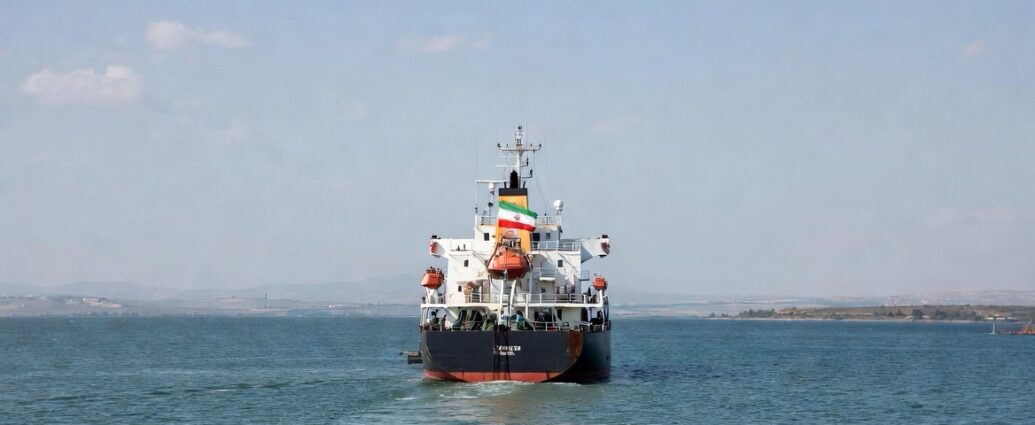
Tehran — May 4, 2026 — Iran’s attempt to turn the Strait of Hormuz into a revenue source appears to be generating only a sliver of the cash Tehran once pulled in from oil exports, even as the country’s currency slides deeper into crisis. U.S. Treasury Secretary Scott Bessent said in comments aired by Fox News that Iran’s toll collections total “under $1.3 million,” and Fortune, citing a U.S. Treasury briefing on May 3, reported the figure as evidence that the pressure campaign has sharply limited Tehran’s near-term fiscal gains.
The revenue figure matters because it highlights the gap between Iran’s threats over one of the world’s most important shipping lanes and the actual money reaching state coffers. President Donald Trump signaled little appetite for easing pressure, saying in a post on Truth Social that Tehran’s latest proposal “does not yet reflect a big enough price for what they have done to Humanity, and the World, over the last 47 years,” a statement that pointed to continued U.S. skepticism despite fresh diplomatic contacts.
Iran, for its part, has tried to frame the standoff as part of a broader political settlement rather than a narrow shipping dispute. Semi-official outlets Nour News and Tasnim reported that Tehran’s 14-point proposal calls for sanctions relief, an end to the U.S. naval blockade, a withdrawal of American forces and a halt to hostilities including Israeli operations in Lebanon. Foreign Minister Abbas Araghchi said Iran “seeks a comprehensive peace that restores regional stability,” though he did not address the country’s nuclear enrichment program.
Regional intermediaries are still trying to keep the diplomatic channel open. Pakistani officials speaking anonymously told Reuters that direct U.S.-Iran talks remain the best path forward and said “the momentum generated in Islamabad last month provides a rare window for constructive engagement.” The report said Prime Minister Shehbaz Sharif and Foreign Minister Ishaq Dar have hosted back-channel meetings aimed at turning broad proposals into concrete negotiating steps.
At the same time, Iranian officials continue to project defiance over Hormuz. Deputy parliamentary speaker Ali Nikzad, speaking during a visit to port facilities on Larak Island, said Iran “will not back down from our position on the Strait of Hormuz, and it will not return to its pre-war conditions,” according to remarks aired by state television and quoted by Al Jazeera. That posture reinforces Tehran’s insistence that only non-U.S. and non-Israeli vessels can pass after paying a toll, a policy that has raised legal and commercial risks for shipowners and traders.
Washington has moved to make those risks explicit. The U.S. Treasury Department warned that any payment to Iran, whether in cash, bank transfers, or digital assets, could trigger secondary sanctions, underscoring that the U.S. aim extends beyond military deterrence to cutting off alternative funding channels. For shipping companies, insurers and commodity traders, that warning adds another layer of compliance pressure at a moment when any transaction linked to Iranian authorities could invite regulatory scrutiny.
The financial strain inside Iran is becoming harder to ignore. Market data showed the rial at a record low around 1.8 million to the dollar, reflecting both sanctions pressure and fears of prolonged disruption to oil income. Analysts say the currency slump has already led to factory contract cancellations and higher consumer prices.
The broader humanitarian and political pressure on Tehran is also building. The Norwegian Nobel Committee urged Iran to immediately transfer imprisoned Nobel Peace Prize laureate Narges Mohammadi for treatment, warning that “her health remains at serious risk and requires prompt care.” While separate from the shipping dispute, the appeal adds to the international scrutiny facing Iranian authorities as they try to manage external confrontation and domestic instability at the same time.
Energy markets are now watching whether Iran can keep producing at current levels if exports remain constrained and storage fills up. Scott Bessent warned that Iran may soon need to shut in wells “in the next week,” a scenario that could tighten regional supply calculations even if Tehran’s immediate toll income stays marginal.
The next phase hinges on whether Washington softens its posture, whether Tehran revises its proposal into terms the White House can accept, and whether commercial traffic through Hormuz finds a workable legal path. For oil traders, regional governments and global shippers, that outcome will shape not only energy flows but the durability of a new sanctions and security regime in the Gulf.
JbizNews- Desk – Middle East / Energy