By JBizNews Desk
BAGHDAD — May 5, 2026
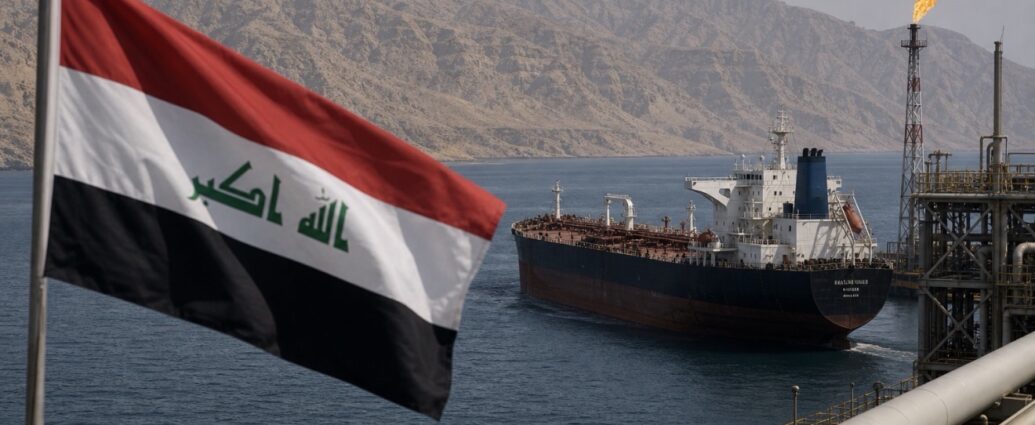
Iraq is offering some of the deepest crude oil discounts ever recorded, cutting prices by as much as $33 a barrel to entice buyers willing to risk sending tankers through the Strait of Hormuz — the world’s most volatile shipping chokepoint — as conflict involving Iran, the United States, and Israeli coalition forces continues to disrupt global energy flows.
The country’s state oil marketer, SOMO, is offering discounts of up to $33.40 per barrel on its flagship Basrah Medium crude, according to a May 3 pricing notice, an extraordinary move that underscores the severity of the disruption gripping one of the world’s most critical oil corridors.
A Country That Cannot Afford to Stop Selling
The urgency is driven by Iraq’s economic reality.
Oil exports account for roughly 90% of the country’s GDP, leaving Baghdad heavily exposed when shipments stall. Production at Iraq’s major southern oil fields has collapsed, dropping from about 4.3 million barrels per day to near 1.3 million, with overall capacity plunging even further during the peak of the disruption.
Within weeks of the conflict’s escalation in late February, output fell by more than 80%, as international shipping companies refused to enter the Persian Gulf amid escalating military risk.
The result: a growing backlog of unsold crude.
Data from Kpler shows more than 20 million barrels of Basrah crude now sitting in floating storage, with an additional 17 million barrels held onshore — volumes Iraq cannot move without convincing tankers to return.
The steep discounts are a direct attempt to clear that backlog.
A Narrow Opening — With Real Risk
Iran has publicly stated that Iraq is exempt from transit restrictions through the Strait of Hormuz, with an Iranian military spokesman describing Iraq as a “brotherly” nation not subject to the same limitations imposed on adversaries.
That exemption has allowed limited movement.
The Ocean Thunder, carrying nearly 1 million barrels of Basrah Heavy crude, became the first Iraqi tanker to successfully pass through the strait on April 5 after being stranded for weeks.
But the exemption has not removed the risk.
Shipping companies remain cautious as tensions continue between Iran and U.S.-led forces. Iran’s military issued fresh warnings on May 4, even as the United States launched Operation Project Freedom to escort neutral vessels through the waterway.
The Scale of the Disruption
The broader energy shock is historic.
The International Energy Agency has described the situation as one of the greatest threats to global energy security in modern history. Oil flows through the Strait of Hormuz have collapsed from roughly 20 million barrels per day before the conflict to just over 2 million at the height of the disruption.
The impact has been immediate:
- Brent crude surged above $120 per barrel
- QatarEnergy declared force majeure on exports
- Gulf producers collectively lost millions of barrels per day in output
The financial toll is equally severe. Gulf states, including Iraq, are losing an estimated $1.1 billion per day in oil revenue while the strait remains constrained.
What It Means for Global Markets
If Iraq succeeds in restarting flows, the release of its accumulated crude could quickly reshape market dynamics.
Basrah crude is a key supply source for Asian refiners, particularly in India, China, South Korea, and Southeast Asia, where demand for medium and heavy sour crude remains strong.
According to Kpler, once shipments resume, Iraq could rapidly restore exports to above 3 million barrels per day as inventories are drawn down — a move that would likely pressure oil prices lower, particularly in sour crude markets.
What Comes Next
For now, Iraq’s pricing strategy tells the real story.
A major oil producer, facing an economic crisis driven by blocked exports, is offering unprecedented discounts simply to get its crude moving again — effectively asking buyers to weigh profit against geopolitical risk.
Whether tankers return in meaningful numbers will depend less on price — and more on whether the world’s most dangerous shipping lane becomes safe enough to cross.
JBizNews Desk
© JBizNews.com. All rights reserved.