At first glance, the strategic rivalry between the United States and China appears nearly absolute. The two superpowers compete over trade, artificial intelligence, military influence, semiconductors, rare minerals, maritime dominance, and the future architecture of the international order.
Yet amid this intensifying competition, there are at least two issues on which Washington and Beijing should, in theory, share a profound common interest: preventing Iran from obtaining nuclear weapons and preventing Tehran from gaining the ability to disrupt the major maritime arteries of the Middle East.
Both issues are deeply connected to Israel and to the broader strategic balance in the region. For the United States, they have long stood at the center of its confrontation with the Islamic Republic. Washington has repeatedly used sanctions, covert action, military deployments, and direct force to contain Iran’s nuclear ambitions and to secure freedom of navigation in the Persian Gulf and the Red Sea.
Less obvious, however, is why China should care just as deeply.
Why China cares
A nuclear-armed Iran would not merely alter the Middle Eastern balance of power. It could embolden radical Islamist movements across Asia, including separatist sentiments among Muslim minorities in western China – a scenario Beijing views as an existential threat to domestic stability. China has invested enormous resources in maintaining tight control over sensitive regions such as Xinjiang, and the emergence of an ideologically empowered Iran possessing nuclear weapons would introduce a dangerous new variable into that equation.
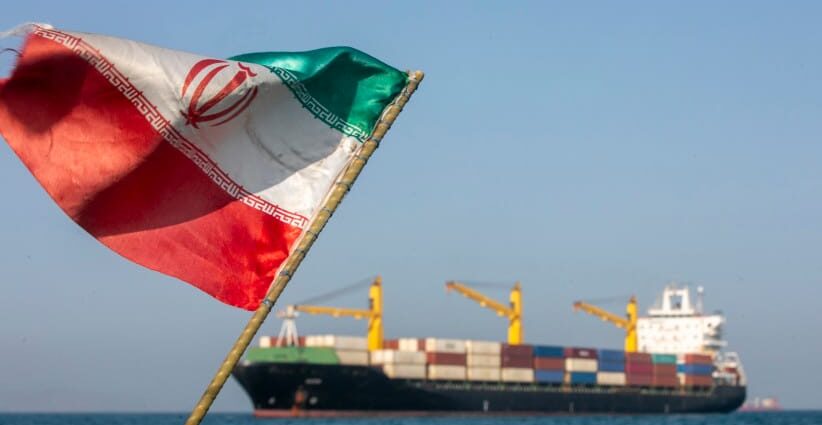
Equally important is the maritime dimension. China’s global economic rise depends heavily on uninterrupted trade routes stretching from East Asia through the Indian Ocean and into Europe. The Strait of Hormuz and the Bab al-Mandab Strait are critical choke points within this network.
Any Iranian ability – whether direct or through proxies – to close these waterways, harass shipping, or impose de facto “tolls” on international commerce would severely undermine China’s Belt and Road Initiative and threaten the reliability of the supply chains upon which China’s export economy depends.
For these reasons, one might have expected last week’s Trump-Xi summit in Beijing to produce a dramatic joint declaration affirming a common determination to prevent Iranian nuclearization and ensure freedom of navigation in the Middle East.
That did not happen.
While US President Donald Trump made strong unilateral statements regarding Iran, Chinese President Xi Jinping avoided publicly endorsing them. Still, diplomacy is often defined less by what leaders say publicly than by what they discuss behind closed doors.
China’s approach to diplomacy
China traditionally avoids direct military involvement in foreign conflicts. It is highly unlikely that Chinese naval forces would join an American-led maritime coalition in the Gulf, just as it is implausible that Chinese bombers would participate in strikes against Iranian nuclear facilities. Beijing’s strategy has always relied on influence exercised quietly through economic leverage rather than overt military intervention.
Yet China possesses enormous behind-the-scenes power over Iran. Beijing remains one of Tehran’s most important economic lifelines. If China chose to restrict arms-related cooperation, reduce strategic investments, tighten financial channels, or quietly scale back economic engagement, the pressure on Iran could become overwhelming. Such measures, even if unofficial, could significantly influence Tehran’s calculations.
But geopolitics never comes free.
If Chinese pressure were ultimately to force Iranian concessions on nuclear weapons or regional maritime aggression, the result would inevitably be celebrated in Washington as a historic victory for Trump and the broader MAGA worldview. Beijing is unlikely to facilitate such an outcome without extracting a strategic price of its own.
And that raises the most intriguing – and controversial – possibility of all: Taiwan.
China’s leadership may calculate that meaningful cooperation with Washington on Iran deserves reciprocal American flexibility on Beijing’s core national objective. It is therefore conceivable that quiet understandings regarding Taiwan’s long-term status formed part of the broader strategic backdrop of the Beijing summit.
History offers precedents. More than three decades ago, British prime minister Margaret Thatcher accepted the transfer of Hong Kong to China under the “one country, two systems” formula. One cannot entirely dismiss the possibility that the US may eventually contemplate a similarly gradual framework regarding Taiwan.
For now, such ideas remain speculative. But in an era of grand-power bargaining, the most consequential agreements are often the ones never mentioned in official communiqués.
The writer is an emeritus professor at the Technion-Israel Institute of Technology where he has served in various leadership positions. He also serves as a member of the board and as a strategic consultant to some companies and organizations.