Iran enjoys many advantages in its attacks in the Gulf. It will be incredibly difficult to stop the Iranian threats entirely.
In the latest clashes, Iran targeted shipping and carried out attacks on Bahrain and Kuwait. This has become a cycle over the last months. Even with a ceasefire and memorandum of understanding (MoU), Iran continues its attacks. The United States continues to respond.
The question is whether there is an easy solution. The US will be pressed to do more and to come up with a way to avoid repeating a cycle every week or two in tit-for-tat strikes.
The Islamic Republic, meanwhile, can attack at a time and place of its choice. As such, Iran dictates the tempo and the battlefield to some extent. Having the ability to attack wherever one wants, when one wants, gives Iran an advantage.
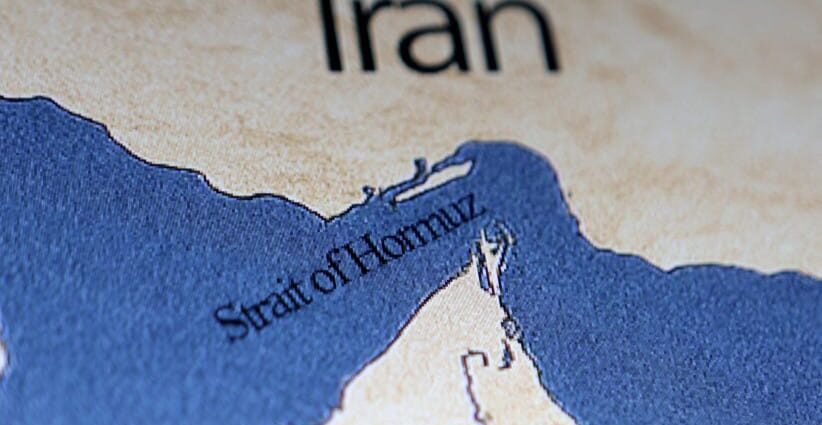
It enjoys the advantage because the Gulf is Iran’s backyard: It is around 990 kilometers of waterway that end at the Strait of Hormuz, which is between 40 and 100 km. wide.
There are hundreds of small islands in the Persian Gulf, also known as the Arabian Gulf. Around 30 of the islands are both substantial and controlled by Iran. This provides Iran with a major advantage because it can use the islands and its long coastline to threaten the region.
The Gulf is also a large area, with a surface area of water covering around 250,000 sq. km. This is larger than the area of Denmark and smaller than the size of Norway.
The comparison to Norway is worth considering. It may be no surprise that during World War II the German Navy used the fjords to hide its ships. Even though the Allies increasingly had air superiority, the Germans could still hide in Norwegian waters with their much weaker navy. It took many strikes, for instance, to sink the massive German battleship Tirpitz, which now rests at the bottom of a fjord near Hakoya island, close to Tromso, Norway.
Concern is over Iranian missiles getting through, not Iran winning the battle
Iran no longer has a navy, so finding the regime’s ships is not a major issue. The challenge is finding Iranian drone launcher teams and missile launchers. Iran has expanded the range and accuracy of drones and missiles. This means that it can launch drones from up to 2,000 km. away and strike ships. This gives Iran a huge land area to strike the Strait. It means that any attempt to suppress the drone and missile threat is likely impossible. Another threat Iran can create is using small fast boats. It has done this in the past. This creates a large number of options for Iran.
Most of the Iranian threats are not that serious. There are defenses against Iranian drones and missiles. The US Navy and partner forces have shown they can defeat these threats. As such, the Iranian threat is not that it will win the battle. The threat is more that a few drones or missiles, out of hundreds launched, will get through.
This causes tankers to not want to risk the journey or the lives of their civilian crew members. Many such crews have already been trapped in the Gulf for months.
Insurance for the ships is hard to obtain to transit the Strait in wartime, and the cost is prohibitive. This has meant that the real threat is not that drones will sink ships, but that it will become too costly to risk transit. Iran knows this. It knows it doesn’t need to win the battle but only to create the appearance of limited threat. This is what it has been doing. It has been waiting for a week, attacking, then de-escalating and attacking again, gambling that the Gulf states prefer de-escalation.
Many countries are present in the Gulf, not just the US
Iran knows that it is dealing with different countries. Not only is the US present in the Gulf, but there is also Qatar, Kuwait, Bahrain, UAE, Saudi Arabia, and Oman. Each country has separate views and interests.
For instance, Oman and Qatar have generally had better ties with Iran.
Kuwait has tried to be neutral.
Iran views the United Arab Emirates and Bahrain as close to Israel.
The US has major bases in Kuwait, Qatar, Bahrain, and the UAE. This includes the naval base in Bahrain and major air bases in Qatar and the UAE. The current bases are, in some ways, a result of the Gulf War and the post-Gulf War period. This has changed over time due to conflict in Iraq in 2003 and the 20-year war in Afghanistan.
Iran knows all this. It is aware the US is also weighing moving assets out of the Gulf, further away from the threat. Iran thinks it has the ability to push the US away from the region and then get some of the Gulf states to buckle under. The Gulf states are increasingly angry at the Iranian attacks. They want a solution.
It is not clear at the moment how the US or the Gulf countries will reach a solution. Military means alone may not be enough. So far, there is a cycle of escalation and de-escalation. Iran is dictating this cycle so far, after originally having setbacks in the war that began on February 28.