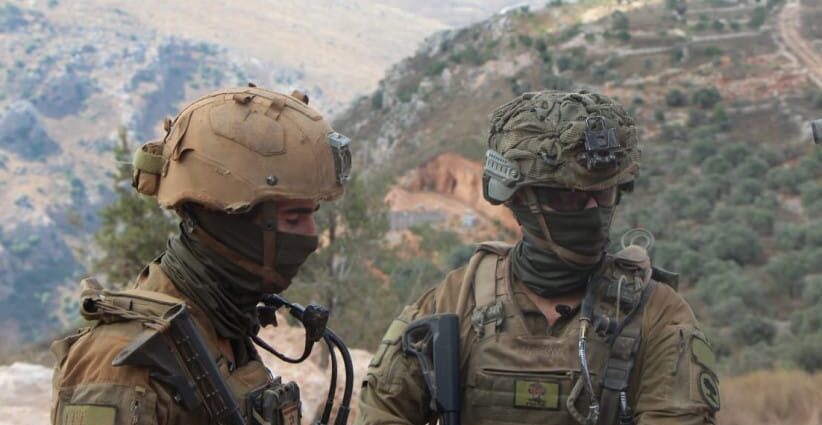
Israel and Lebanon will open another round of direct talks in Rome on Tuesday, at the US Embassy and with American mediation, in an effort to move the political understandings reached in Washington to the implementation stage, first and foremost the pilot project in southern Lebanon.
The two-day meeting will focus on implementing the framework agreement signed on June 26. Under the agreement, Israel is expected to withdraw gradually from two defined areas in southern Lebanon and hand them over to Lebanese Army control. The Lebanese Army would then be required to deploy forces there, dismantle Hezbollah infrastructure, and prevent the organization from reestablishing a military presence.
If the move succeeds, it could be expanded to other areas and lead to a broader Israeli withdrawal.
Despite the agreement’s reference to two pilot areas, practical preparations are currently focused on the first. An American official said in recent days that an IDF withdrawal from the area could begin within days, but did not provide a date, map, or binding timetable.
Planning for the second area has not yet been completed, and it remains unclear whether it would be activated immediately after the first stage. Israel insists that any further step must depend on the results in the first area. Lebanon, meanwhile, notes that the transfer of both areas is already included in the agreement and says implementation should not become an open-ended process.
The pilot also has a civilian dimension. Under the framework agreement, the transfer of territory is expected to be accompanied by the reconstruction of villages and the gradual, safe return of displaced residents.
The US administration wants to determine whether the Lebanese Army can hold the territory and restore civilian life without allowing Hezbollah to exploit its welfare, reconstruction, and funding mechanisms to reestablish its grip on the area.
Details of IDF withdrawal, Lebanese responsibility remain disputed
As the talks begin, the pilot has not yet been launched. The IDF has not completed its withdrawal from the first pilot area, the Lebanese Army has not assumed full responsibility there, and no agreed public timetable has been set.
The boundaries of the areas, the identity of the Lebanese units that will be deployed there, and the criteria for determining whether Hezbollah has been removed remain disputed.
The choice of territory has itself become a point of contention. Lebanon is demanding that the pilot areas include locations with a real Israeli presence, so that implementation would amount to a withdrawal that can be presented as a diplomatic achievement.
Israel prefers to begin with limited areas where responsibility can be transferred in a controlled manner, and the security risk can be reduced.
In Beirut, the pilot is being presented as the first step toward an Israeli withdrawal from southern Lebanon. In Israel, it is being treated first and foremost as a test of the Lebanese Army’s capabilities, without any advance commitment to further withdrawals.
In recent days, an American military delegation held talks with the Lebanese Army in Beirut to establish the operational mechanism for activating the first area. The Americans want to synchronize the IDF withdrawal with the Lebanese Army’s entry so that the territory is not left without a force capable of preventing Hezbollah from returning.
Even after the Beirut discussions, no date was given for the start of implementation.
The operational work is expected to be carried out through a US-led military coordination group that will maintain contact with the IDF and the Lebanese Army and oversee the transfer of the territory.
The framework agreement includes a classified security annex intended to define deployment and monitoring arrangements, but its full contents have not been published.
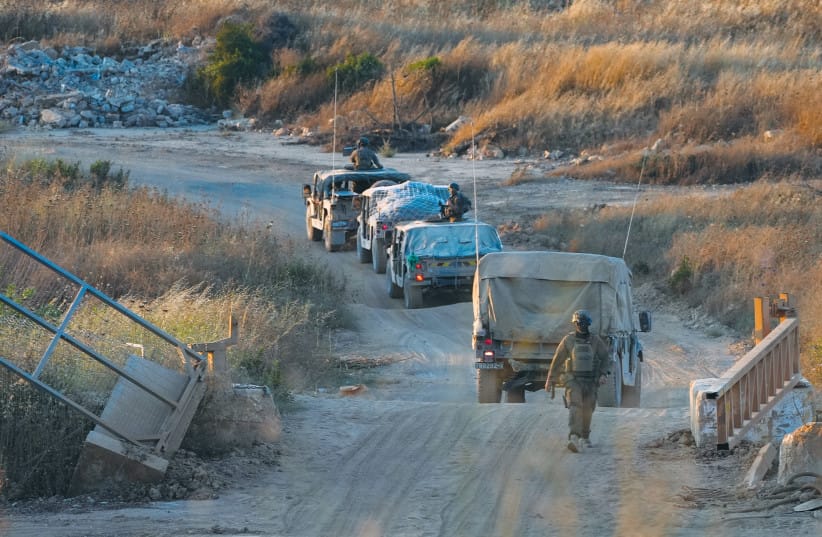
It remains unclear whether the US will have the authority to rule in cases where Lebanon claims it has met its obligations while Israel maintains that Hezbollah operatives or infrastructure remain on the ground.
Israel demanding proof of Lebanese Army’s ability to fight Hezbollah
The main dispute concerns the order of the steps. Lebanon is demanding that the IDF withdraw first, arguing that the Lebanese Army cannot enter an area where Israeli forces remain deployed.
Israel is demanding proof that the Lebanese Army can locate weapons, dismantle tunnels, positions, and depots, and prevent Hezbollah operatives from returning before it withdraws.
The American outline is intended to narrow the gap through a coordinated move. The US would confirm that the Lebanese force is ready to deploy, the IDF would withdraw according to an agreed timetable, and the Lebanese Army would enter the area immediately.
The sides have not yet agreed on the conditions that must be met before US approval is granted, or whether Israel will be bound by Washington’s determination that the area is ready for transfer.
Israel is not satisfied with the deployment of Lebanese soldiers alone. It is demanding effective and sustained control on the ground, including preventing the entry of armed elements not subordinate to the state, collecting weapons, dismantling underground infrastructure, and blocking Hezbollah operatives from returning in civilian guise.
Israel is also seeking US oversight of the units deployed in the area and of how their missions are carried out.
Under the proposal being discussed, Lebanese soldiers deployed in the pilot areas would undergo American training and vetting to ensure they are not linked to Hezbollah.
US Secretary of State Marco Rubio said Washington was prepared to help strengthen the Lebanese Army’s ability to hold the territory, but he did not publicly confirm all the details of the screening mechanism. In Israel, the composition of the units entering the area is regarded as a central condition for any withdrawal agreement.
Another unresolved question is who will determine whether the pilot has succeeded. The sides have not agreed whether a Lebanese Army declaration that the area has been cleared will be sufficient, whether US Central Command will be authorized to decide, or whether Israel will be able to delay the withdrawal on the grounds that infrastructure or operatives remain.
The IDF’s right to act after the area is transferred, in the event of a violation, has also not been settled.
Even the term “dismantling Hezbollah infrastructure” has not yet been defined in operational terms. It is unclear whether the Lebanese Army will be required only to seize visible weapons and dismantle positions, or whether it will also have to search private homes, expose underground infrastructure, and arrest operatives.
Another sensitive question concerns Hezbollah members living in the area and how they can be allowed to return as civilians while being prevented from renewing military activity.
There is also no agreement on the meaning of the pilot itself. In Israel, it is seen as a limited move that can be halted if it does not meet its goals. Each area would be transferred separately, and only if the Lebanese Army proves that it can prevent Hezbollah’s return would another withdrawal be considered.
In Beirut, the pilot is being presented as the beginning of a gradual process intended to end with a full Israeli withdrawal and the restoration of Lebanese sovereignty over the entire south.
That difference may allow progress in the first stage, but it is expected to resurface immediately afterward. Israel is not committing in advance to additional withdrawals, while Lebanon is not prepared to accept an Israeli presence without an end date.
The dispute is further sharpened by Israel’s intention to continue holding a security strip near the border even after the pilots are activated, as long as Hezbollah remains armed and continues to pose a threat.
From Israel’s perspective, the pilot areas are part of a broader security concept. In Lebanon, there are concerns that keeping the strip under IDF control will give the Israeli presence a permanent character, even if certain areas are transferred to the Lebanese Army.
Lebanon threatens not to participate in talks until Israel’s withdrawal
Lebanon threatened last week not to participate in the Rome round unless Israel first withdrew from the two pilot areas. It later backed away from that demand after the arrival of the American military delegation in Beirut and a pledge to advance the activation of the first area.
Beirut ultimately decided to attend the talks, but the Lebanese delegation is expected to demand a binding timetable and refuse to settle for another general statement about progress.
Hezbollah’s fierce opposition to the agreement looms over the talks. The organization, which was not involved in the negotiations, rejects the demand that it disarm and has warned against any attempt by the Lebanese government to impose the understandings.
President Joseph Aoun and Prime Minister Nawaf Salam will have to decide whether the state is prepared to deploy its army in the south and act against Hezbollah’s military apparatus.
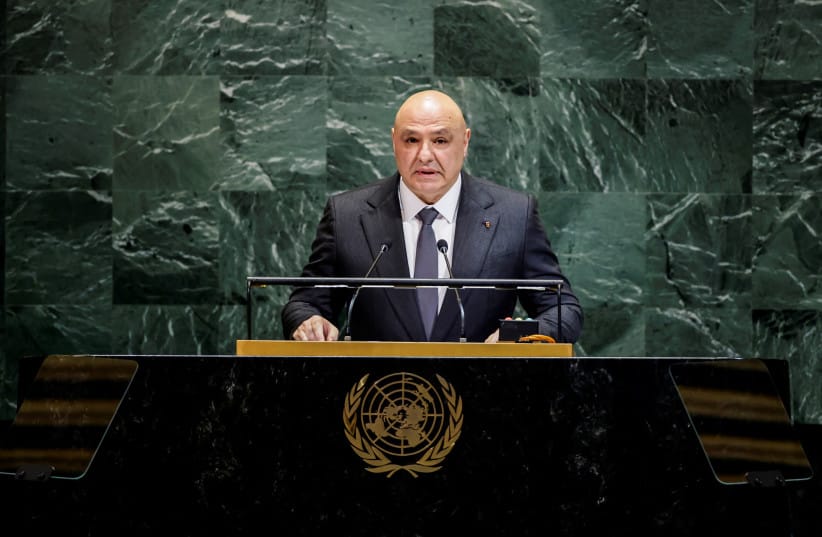
Hezbollah argues that making an Israeli withdrawal conditional on the dismantling of its weapons gives Israel justification to remain on Lebanese territory. The terrorist organization and its allies have warned that any attempt to disarm it by force could trigger internal conflict.
The government in Beirut presents the agreement as an opportunity to restore state control over weapons and security decision-making. The pilot is therefore also part of the internal struggle over the balance of power between state institutions and Hezbollah.
The difficulties are not limited to operational issues. The framework agreement may require approval by the Lebanese government and possibly parliament, where Hezbollah and its allies have the power to delay implementation.
A technical agreement in Rome will not end the political battle in Beirut over the organization’s disarmament. No timetable has yet been published for the completion of Lebanon’s ratification process.
The broader agreement includes a US commitment to help raise funds for Lebanon’s reconstruction. At the signing ceremony, Washington announced $100 million in humanitarian aid.
The administration views reconstruction and the return of residents as a means of strengthening Lebanese state institutions and reducing southern residents’ dependence on Hezbollah’s civilian systems.
The link between reconstruction and disarmament is also disputed. Lebanon wants work to begin and residents to return immediately after the IDF withdrawal.
Israel wants to ensure that reconstruction funds and the returning population are not used to rebuild Hezbollah’s military infrastructure. Civilian and financial oversight mechanisms are therefore expected to play a major role in the arrangement.
Israel will seek in Rome to block any commitment to an automatic withdrawal sequence. Its position is that each area must be examined separately and that only the results of the first stage should determine whether it is possible to proceed to the next.
Lebanon will demand that the pilot serve as the starting point for a process ending with a full Israeli withdrawal and the restoration of sovereignty over the south.
The framework agreement is intended to serve as the basis for a broader process, including an end to the state of war between Israel and Lebanon, mutual recognition of their right to exist in peace, and continued negotiations toward a comprehensive settlement.
It also addresses the return of detainees and bodies and includes a commitment to refrain from hostile steps in legal and diplomatic arenas. At this stage, those broader goals depend on the ability to carry out an orderly transfer of the first area in southern Lebanon.
By the end of the round, it should become clear whether the sides have succeeded in setting a date for activating the first pilot, defining its boundaries, and agreeing on a mechanism to supervise the dismantling of Hezbollah infrastructure.
Another announcement that activation will begin within days, without a map or an agreed sequence of steps, will not constitute meaningful progress. As long as those three issues remain unresolved, the framework agreement will struggle to move from paper to implementation.