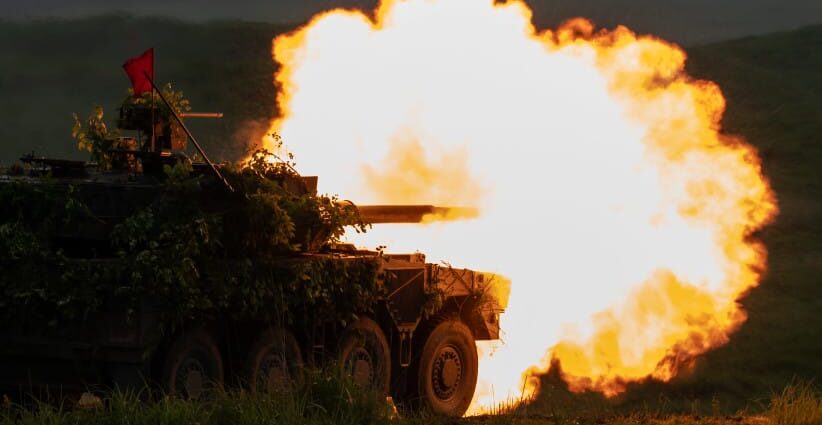
One of the most important geopolitical transformations of our time is taking place in Japan.
For nearly eight decades after World War II, Japan prioritized economic growth while relying heavily on the United States for security. That strategy worked remarkably well. Japan became an economic and technological powerhouse while maintaining limited military capabilities. But the world that made this model possible is disappearing.
China’s military buildup, North Korea’s missile and nuclear programs, Russia’s invasion of Ukraine, and growing tensions around Taiwan have forced Tokyo to rethink its security doctrine. Since 2022, Japan has undertaken its most significant security transformation since the end of World War II.
Defense spending is rising sharply. New capabilities are being acquired. Intelligence structures are being strengthened. Strategic decision-making is being centralized.
Japan is not abandoning its pacifist traditions. It is redefining self-defense for a more dangerous world. Israel should pay close attention.
Japan and Israel are very different countries, but they share something fundamental: both are democracies operating in regions dominated, or heavily pressured, by authoritarian powers. Israel faces Iran and its proxies. Japan faces China, North Korea, and Russia. Both countries also work closely with the United States, whose alliances and partnerships remain central to stability in both the Middle East and the Indo-Pacific.
This matters because the two regions are becoming increasingly connected.
China, Russia, Iran, and North Korea are not a formal alliance, but their cooperation is growing. Iran has supplied drones to Russia. North Korea has supported Moscow’s war effort. China provides diplomatic and economic backing to both Russia and Iran. Tehran and Pyongyang have long cooperated on missile technology and sanctions evasion.
As a result, what happens in East Asia increasingly matters to the Middle East, and what happens in the Middle East increasingly matters to East Asia.
For Japan, Iran is no longer merely a Middle Eastern country and a potential energy supplier. Its expanding cooperation with China, Russia, and North Korea is making Middle Eastern developments increasingly relevant to Japan’s wider security environment. At the same time, the Middle East itself is changing.UA
The Abraham Accords have created a new framework for regional cooperation. Israel, the United Arab Emirates, Bahrain, and Morocco are developing partnerships in technology, infrastructure, trade, energy, and security. This is not only an Arab-Israeli story. It is also part of a wider shift toward connectivity between Asia, the Gulf, Israel, and Europe.
Critical minerals are part of this story. The future of power will depend not only on oil and gas, but also on semiconductors, rare earths, batteries, artificial intelligence, digital infrastructure, and secure supply chains. Japan understands this better than most countries. So do Israel and the Abraham Accords countries, which are investing heavily in advanced technologies, logistics, cybersecurity, and economic diversification.
A new axis of cooperation
This creates a major opportunity.
Israel brings unique experience in missile defense, counter-drone warfare, cybersecurity, intelligence integration, and national resilience. These capabilities were developed under harsh conditions, but they are increasingly relevant to countries facing new forms of warfare and strategic competition.
Japan brings technological sophistication, industrial capacity, economic strength, and a growing ability to contribute to regional security. Together, Japan and Israel can cooperate on issues that will define the 21st century: critical infrastructure, cyber resilience, maritime security, supply-chain protection, critical minerals, and defense innovation.
The opportunity extends beyond bilateral relations.
Projects such as the India-Middle East-Europe Economic Corridor (IMEC) offer a framework for connecting India, the Gulf, Israel, and Europe through transportation, energy, digital, and technological networks. More than an infrastructure initiative, IMEC is a strategic project designed to strengthen connectivity, secure supply chains, and reduce dependence on authoritarian powers.
For too long, Israel’s foreign policy conversation has focused almost exclusively on the United States, Europe, and our immediate neighborhood. Those arenas will remain essential. But the future of global politics will increasingly be shaped in Asia.
Japan is one of the world’s leading democracies, one of America’s most important allies, and one of the most advanced technological powers on earth. Its strategic awakening is not a distant Asian development. It is an opportunity for Israel.
Recognizing that opportunity early could help build one of Israel’s most important partnerships for the decades ahead.
The writer is Israel’s ambassador-designate to Japan, CEO of the Euro-Med Middle East Council (EM2C), and a lecturer in international relations at Tel Aviv University.