By Julia Parker — JBizNews Desk
Israel’s economy contracted in the first quarter of 2026 as the conflict with Iran disrupted business activity, consumer spending, and transportation across much of the country, according to data released Sunday by the Israel Central Bureau of Statistics.
The agency reported that gross domestic product shrank at an annualized rate of 3.3% during the quarter, marking the country’s first economic contraction since the ceasefire that ended the two-year Gaza war. While the decline was slightly less severe than the 4% drop economists surveyed by Reuters had forecast, it interrupted a rebound that had gained momentum through the second half of 2025.
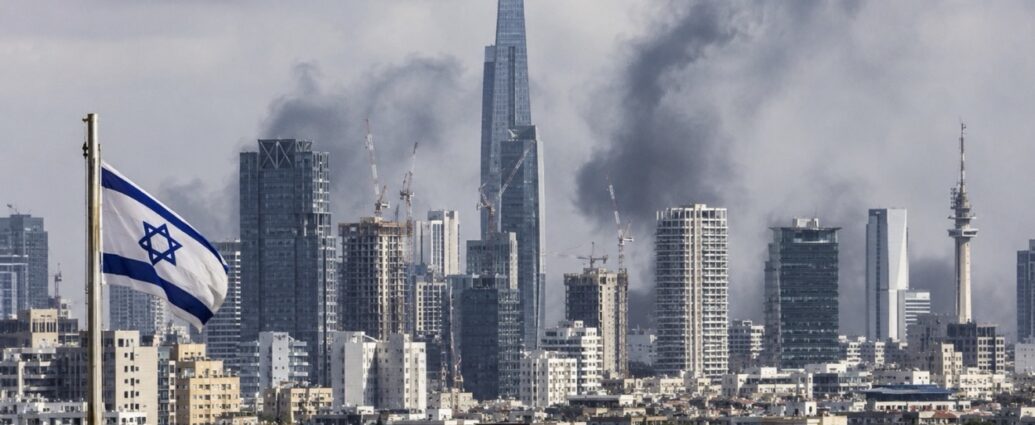
In quarter-over-quarter terms, GDP declined 0.8%, with officials pointing to March and the early weeks of April as the most disruptive period as ballistic missile attacks from Iran forced repeated school closures, interrupted transportation networks, and temporarily shuttered businesses across central Israel.
On a per-capita basis — often viewed by economists as a more accurate measure of household economic conditions — output fell 4.5%. Business-sector GDP declined 3.1%.
Consumer spending, the largest driver of Israel’s economy, dropped 4.7% as households reduced travel, shopping, dining, and entertainment activity during weeks of missile alerts and shelter advisories. Exports fell 3.7% amid disruptions to ports and airfreight operations, while government consumption declined 4.8%.
One major category continued to expand sharply: fixed-asset investment surged 12.6%, reflecting elevated military procurement, infrastructure spending, and emergency preparedness investments tied to the conflict environment.
The economic slowdown has already forced policymakers to reassess growth expectations for the year.
Bank of Israel Governor Amir Yaron lowered the central bank’s 2026 growth projection to 3.8% in March, down from the 5.2% forecast issued before the Iran conflict escalated.
“Recent weeks, since the beginning of Operation Roaring Lion, have been marked by considerable geopolitical uncertainty, and the war’s impacts on the economy and on real activity can be seen across all industries,” Yaron said during a press conference in Jerusalem.
He pointed specifically to declines in tourism, weaker consumer activity reflected in credit-card spending data, labor shortages caused by reservist mobilizations, and supply-chain disruptions affecting both imports and exports.
Even so, the downturn was not as severe as the economic shock Israel experienced during the 12-day Israel-Iran war in June 2025, when large-scale mobilizations and nationwide airspace closures brought portions of the economy close to a standstill.
Israel’s Finance Ministry, led by Finance Minister Bezalel Smotrich, now projects full-year economic growth between 3.3% and 3.8% for 2026, assuming the ceasefire reached with Iran last month remains intact.
Financial markets have remained notably resilient despite the conflict.
The Israeli shekel weakened to roughly 3.1675 per U.S. dollar during the height of the fighting but remains near multi-decade highs reached earlier this year. The Tel Aviv 35 stock index has also continued climbing despite the geopolitical instability.
Yaron told CNBC last month that five-year credit default swaps tied to Israeli sovereign debt had already retreated back toward pre-war levels, suggesting international investors view much of the geopolitical risk as already priced into markets.
“Markets, both abroad and in particular in Israel, are taking the view that the geopolitical situation has improved a lot already,” Yaron said.
Some analysts continue to expect a relatively strong rebound in the second half of the year.
Keren Uziyel, senior analyst at the Economist Intelligence Unit, told CNBC that resilient labor conditions, strong global demand for Israeli cybersecurity and technology exports, and a wave of major acquisition activity could help stabilize growth by midyear.
Among the largest transactions was Alphabet’s Google acquisition of Israeli cybersecurity company Wiz for approximately $32 billion and Palo Alto Networks’ purchase of CyberArk Software for roughly $25 billion. Both deals closed in March and injected substantial liquidity into Israel’s technology ecosystem and investment markets.
The central bank is also increasingly signaling potential monetary easing later this year if conditions stabilize.
Jonathan Katz, chief economist at Leader Capital Markets, said he expects the Bank of Israel to gradually lower its benchmark interest rate from 4% toward a range between 3% and 3.25% by year-end, assuming inflation moderates and the ceasefire continues to hold.
Yaron has repeatedly identified three conditions necessary before significant rate cuts become realistic: a sustained end to hostilities, declining global energy prices, and the return of reservists from military service back into the civilian labor force.
Despite the weak first quarter, Israel’s medium-term growth outlook still compares favorably with many advanced economies.
The International Monetary Fund continues to project Israel’s economy will expand 3.5% in 2026, stronger than its forecasts for the United States, the European Union, and every G7 economy. Israel’s unemployment rate edged up to 3.2% in March but remains relatively low by developed-market standards, while the country’s debt-to-GDP ratio of roughly 70% remains well below the G7 average.
For policymakers and investors alike, however, the larger question now centers less on the first-quarter contraction itself and more on the durability of the ceasefire with Iran.
If fighting resumes, economists warn that the recovery Israeli officials are expecting in the second quarter could evaporate quickly — along with hopes for lower borrowing costs and a broader normalization of economic activity.
JBizNews Desk
© JBizNews.com. All rights reserved. This article is original reporting by JBizNews Desk. Unauthorized reproduction or redistribution is strictly prohibited.