Key to discussions about rebuilding Israel’s reputation around the world is the question of purpose. What does Israel have to offer the world? Is there something more than hi-tech ingenuity that makes Israel admirable?
The answer is resilience. Israeli society enjoys a sense of righteousness and grit, and the Israeli state possesses military and economic might, which make Israel a model for the world.
This is a theme that ought to dominate Israeli public diplomacy (hasbara) in the coming years.
Resilience is the ultimate essential commodity for facing bleak global realities. The world-at-large is threatened by very bad state actors like Russia, China, and Iran, with hard military conflicts ahead; by hegemonic transnational movements such as radical Islam that seek to undermine Western societies from within and pose a growing terrorist peril; by corrosive ideologies that contradict the values of Judeo-Christian civilization and classic democratic creed; and by distorted historical narratives that delegitimize the foundations of national sovereignty.
The stability of modern life is also threatened by the epidemics of drug use and depression, and family and community dissolution; by technologies that destroy privacy and promote distrust; and by global economic interdependence that crushes entire classes and countries, and which fuels hatred and violence.
Israel is an exemplar for how to deal with all these challenges to national health and existential danger. It is a country that, throughout its nearly 80 years, has successfully confronted extreme security threats and ideological delegitimization by carrying grand historical-ideological awareness and a stirring national identity, developing deep patriotism that embraces the pride and privilege of fighting for the country, inculcating love of the land and of neighbor, and maintaining religious faith.
Israel has also made the hard choices and sacrifices that are necessary for sustaining heavy-duty national defense and a robust economy, and the results are amazing.
In all, Israel is resilient. It thrives while its haters flounder. It is a paradigm of how to stand strong and uphold a noble cause with clarity, something that the rest of the embattled world needs to rediscover.
Israeli youth optimistic, passionate about future of the country
Consider the identity statistics. According to every poll conducted over the past decade, Israeli youth believe deeply and optimistically in the future of this country, with 90% planing to stay here, no matter what. Over 85% think that the IDF is the most moral army in the world. At least 65% say it would be worthy to die for the country, if necessary.
More than 75% categorically prefer to buy “Blue & White” (Israeli-made products), and 84% prefer to buy from Israeli or international companies that contribute to the war/national effort.
More than 60% say that social solidarity, volunteerism, and family values are what make Israel great. This, even though over 80% of high schoolers think the chances for peace with the Palestinians are minimal to nil.
In short, our youth know that Israel is more than the sum total of conflict with the Palestinians or with Iran, and believe that Israel will manage and even prosper.
The determined sentiments of Israeli youth are of a piece with the resilience demonstrated by broad segments of the Israeli public. This ranges from muscular mothers holding down the home front to the hundreds of thousands of Israelis (and Diaspora Jews) who are volunteering in myriad ways during wartime to make up labor shortfalls in fields, factories, and hospitals, and to heal and rehabilitate the war widows, the many wounded, and the displaced.
This overall buoyancy stems from the grand historical-ideological awareness and other markers of devotion I described above. Indeed, Israeli society is undergirded by a “civil religion” of sorts – a latent faith that buttresses public and political life.
It is what the late, great Lord Rabbi Dr. Jonathan Sacks (the most prolific Jewish philosopher of our day) calls public theology: a sense of national purpose and identity that is shared by almost all Israelis.
This is not an empty convention. Regardless of how or whether they adhere to religious ritual, Israelis understand themselves as holding a moral bond, and as being chosen – yes, chosen! – for a task. They feel a responsibility for advancing Jewish civilization, which the Bible roots in building an exceptional polity in Zion. And thus, Israelis will fight unflaggingly for their freedom.
Moreover, the Jewish People aspire to be an instrument for broadcasting essential values to the world. Among others, this explains why Israelis are among the first to fly across the world to provide aid in times of natural disaster; why they are so proud of their global medical and scientific contributions; and why scholarly international academic collaborations are essential to their soul. Yes, even now, when parts of Western academia want to boycott Israelis and Jews.
No one can claim that life in Israel has been carefree or lighthearted since the October 7 massacre and the ensuing wars on seven fronts. But as longevity and happiness studies show (in which Israel ranks among the highest in the world), there are motivators in life that can overcome duress and turn challenges into blessings.
Israelis are not superheroes. But they are people who love their land, believe in their country and their historical mission, adore their children, and are intent on seeing their families, neighbors, and brethren protected, defended, and supported.
Israel is big, powerful, and wealthy enough to fiercely defend its way; and at the same time, big, powerful, and wealthy enough to be educated, generous and tolerant. Secure in its heritage, Israel is confident about its abilities and capable of contributing to the world.
Consider the economic statistics. Despite a three-year-long war footing, the International Monetary Fund still expects Israel’s economy to grow by 3.5% in 2026 (compared to 2.3% for the US and 1.3% for the EU). Israel’s GDP is forecast to outperform all G7 countries, too.
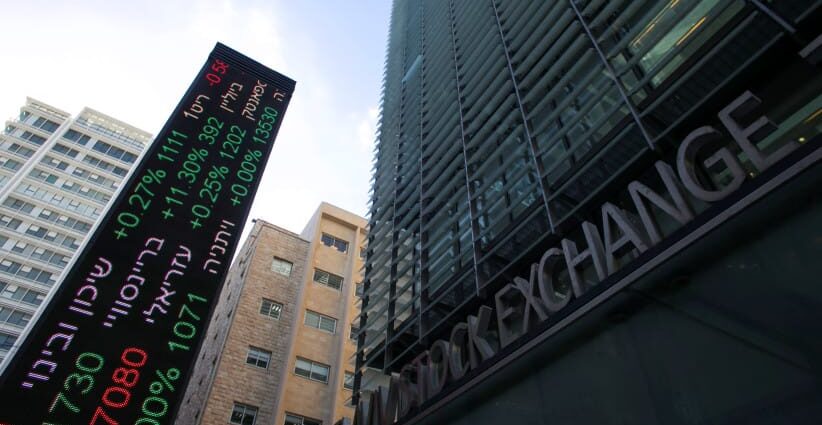
The Tel Aviv Stock Exchange is booming (outpacing major international indices such as the S&P 500 and Nasdaq Composite).
Foreign investment continues to play a decisive role in Israel’s economic strength, staying high despite the recent wars, as has hi-tech merger and acquisition activity (almost $100 billion in 2025). Egypt and Israel have signed the biggest natural gas deal in Mideast history, worth $35 billion. The UAE and Morocco have reached multi-billion-dollar defense deals with Israel.
Israel itself is expected to invest $120 billion over the coming decade to develop an arms industry not dependent on foreign suppliers; atop $50 billion a year in direct military spending.
In short, possessing a sense of purpose has always been central to community and nation-building in any society. It provides direction and spirit, and generates the hardiness necessary for confronting enemies.
Traditional American political discourse knew this, and sought to place redemption, liberty, morality, and Divine covenant – themes explicitly drawn from the Exodus story – at the center of public life.
The Founding Fathers of America also possessed an abiding belief in the essential goodness and uniqueness of America, what is known as conviction in American “exceptionalism.” They all shared the sense that something great, even miraculous, was at work in America, and this informed an “evangelical” (eager) American responsibility to lead the world.
Alas, the 44th president of the USA, Barack H. Obama, was not comfortable with American leadership in world affairs. He explicitly viewed America’s past to be arrogant and high-handed. He set out to “fundamentally transform” America’s place in the world; to strip the United States of its superior position; to drag America down from its “imperious” perch.
He thought that he would be leaving the world a better place by cutting unexceptional America (and unremarkable Israel) down to size. Alas, he was quite successful in doing so.
His intellectual mold is what, among others, cobbles the West’s ability to today confront, say, modern Islamofascism or Russian/Chinese imperialism.
It is what prevents the renewal of Western resolve to defend itself, a tenacity that can only come from profound intellectual, moral, and societal rearmament, as well as concrete military rearmament. It is also what prevents certain Western elites from identifying with Israel and its heroic, successful struggles.
Time to reverse this. It is time to flaunt the resilience of Zion. There are enough smart and searching citizens of the world, and hopefully Western leaders, who will take heart and take example from Israel’s brave path. Israel the resilient – this is critical branding for the country’s advocacy going forward.
The writer is managing senior fellow at the Jerusalem-based Misgav Institute for National Security & Zionist Strategy. The views expressed here are his own. His diplomatic, defense, political, and Jewish world columns over the past 30 years are at davidmweinberg.com.