The reports that the US and Iran are close to inking a deal to formally end the war that has engulfed the region, with Israel at its center, for the last two months, are both encouraging and alarming.
A one-page document containing a 14-point memorandum of understanding was in Iran’s hands, and US President Donald Trump on Wednesday said the Iranian regime had a week to respond. The one-page document would reportedly require an end to hostilities and the start of a 30-day negotiation period.
According to a variety of reports, key points on the burgeoning deal include both countries lifting their respective blockades on the Strait of Hormuz. That would come in exchange for a US removal of sanctions and an Iranian commitment to a 15-year moratorium on uranium enrichment.
Iran would additionally agree to transfer its stockpile of highly enriched uranium outside of its borders, potentially to the US. Several key terms in the potential agreement remain contingent on a future final comprehensive agreement and must still be negotiated.
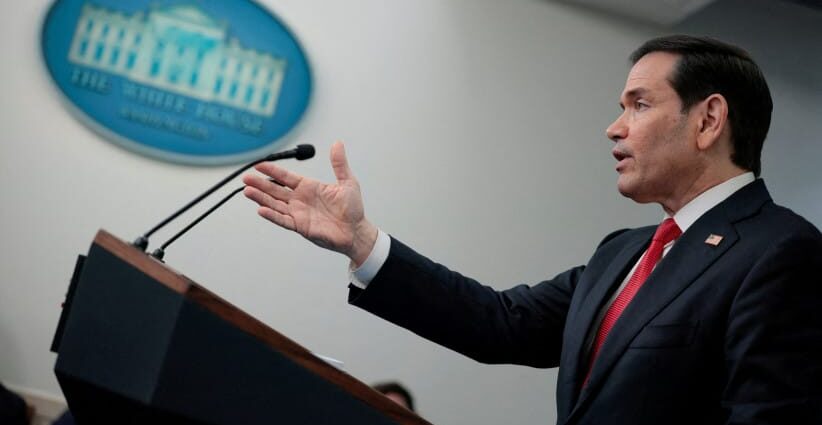
US Secretary of State Marco Rubio said the negotiations with Iran were “highly complex and technical.”
“We have to have a diplomatic solution that is very clear on the topics they are willing to negotiate on and the extent of the concessions they are willing to make at the front end in order to make it worthwhile,” he said, adding that some of Iran’s senior leaders are “insane.”
That goes without saying, as Israel has learned the hard way over the past few decades of sounding the alarm about Iran’s nuclear ambitions. This has been felt in a more physical sense through the bombardment of missiles aimed at killing huge swaths of Israeli civilians both in last June’s mini-war and in March during the current conflict.
If an agreement can be reached that will indeed set a 15-year moratorium on nuclear enrichment and include the transfer of Iran’s enriched nuclear stockpile outside its borders, it will truly be a major turning point.
Nuclear or not, Iran will always aim to destroy Israel
Despite the pummeling Iran took during the March war, however, changing its stripes and agreeing to cast aside its nuclear aspirations aimed at leveling the Jewish state is a dubious prospect at best.
An Iranian official said the proposal was “more of a wish list than a reality.” On Wednesday, the semi-official Tasnim News Agency said the text contained “unacceptable clauses” and was propaganda “aimed at justifying Trump’s retreat from his recent hostile action.”
While Israel certainly wants an end to the war with an Iran that no longer poses a threat to its existence, what’s alarming about this process is that the government in Jerusalem seems to have no say in the process and is totally relying on Trump’s negotiating team, Steve Witkoff and Jared Kushner, to represent its interests.
Although Israeli officials said they were unsurprised by the developments, Prime Minister Benjamin Netanyahu is likely understandably concerned over the deal at hand. He worries about the likelihood that Iran will not honor the agreement, along with the implications for Israel’s ongoing efforts to remove the Hezbollah threat from its northern border.
Whether it was a coincidence or a message that Israel is not going to let its hands be tied in Lebanon, the IDF attacked Hezbollah’s Radwan special forces in Beirut on Wednesday. This was the first attack in Lebanon’s capital in weeks, following the ceasefires with Iran on April 7 and with Hezbollah on April 17.
On Thursday, the IDF confirmed the killing of Hezbollah’s Radwan commander in Beirut, Ahmed Ghaleb Balout, who had directed dozens of attacks against Israeli soldiers in southern Lebanon during the war, including anti-tank missile fire and explosive-device attacks.
Balout was also working to rebuild Radwan’s capabilities, including Hezbollah’s long-planned “Conquer the Galilee” invasion plan, the IDF said, adding that it would continue acting against threats to Israeli civilians and troops.
That’s the crux of the matter. An agreement between the US and Iran could theoretically weaken Tehran’s proxy in Lebanon, Hezbollah. But it’s far from a foregone conclusion.
That’s why, along with the impression that the Lebanese government appears unwilling or unable to do anything about Hezbollah, Israel must maintain the freedom to act to safeguard the North – even if it results in a diplomatic conflict with Trump and the US.