On Sunday, the IDF detained about 100 activists of the so-called “HaBashan Pioneers” settler movement who crossed from Israel through the Syrian buffer zone into the Syrian side of Mount Hermon.
Next, several more Israeli citizens attempted to cross the border on Monday, but IDF troops intercepted, detained, and transferred them to the police before they could penetrate into Syria.
However, all past and current signs indicate that these activists will get off with their dangerous actions with little more than a slap on the wrist.
When The Jerusalem Post contacted an Israeli prosecution spokesperson on Monday about what punishment, let alone jail time, the activists might face, the response was vague and evasive.
The prosecution spokesperson tried to place the onus for consequences on the police.
However, the police in recent years have often been called a black hole by the IDF, Shin Bet, and by some prosecutors off-record in this and some other areas. Despite some of these areas clearly constituting dangerous violations of Israeli law, they have often been whitewashed, especially during the term of National Security Minister Itamar Ben Gvir.
Not the first time activists have infiltrated Syria
Activists have infiltrated Syria numerous times since Israel created a buffer zone in southern Syria after the fall of the Assad regime in December 2024.
Recent incidents occurred in both April and May, with between 10 and 40 activists penetrating into Syria.
Despite these violations being both serious as well as open and shut easy cases to convict on (the activists were caught in Syrian territory and freely and proudly admit their violations), when questioned about how past cases would influence the approach to prosecuting the latest border violators, a spokesperson said that it was still unclear that the prosecution has any set approach to the issue.
This contrasts with a variety of other areas of crime where the state prosecution develops a clear zero-tolerance policy and seeks jail time, and sometimes significant jail time, to end or at least significantly deter future potential criminal conduct.
And there is no question about the activists’ commitment to continuing to penetrate into Syria.
The movement claims to have crossed the boundary “many times in the past,” even beyond when they have been caught and reported on, and they seek to establish an Israeli settlement in the area.
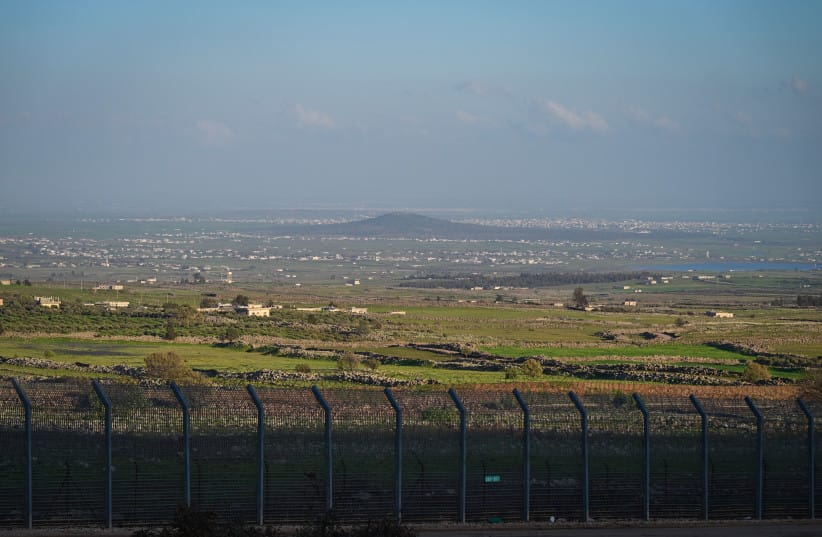
They say that during their last penetration, they intentionally entered a mountainous area to make evacuating them more difficult for the IDF, showing that this is an organized and strategic long-term operation with a mission.
“Only settlement” would cement Israeli control of the area, the movement has said, noting the importance of IDF control in the region.
“Eventually, we will also reach Daraa, Quneitra and Abedin,” the movement has added.
While the movement claims to be fighting for Israeli interests and says its actions come amid attempted attacks by Syrian terrorists against Israeli communities in the Golan Heights, including within the buffer zone, no one in the professional level of the defense establishment and no government decision-makers agree.
There is a debate in the political and defense establishments about how long Israel should keep a buffer zone in Syria, what security, demilitarization, and other concessions it should request from Syrian leader Ahmad al-Sharaa in exchange for any withdrawal, and whether certain areas should be held onto longer than others.
But all of them agree that Israel cannot build settlements in Syria and makes no claims to Syrian territory.
Unlike Lebanon, where Hezbollah has repeatedly attacked Israel in recent years, Syria, which had been a mostly quiet border with Israel even before the fall of Assad, has been basically on mute as far as Israel is concerned since December 2024.
Mainly Israeli concerns for having a buffer zone relate to how al-Sharaa has treated his own minorities and whether in future years he might release some of his terror militias more in Israel’s direction.
But if none of this transpires and none of it has for around 18 months, at some point Israel will need to withdraw, lacking the ability to justify its continued presence.
In any event, Israeli law clearly prohibits anyone other than the IDF from entering Syria, and the military is furious that it has been continually stuck with policing Israeli citizens instead of being able to focus fully on deterring any threats from Syria itself.
Why does Israel remains so passive on prosecution?
So why are the police, the prosecution, and likely the courts so passive on this issue?
First is the Druze complication. Multiple times, a large number of Israeli-Druze crossed the border into Syria illegally to try to assist their Syrian-Druze brethren when the al-Sharaa regime started to slaughter them.
The IDF, police, prosecution, courts, and government were all likely too tolerant of this situation, with essentially no one being prosecuted, let alone receiving any harsh punishment.
IDF officials have acknowledged off the record that this was a mistake.
While some may find it “understandable” for Israeli-Druze to want to help their Syrian-Druze brethren, it is still breaking the law and endangering the country.
But this past example may be holding law enforcement back from acting decisively against the newest phenomenon, which is part of a movement and not connected to an isolated incident involving the Druze.
In any event, various defense officials would acknowledge that the right move going forward would be to act decisively against those seeking to penetrate into Syria, whether Druze-Israeli or pro-settlement activists in Syria.
Besides the case of the Druze, there is the fact that the police have, according to many in the IDF and the Shin Bet, largely fallen apart in enforcing the law on violent Jews in the West Bank.
Also, law enforcement has not really prosecuted Jews who illegally travel into Palestinian areas for prayer, while these Jews could have traveled at other times in coordination with the IDF.
Earlier in the Gaza war, a number of activists also traveled into Gaza illegally, facing no real legal consequences.
All of this contributes to an atmosphere of a “free for all” that activists can penetrate foreign countries and areas against Israeli law, with no punishment or reason that they should not keep doing so.
If the police will not step up and the prosecution will not enter the fray to press the police to take the issue more seriously, and if some of these parties are worried about the courts going easy on the activists, these activists will continue wasting the IDF’s time and resources, and endangering their and the IDF’s lives.
Moreover, there is a rising tide of parties seeking to label Israel as expansionist in Syria in order to try to prematurely force it out of the buffer zone with no security concessions.
These activists, paradoxically, play into the hands of such anti-Israel parties.
Jerusalem Post Staff contributed to this story.