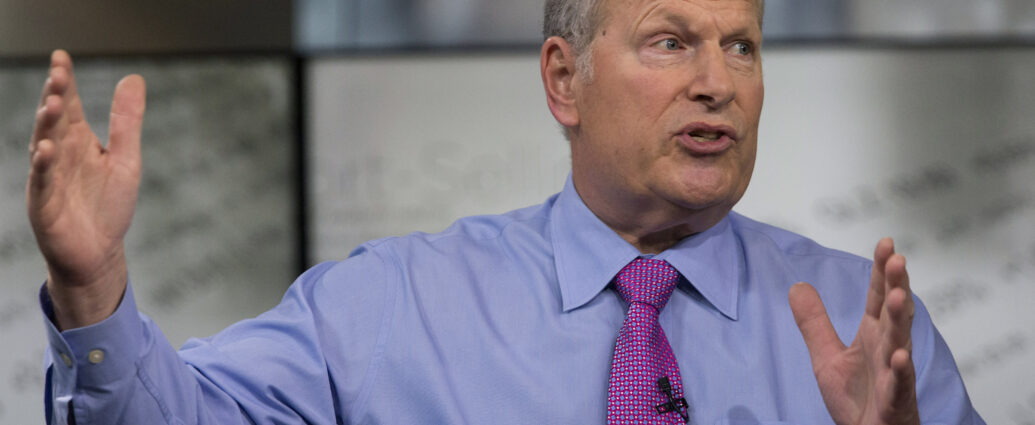
David Cote has already had one career most executives would envy. As CEO of Fortune 500 industrial giant Honeywell, he spent 15 years engineering a revival that delivered shareholder returns 150% greater than the S&P 500.
Now, after coming out of retirement, he is executive chairman of Vertiv, an 80-year-old cooling company whose market cap has surged from under $11 billion to $109 billion since going public, writes my colleague Shawn Tully.
His route to the top might look preordained from where he sits today, but it includes the kind of setback that could make an executive question whether they’ll ever be fit for the corner office.
Cote began his 25-year GE career as a night-shift worker at an aircraft engine plant in New Hampshire, eventually rising to run its appliance business. In 1999, then-CEO Jack Welch approached him in the company dining room and told him he wanted him out by year-end. Cote repeatedly asked what he had done wrong. He says Welch never answered.
Three years later, Cote was CEO of Honeywell. One of corporate America’s most celebrated CEOs had effectively told him he had no future at GE. Another major industrial company soon handed him its top job.
After 15 years at Honeywell, Cote retired in 2018. Retirement did not stick. Convinced he had another chapter in him, he teamed up with Goldman Sachs to hunt for a company to acquire. They considered more than 1,000 companies before choosing Vertiv, a struggling cooling business that was entirely new to Cote.
The choice proved prescient, but the payoff was anything but immediate. Cote saw digital data growing much faster than the data centers needed to support it and positioned Vertiv in the middle of that expansion.
Then the bet faltered. COVID hit three weeks after Vertiv’s NYSE debut, and a later surge in orders exposed that the company was underpricing its equipment by 20% to 30%. Profits cratered, and by early 2023 the stock had fallen roughly 55% from its previous high.
Cote became heavily involved in day-to-day management, and the board installed a new CEO. As Vertiv repaired its operations, it kept investing in direct-to-chip liquid cooling and acquired cooling startup CoolTera in late 2023. It ramped up production as demand from AI data centers took off.
There is an irony in Cote’s trajectory. Welch’s decision to push him out of GE looked like a judgment on his prospects. Vertiv’s early struggles threatened to derail his second act. In both cases, what looked like a defining setback proved temporary.
The same can be true when a career, company, or idea hits a wall. A bad outcome can tell you that something needs to change without telling you how high the person behind it can ultimately climb.
Read the full piece here.
Ruth Umoh
ruth.umoh@fortune.com
This story was originally featured on Fortune.com