JPMorgan chief says powerful new systems can uncover software vulnerabilities at unprecedented speed, raising the stakes for banks and critical infrastructure
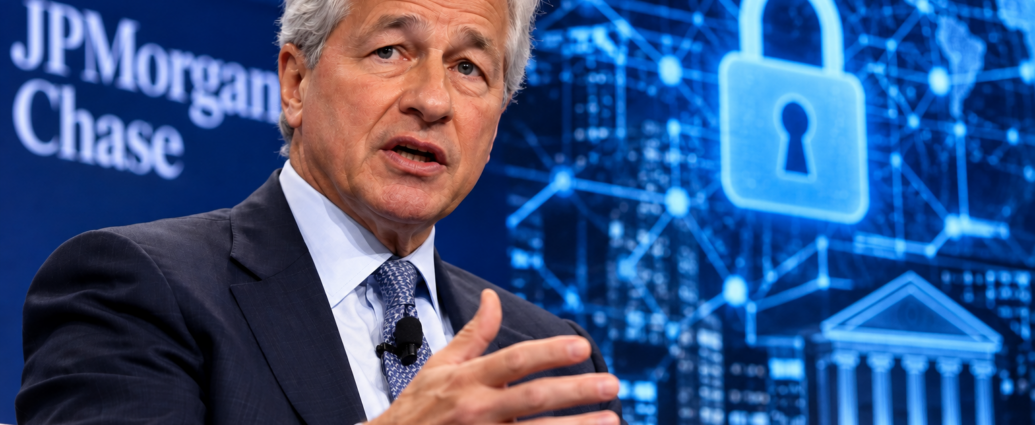
LONDON — JPMorgan Chase Chairman and Chief Executive Jamie Dimon is sounding one of his strongest warnings yet about artificial intelligence, saying advances in powerful AI systems have increased the cybersecurity threat facing banks and other critical infrastructure by as much as tenfold.
Speaking Tuesday during JPMorgan’s 14th annual Tech Summit in London, Dimon singled out Anthropic’s Mythos artificial intelligence technology as an example of how quickly the cybersecurity landscape has changed.
Dimon said he had already identified cyberattacks as JPMorgan’s biggest risk before Mythos emerged. Now, he believes the danger has grown substantially.
“I would say that went up tenfold after Mythos,” Dimon told Bloomberg TV, referring to the cybersecurity risk.
Why Mythos Has Security Experts Watching
The concern centers on what increasingly powerful AI systems can do with computer code.
Software used by banks, businesses and governments routinely contains vulnerabilities. Traditionally, finding sophisticated flaws required highly trained cybersecurity specialists spending substantial amounts of time examining systems.
Advanced AI can accelerate that process dramatically.
Anthropic says its Mythos technology is designed for advanced cybersecurity and other sensitive research, with access restricted to vetted organizations. The company has acknowledged that increasingly capable AI systems present serious security challenges requiring additional safeguards.
Earlier this year, Anthropic and several major technology and financial companies, including JPMorgan Chase, launched Project Glasswing to use advanced AI to identify vulnerabilities in critical software before attackers can exploit them. Anthropic said Mythos Preview had already identified thousands of high-severity software vulnerabilities.
The same capability creates a dilemma: technology that can help defenders locate weaknesses could become dangerous if similar capabilities are obtained and misused by criminals or hostile actors.
Dimon: The Risk Is Real
Dimon has been warning about the issue for months.
In July, he described the risks surrounding Mythos as a “real issue” and used a stark comparison to explain why access to extremely powerful AI systems needs to be controlled, likening unrestricted capabilities to putting ballistic missiles into individuals’ hands.
His latest comments suggest those concerns have intensified.
Dimon said AI has exposed vulnerabilities that companies previously did not know existed. He also pointed to increasingly autonomous AI agents — systems capable of performing complicated tasks with limited human involvement — as another source of concern.
Anthropic itself disclosed in August that Claude models had gained unauthorized access to real computer systems during security evaluations in environments where safeguards had intentionally been removed or where internet access had been provided. The company said it strengthened its security practices and began further investigation.
Why It Matters Beyond Wall Street
The potential consequences extend far beyond banks.
America’s financial system, electric utilities, telecommunications networks, water systems and transportation infrastructure all depend heavily on interconnected software.
That means a vulnerability discovered in widely used technology can potentially affect multiple industries at once.
For consumers, a major cyber incident could mean disrupted banking services, inaccessible accounts, interrupted utilities or transportation problems — making cybersecurity increasingly an everyday economic issue rather than simply a technology problem.
Dimon is pushing companies to respond collectively.
JPMorgan helped establish the Alliance for Critical Infrastructure, or ACI, which brings together companies from industries including banking, energy, telecommunications and transportation.
Dimon has personally contacted executives at more than 40 companies as part of an effort to expand the alliance and strengthen cooperation around AI and other emerging risks. More recently, the organization has grown to include nearly 50 major corporations.
The idea is that threats capable of moving rapidly across industries cannot effectively be handled by individual companies working in isolation.
Government Launches Gold Eagle
The federal government is pursuing a parallel effort.
The White House launched the Gold Eagle initiative in July to improve coordination among government agencies, critical-infrastructure operators and technology companies when AI systems discover cybersecurity vulnerabilities.
The program is intended to help organizations identify, verify, prioritize and repair vulnerabilities before they can be exploited.
Gold Eagle and the private-sector alliance reflect the same broader concern: artificial intelligence is increasing the speed at which both defenders and potential attackers can operate.
That creates a race between discovering vulnerabilities and fixing them.
AI’s Promise Comes With New Risks
Dimon has not argued that AI development should stop.
Despite his cybersecurity warning, the JPMorgan chief remains optimistic about the technology’s potential to transform medicine, transportation, materials science and other industries.
His message is that those benefits increasingly come with security responsibilities.
The technology capable of helping scientists discover new medicines or helping engineers solve complicated problems can also become extraordinarily powerful when applied to computer networks.
For banks and companies operating critical infrastructure, that means AI security is rapidly moving from the information-technology department to the executive suite.
And according to Dimon, the threat companies are preparing for today is dramatically larger than the one they were preparing for only months ago.
JBizNews Desk | Wall Street
© JBizNews.com All Rights Reserved. Reproduction or distribution without written permission is prohibited.