JBizNews Desk | April 22, 2026
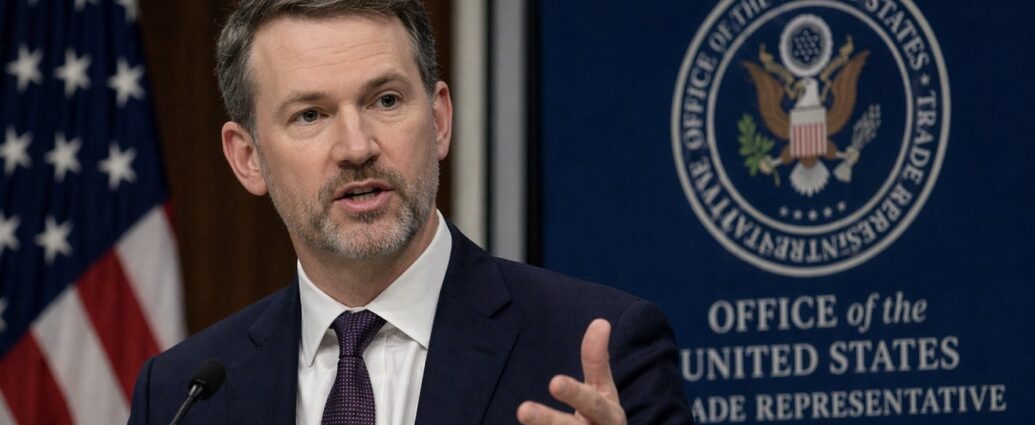
The United States is intensifying efforts to restructure global supply chains for critical minerals, with U.S. Trade Representative Jamieson Greer urging allies to accept higher costs in exchange for long-term security as Washington moves to reduce dependence on China. The push comes as President Donald Trump has directed a whole-of-government approach to reduce strategic vulnerabilities tied to Beijing’s dominance in key industrial inputs.
In remarks published Wednesday, Greer said Western nations must be willing to pay what he described as a “national security premium” to secure reliable, non-Chinese sources of critical minerals—key inputs for defense systems, semiconductors, and electric vehicles. “There is a premium we pay… and we will all pay a national security premium to have a secure supply chain,” Greer said, underscoring what he framed as a necessary shift in global trade priorities.
He directly challenged the cost-focused mindset that has guided global trade for decades. “What you’re talking about, which is cost efficiency — this is why we are in the situation we’re in,” Greer added, arguing that prioritizing low-cost sourcing enabled China to dominate the processing and refinement of key materials. Ngozi Okonjo-Iweala, Director-General of the World Trade Organization, has similarly warned in recent forums that overconcentration in supply chains poses systemic risks to global trade stability.
China currently controls roughly 90% of global critical minerals processing capacity, a structural advantage that has become a focal point for policymakers in Washington. While Beijing has recently eased some export restrictions amid a temporary U.S.–China trade truce, officials remain concerned about long-term exposure. José W. Fernández, U.S. Under Secretary of State for Economic Growth, Energy, and the Environment, has repeatedly emphasized the urgency of diversifying supply chains to “ensure resilience in strategic sectors.”
Under direction from President Trump, Commerce Secretary Howard Lutnick and Greer have been given a 180-day deadline to secure agreements with allied nations aimed at diversifying supply. According to Gina Raimondo, former U.S. Commerce Secretary and current senior economic advisor, building domestic and allied processing capacity will be “critical to long-term economic and national security.” Policy options under review include expanding refining capabilities, securing long-term offtake agreements, and implementing price floors to stabilize investment.
Should negotiations fall short, the White House has indicated it is prepared to act unilaterally, with potential tools including tariffs, quotas, and minimum import pricing mechanisms. Robert Lighthizer, former U.S. Trade Representative, has previously argued that such measures may be necessary to counter “non-market behavior” and level the playing field in strategic industries.
Despite the urgency, allied governments are approaching the strategy cautiously. Valdis Dombrovskis, European Commission Executive Vice President and Trade Commissioner, has signaled that while Europe supports diversification, it must also balance economic competitiveness and avoid triggering retaliatory trade actions from Beijing.
China’s Embassy in Washington pushed back on the U.S. position, with a spokesperson stating that Beijing remains committed to maintaining “stable and unimpeded” industrial and supply chains. Wang Wenbin, spokesperson for China’s Ministry of Foreign Affairs, has similarly warned that politicizing trade could undermine global economic recovery and disrupt established supply networks.
Economists say the challenge facing the U.S. is structural, not just diplomatic. Analysts at the Peterson Institute for International Economics, including Adam S. Posen, the institute’s president, have emphasized that while many countries possess raw mineral reserves, processing capacity remains the critical bottleneck, largely controlled by China.
The U.S. has already begun laying the groundwork for a broader coalition. Earlier this year, Washington signed 11 bilateral critical minerals frameworks with countries including Argentina, Morocco, Peru, the Philippines, the United Arab Emirates, and the United Kingdom, alongside engagement led by Amos Hochstein, Senior Advisor to the President for Energy and Investment, who has been active in coordinating international energy and resource diplomacy.
The outcome of the current push is expected to shape the future of global supply chains across industries ranging from clean energy to defense manufacturing. As Janet Yellen, U.S. Treasury Secretary, has noted in recent remarks on “friend-shoring,” aligning supply chains with trusted partners may come at a higher cost—but is increasingly viewed as essential for long-term economic security.
— JBizNews Desk