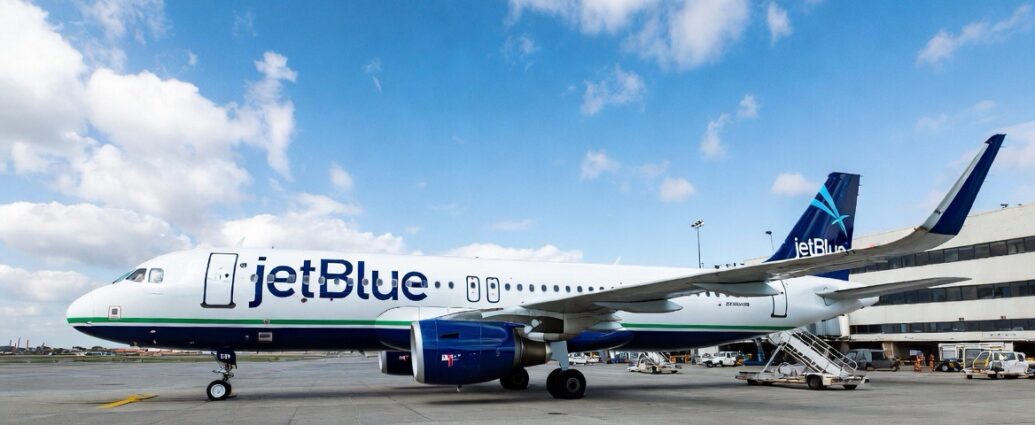
JBizNews – JetBlue Airways Corp. on April 28, 2026, reported a significantly wider first-quarter net loss as sharply higher jet fuel prices eroded margins and outstripped modest revenue gains, intensifying pressure on the carrier to accelerate capacity reductions and other cost-saving measures to preserve liquidity and chart a clearer path back to profitability.
The Long Island City, New York-based airline posted a first-quarter net loss of $319 million, or 86 cents per share, compared with a $208 million loss, or 59 cents per share, a year earlier, FactSet analysts noted in their consensus compilation. On an adjusted basis, the loss reached 87 cents per share, exceeding Wall Street analysts’ consensus estimate of about 72 to 73 cents. Operating revenue rose 4.7 percent to $2.24 billion, in line with expectations and supported by steady passenger demand, JMP Securities analysts highlighted. Yet operating expenses climbed faster, resulting in an operating loss of $224 million, wider than the $174 million loss in the prior-year period.
Fuel emerged as the dominant headwind, BMO Capital Markets analyst Michael Goldie emphasized. The average price per gallon climbed to $2.96, up 15.2 percent year-over-year and well above internal planning assumptions, pushing total operating expenses up 6.5 percent. Operating expense per available seat mile rose 8.3 percent, while CASM excluding fuel increased 6.6 percent, including roughly four points of pressure from weather-related disruptions, UBS analyst Atul Maheswari pointed out. System capacity declined 1.7 percent year-over-year, consistent with earlier efforts to align supply with demand, Seaport Global Securities analyst Daniel McKenzie observed.
Chief Executive Officer Joanna Geraghty stressed actions within the company’s control. “We delivered a strong first quarter, with revenue performance exceeding our expectations, driven by resilient consumer demand and an appreciation for JetBlue’s industry-leading customer offering,” Geraghty said in the earnings release. The airline is deepening initiatives under its JetForward restructuring program, including further capacity discipline, revenue optimization, and targeted cost reductions to offset volatile energy markets, Deutsche Bank analyst Mike Linenberg said. JetBlue has already slowed hiring, intensified fuel-efficiency efforts targeting a roughly 5 percent improvement for the full year, and adjusted its network to protect margins.
These challenges reflect broader pressures across the U.S. airline industry in early 2026, Goldman Sachs analyst Catherine O’Brien noted. Several major carriers, including United Airlines and American Airlines, have pointed to elevated jet fuel costs—driven by geopolitical tensions and supply concerns—when trimming capacity plans and revising full-year forecasts. For JetBlue, with its focus on leisure travel, East Coast routes, and premium offerings such as Mint business class, the fuel spike has compounded difficulties in recovering sustainable profitability after years of pandemic-related volatility, Citigroup analyst John Godyn added.
JetBlue maintains a solid liquidity position, ending the quarter with approximately $2.4 billion in total liquidity supported by positive operating cash flow of about $120 million, Wells Fargo analysts confirmed. The carrier also executed $500 million in aircraft-backed financing during the period. Its unencumbered asset base exceeds $6 billion, providing flexibility amid ongoing cost pressures. Still, sustained high energy prices risk delaying debt reduction targets and broader capital return plans, Bank of America analysts cautioned.
Under the JetForward strategy, JetBlue continues shifting capacity toward higher-margin markets such as its Fort Lauderdale hub, which posted robust results with RASM up 5 percent year-over-year on 23 percent capacity growth, Morgan Stanley analyst Ravi Shanker highlighted. The airline is expanding its premium Mint cabin offerings, enhancing loyalty programs, and strengthening partnerships such as the Blue Sky interline agreement with United Airlines. Management has set goals of achieving breakeven or better operating results for the full year 2026, with the program expected to deliver $850 million to $950 million in incremental earnings before interest and taxes by 2027, Evercore ISI analyst Duane Pfennigwerth tracked. Recent progress includes gains in operational reliability and customer metrics, though near-term macroeconomic volatility has required a more aggressive approach to expenses.
Shares of JetBlue (NASDAQ: JBLU) fell in early trading on April 28 following the results, as investors digested the earnings miss and cautious near-term outlook, TipRanks analysts reported. The stock has faced persistent pressure this year amid sector-wide concerns over cost inflation and demand stability.
Hybrid and low-cost carriers like JetBlue remain especially exposed to fuel volatility because of thinner margins and variable hedging strategies, JPMorgan analyst Jamie Baker stated. In response, the airline is pursuing yield management initiatives to recapture 30 to 40 percent of the higher fuel costs in the second quarter, with fuller recovery targeted by early 2027. Capacity for the April-to-June period is now expected to rise between 1.5 percent and 4.5 percent, with revenue per available seat mile projected to grow 7.0 percent to 11.0 percent. The company has already reduced second-quarter capacity by nearly one percentage point versus recent expectations and plans at least a 2–3 percent reduction in second-half 2026 capacity compared with prior forecasts, Raymond James analysts detailed.
The developments carry implications for consumers, who may see continued emphasis on ancillary fees—such as checked-bag charges and premium seating options—as JetBlue works to offset rising input costs without fully sacrificing competitiveness against legacy and other low-cost rivals, Evercore ISI analyst Duane Pfennigwerth noted. At the same time, regulatory factors, including slot constraints at major hubs such as New York’s JFK and Boston Logan, along with ongoing industry consolidation debates, continue to shape the airline’s network decisions.
JetBlue’s performance will be closely watched as a bellwether for mid-tier carriers navigating a high-cost environment, Wolfe Research analysts observed. The broader U.S. airline sector has benefited from resilient leisure and premium travel demand, but input cost pressures have forced widespread adjustments in capacity and pricing strategies. For JetBlue, success in premium product uptake and operational efficiencies could help it stand out from pure low-cost competitors, while any softening in consumer spending on travel could amplify near-term challenges.
Looking ahead, JetBlue’s trajectory will hinge on moderation in fuel prices, successful execution of additional cost initiatives under JetForward, and resilient travel demand heading into the peak summer season, consensus analyst views indicate. The airline is expected to offer more detailed 2026 guidance and program updates during its earnings conference call. Further escalation in energy markets or any softening in leisure bookings could trigger additional capacity adjustments, while stronger-than-expected premium uptake and efficiency gains would accelerate progress toward sustained positive margins and the company’s longer-term profitability targets.
JBizNews Desk
April 28, 2026
This article is for informational purposes only and does not constitute investment advice. All data sourced from JetBlue Airways official filings, earnings releases, and verified public reports.