Johnson & Johnson’s experimental combination therapy for inflammatory bowel disease is showing its greatest impact where existing treatments fall short — in patients who have already cycled through multiple therapies — positioning the drug as a potential breakthrough for one of the most difficult segments of the market.
The company on Tuesday presented results from two large Phase 2b trials at Digestive Disease Week 2026, demonstrating that its dual-mechanism therapy, JNJ-78934804 (JNJ-4804), delivered the strongest outcomes in patients with the highest level of treatment resistance.
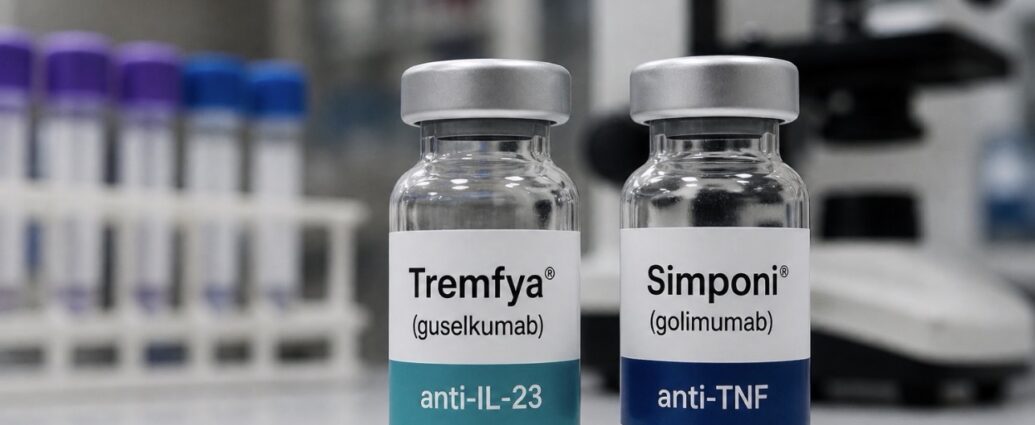
The drug combines guselkumab, an anti-IL-23 therapy marketed as Tremfya, with golimumab, an anti-TNF therapy sold as Simponi — targeting two separate inflammatory pathways simultaneously, a strategy researchers say may overcome the diminishing returns seen with single-drug approaches.
Results Driven by the Most Difficult Cases
Both trials — DUET-Crohn’s and DUET-UC — enrolled patients with moderate-to-severely active disease who had failed one or more prior therapies, including biologics and newer oral treatments. The Crohn’s study included 693 patients, while the ulcerative colitis trial enrolled 572.
The most striking results emerged in patients who had exhausted multiple prior options.
In the Crohn’s disease trial, high-dose JNJ-4804 produced clinical remission rates more than 20 percentage points higher than guselkumab and nearly 40 percentage points higher than placebo among patients who had failed two or more therapies.
The ulcerative colitis study showed a similar pattern. High-dose JNJ-4804 significantly outperformed golimumab on the primary endpoint of clinical remission at 48 weeks, with the largest gains again concentrated in the most treatment-resistant subgroup. In those patients, remission rates exceeded guselkumab by more than 20 percentage points and placebo by nearly 20 points, with comparable improvements in endoscopic and histologic measures of disease control.
Why Dual-Pathway Therapy Matters
Bruce E. Sands, MD, of the Icahn School of Medicine at Mount Sinai and lead author of the Crohn’s study, said the results address a longstanding limitation in IBD treatment.
“Currently in IBD treatment, each successive therapy produces diminishing returns, and patients who have failed multiple treatments have very limited options,” Sands said. “By combining two mechanisms of action, we’re seeing efficacy that appears to be additive — without increasing safety risk.”
Maria T. Abreu, MD, Executive Director of the F. Widjaja IBD Institute at Cedars-Sinai and lead author of the ulcerative colitis study, described the biological rationale more directly.
“In some patients, the immune system essentially finds a way around single therapies,” Abreu said. “By targeting two pathways at once, we may be able to outsmart the immune system and achieve better outcomes.”
Safety Profile and Next Phase
Across both trials, the safety profile of the combination therapy was broadly comparable to either drug used alone. Serious adverse events were relatively uncommon and primarily gastrointestinal in nature, according to the data presented.
Researchers said the results support advancing JNJ-4804 into Phase 3 trials, a key step toward potential regulatory approval.
Building on Earlier Signals — and Investor Backing
The DUET trials build on earlier findings from the VEGA Phase 2a study in 2022, which first demonstrated the potential of combining guselkumab and golimumab. In that study, 36% of patients achieved clinical remission, compared with roughly 21–22% for each monotherapy alone — an early signal that helped drive industry interest in dual-pathway strategies.
That momentum is now backed by significant capital. In March 2026, Royalty Pharma agreed to provide $500 million in research and development co-funding to Johnson & Johnson across 2026 and 2027 to support the advancement of JNJ-4804 — a move that underscores growing confidence in the therapy’s commercial potential.
A Large Unmet Need
Inflammatory bowel disease affects millions of Americans and includes both ulcerative colitis and Crohn’s disease, chronic conditions that often require lifelong treatment. Despite a crowded market of biologics and newer therapies, a substantial portion of patients fail to achieve sustained remission and cycle through multiple drugs with limited success.
The subgroup highlighted in the DUET trials — patients who have already failed several treatments — represents one of the largest remaining unmet needs in the field.
What Comes Next
If the Phase 3 program confirms the current findings, JNJ-4804 could emerge as one of the first widely adopted therapies designed specifically for treatment-resistant IBD — a shift that would not only expand clinical options but could reshape how physicians approach sequencing therapy in advanced disease.
For Johnson & Johnson, the results mark a potential entry into a high-value segment of the IBD market. For patients, they may represent something rarer: a meaningful step forward after multiple treatments have failed.
JBizNews Desk