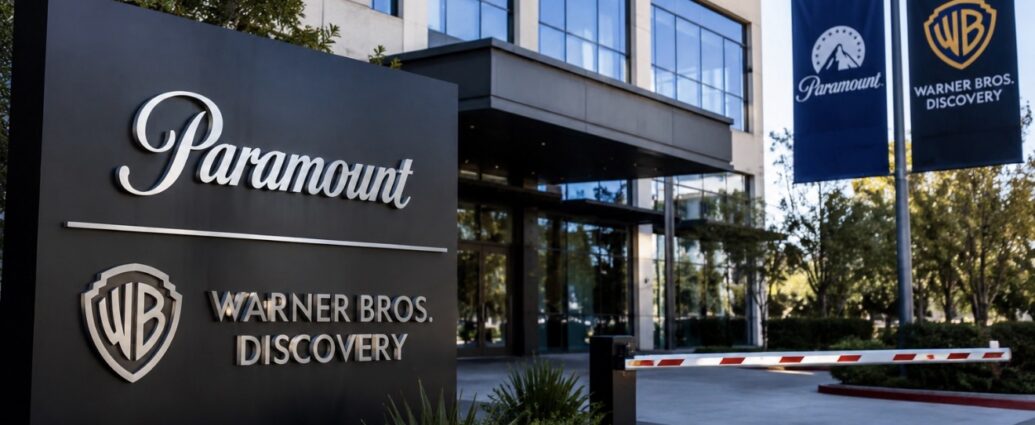
LOS ANGELES — A federal judge temporarily blocked the proposed $81 billion merger between Paramount and Warner Bros. Discovery on Monday, granting a 14-day temporary restraining order that prevents the companies from completing one of the largest media mergers in history while the court considers a broader antitrust challenge brought by 12 states led by California.
The ruling immediately halts plans to close the transaction this week and represents the first significant legal victory for the coalition of state attorneys general seeking to stop the deal. U.S. District Judge Araceli Martínez-Olguín concluded the states had raised substantial questions about whether the merger could unlawfully reduce competition in the entertainment industry. A hearing on whether to issue a longer-lasting preliminary injunction is scheduled for August 3.
If completed, the merger would combine two of Hollywood’s most recognizable entertainment companies under one corporate umbrella, bringing together assets including Paramount Pictures, CBS, Paramount+, Warner Bros. Pictures, HBO, HBO Max, CNN, TNT Sports, Discovery, DC Studios, and a vast library of film and television programming.
State attorneys general argue the combined company would control an outsized share of theatrical film distribution and cable television programming, giving it greater leverage over movie theaters, cable providers, advertisers, and ultimately consumers. They contend reduced competition could result in higher prices, fewer programming choices, fewer original productions, and reduced opportunities for writers, actors, and production workers.
Paramount strongly disputes those claims.
The company argues the merger is necessary to compete with streaming giants and technology companies that have dramatically reshaped the entertainment business. Executives contend consumers increasingly divide their viewing between traditional studios and digital platforms, making scale essential to finance expensive movies, premium television programming, sports rights, and streaming investments.
For investors, the court order introduces fresh uncertainty.
Although the restraining order lasts only two weeks, it delays closing the transaction while the court considers whether the merger should remain frozen during litigation. If a preliminary injunction is granted, the transaction could be delayed for months.
Timing has become increasingly important because the merger agreement contains financial provisions that become more expensive if closing extends beyond September 30. Under the agreement, Paramount could owe Warner Bros. Discovery shareholders substantial quarterly “ticking fee” payments until the transaction is completed, potentially costing hundreds of millions of dollars if litigation continues.
The case also highlights an unusual split between federal and state regulators.
While the transaction previously received clearance from the U.S. Department of Justice, a coalition of state attorneys general independently challenged the merger under federal antitrust law, arguing that state governments retain authority to protect competition within their jurisdictions. Several international regulators, including authorities in Canada, China, and Australia, have already approved the transaction, while reviews remain pending in other jurisdictions.
The outcome could reshape the future of media consolidation.
Hollywood studios continue facing pressure from declining cable television subscriptions, rapidly changing streaming economics, rising production costs, and intense competition for advertising revenue. Many executives argue additional consolidation is necessary to remain financially competitive, while critics warn fewer major studios could reduce competition, limit creative opportunities, and ultimately increase costs for consumers.
For businesses beyond Hollywood, the ruling reinforces that courts remain willing to closely examine large mergers even after federal regulatory approval. Companies pursuing transformative acquisitions may face additional legal challenges from states concerned about competition, potentially extending deal timelines, increasing financing costs, and creating greater uncertainty for investors.
Markets will now focus on the August 3 hearing, where the court will decide whether the merger should remain blocked while the broader antitrust lawsuit proceeds. That decision could determine whether one of the entertainment industry’s largest mergers moves forward this year—or becomes tied up in prolonged litigation.
JBizNews Desk | Los Angeles
© JBizNews.com All Rights Reserved. Reproduction or distribution without written permission is prohibited.