For fast-growing startups, adding new employees is a critical—but perilous—step to further expansion. In many cases, a push to add people doesn’t fuel growth, but instead creates confusion and bureaucracy that causes the startup to stumble. In the case of Kalshi, however, the buzzy prediction market—which one analyst says could soon be worth as much as $42 billion—has figured out how to scale up its staffing without impeding its growth.
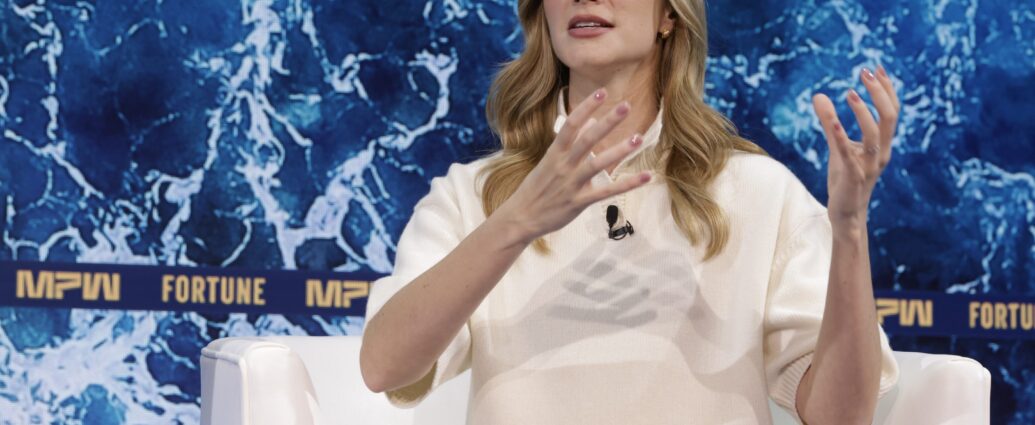
According to Kalshi co-founder and COO, Luana Lopes Lara, the biggest problem companies face as they grow is a flurry of new meetings, approval requests, and red tape. Speaking at Fortune‘s Most Powerful Women summit in Santa Barbara, California, Lara said Kalshi has avoided this by eschewing formal hierarchies.
“We are able to very quickly make decisions, and adjust very, very quickly. We’re also a very flat organization. We don’t have ‘heads of’ or VPs, or all of that structure. Everyone just reports to me, or one step away from me, and I think that also makes us able to move so much faster,” said Lara.
This approach has clearly been working, as one research firm estimated in June that Kalshi was on track for $4 billion in annualized revenue, up from $775 million in December. Much of that has been driven by an explosion of sports betting, but the company has also pushed into a wealth of other new products such as futures markets for compute, helping to make it the clear leader in North American prediction markets.
This growth has also brought changes for Lara, 30, who earlier this year became the world’s youngest self-made female billionaire. Asked how she felt about this development, Lara said she “is so very grateful, but it is very weird”—but that her routine hasn’t changed.
“Very little changed in my life. I’m still in the office over 12 hours every day, and just pretty much try to do the same thing that I always did,” she said.
Kalshi’s rocket ship ride has hardly been smooth, however, as the company has been embroiled in lawsuits across the country, with dozens of state governments claiming it is running an illegal sports gambling operation. The litigation has already given rise to conflicting rulings from different appeals courts, and the Supreme Court is widely expected to rule on the matter next year.
Kalshi takes the position that its sports wagers should be viewed differently than traditional casino or sportsbook bets since users bet against each other rather than “the house”—a distinction some courts have rejected. For her part, Lara said she is optimistic Kalshi will prevail and that, regardless of the final legal outcome, the company will be able to navigate any future regulatory framework.
Lara added that one of the primary challenges Kalshi faces is educating people about the nature of probabilities. She cited the upcoming U.S. midterm elections as a real-world example of how some people misunderstand the nature of prediction market odds.
“I think it’s 92% that the Democrats will take the House, but if the 8% happens, I think a lot of the narratives from the media will be that the [prediction] markets are wrong. But actually, something that has an 8% chance means that eight in 100 times it will happen,” she noted.
Lara also addressed the controversy over a viral ad campaign run by a new sports-focused prediction market firm called Novig that featured a nearly naked Sydney Sweeney.
“It’s not an ad that we would ever put out, or that I, as a woman, would feel comfortable putting out or seeing. I don’t think it’s the brand that we want to build,” she said.
This story was originally featured on Fortune.com