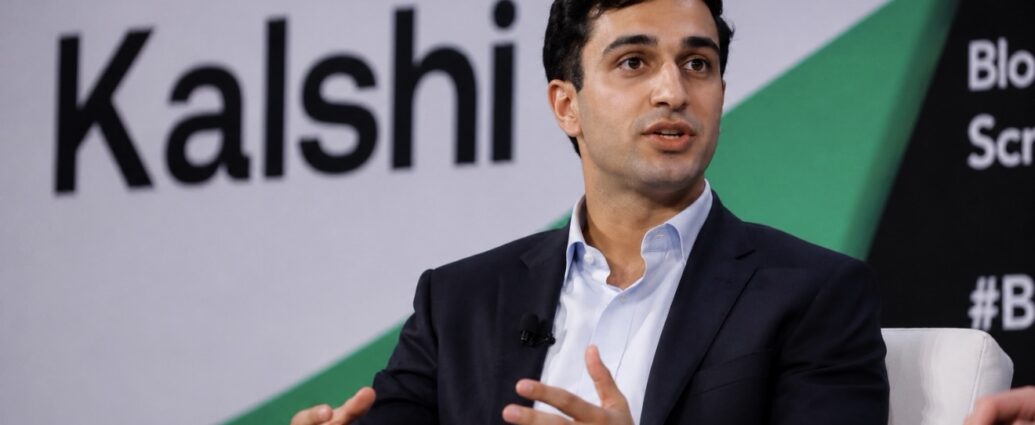
The prediction-market platform Kalshi is building a high-powered trading screen for its most active customers, modeled on the Bloomberg Terminal that has anchored Wall Street trading desks for decades, according to a person familiar with the company’s plans. The new tool, described Thursday, is meant for the serious traders who increasingly treat betting on real-world events as a full-time business — and it signals how far prediction markets have moved from internet novelty toward professional finance.
The product is still early. It is in alpha testing with a small group of selected traders and has been in development for about a month, the source said, with no launch date set. Kalshi has not publicly announced it. From a look at the interface, the tool lets traders manage many positions across different event contracts at once and place trades with fewer clicks — the kind of speed and control that professional traders demand and that casual apps usually lack.
Over time, the ambitions grow. The source said the platform may eventually fold in research and outside information, much like Bloomberg’s product does for stock and bond traders. That comparison is not far-fetched: Kalshi’s market data is already available inside the actual Bloomberg system. While the new tool will start with prediction markets, the company hopes to extend it to other types of trading down the road.
To understand why this matters, it helps to know what Kalshi has become. Founded in 2018, the company runs a federally regulated exchange where people trade “event contracts” — essentially yes-or-no bets on whether something will happen, from inflation readings and interest-rate moves to elections, weather, and sports. Its co-founder and chief executive, Tarek Mansour, is a former quantitative trader at Goldman Sachs and Citadel who studied at MIT. He argues that market prices can reveal the truth about uncertain events more reliably than pundits or polls. The platform now counts roughly 2 million monthly active users.
The business has grown at a startling pace. Kalshi recently raised $1 billion at a $22 billion valuation in a round led by Coatue, with backing from Sequoia Capital, Andreessen Horowitz, Paradigm, Morgan Stanley, and ARK Invest. That value has roughly doubled since December and is more than four times the $5 billion the company was worth last fall. Mansour has said the company generated $263.5 million in revenue and that its annual revenue pace has since climbed above $1.5 billion, a sign of how quickly trading has accelerated.
The push to build a professional terminal fits a clear strategy: chase the big players. The company has reported that trading by institutions — hedge funds, professional trading shops, and asset managers — jumped roughly 800% over six months, with annualized trading volume rising from about $52 billion to $178 billion. These firms are starting to use event contracts to hedge real-world risks and to read market-based forecasts in real time.
To serve them, Kalshi has been adding institutional features like block trading, broker connections, and risk-management tools. It recently received approval to offer perpetual futures on cryptocurrencies, another step toward becoming a fuller-service exchange.
Kalshi is not alone in spotting the opportunity, and that is the competitive risk. A wave of startups already pitches itself as the “Bloomberg Terminal for prediction markets,” including Verso, backed by startup accelerator Y Combinator, along with rivals such as Fireplace and Kairos. These tools pull data from multiple betting venues — including Kalshi and its chief rival, Polymarket — into a single screen so traders can compare odds and spot pricing differences.
Even Paradigm, one of Kalshi’s own investors, was reported in April to be building its own prediction-markets data platform aimed at professional traders. By building its own terminal, Kalshi is trying to keep its best customers inside its ecosystem rather than relying on outside software.
The deeper logic is the same one that helped build Bloomberg into a financial giant. Selling data and trading tools to professionals is a sticky, high-margin business. Once traders rely on a platform every day, they rarely leave. If Kalshi can become the default workstation for event traders, it captures not only trading fees but also the daily workflow of an entire market.
That bet rests on a larger one: that prediction markets are becoming a permanent part of the financial system rather than a passing trend. Mansour has described his company as a form of “truth infrastructure,” turning scattered opinions into a single market-based probability.
Whether that vision ultimately succeeds, Kalshi’s move to build a professional-grade terminal reveals where the company believes the future profits are. The next phase of prediction markets may not be driven by casual bettors. It may be driven by the professional traders who want a screen every bit as powerful as the ones already used across Wall Street.
Markets & Technology — JBizNews Desk
© JBizNews.com All Rights Reserved. Reproduction or distribution without written permission is prohibited.