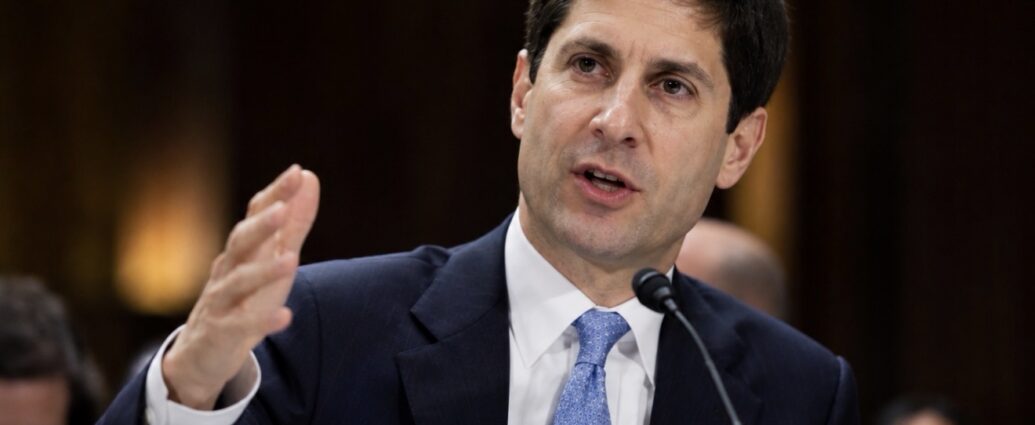
Kevin Warsh opened his first policy meeting as chair of the Federal Reserve on Tuesday, a closely watched debut that will shape how Americans borrow, save and read the central bank for years to come.
The two-day meeting of the Federal Open Market Committee concludes Wednesday, when the Fed will announce its interest-rate decision and Warsh will hold his first press conference as chair.
Almost no one expects the rate itself to change.
The Fed is widely projected to hold its benchmark steady in a range of 3.50% to 3.75%, where it has sat since December 2025.
With that question largely settled, attention shifts to Warsh himself, and to what his arrival means for the direction of policy.
Warsh was sworn in on May 22 after a narrow 54-45 Senate confirmation vote, becoming the 17th chair of the Federal Reserve.
His predecessor, Jerome Powell, has agreed to stay on as a governor, an unusual arrangement that leaves the former chair in the room as the new one takes charge.
That makes Warsh’s first impression all the more important.
Because June is a quarterly projection meeting, Wednesday will bring more than a rate decision.
The Fed will release updated economic forecasts and a fresh “dot plot,” the chart that shows where each policymaker expects rates to go.
Many economists expect the committee to drop its long-standing lean toward future rate cuts and adopt a neutral stance instead, a quiet but meaningful shift.
Inflation is running near its hottest level in more than three years, and energy prices remain elevated even as the war with Iran winds down.
Both argue against cutting.
Some officials may go further: analysts at Bank of America expect at least three of the committee’s twelve voting members to pencil in rate hikes this year, and options markets still put the odds of at least one increase before year-end near 80%.
That puts Warsh in a tight spot from day one.
President Donald Trump, who nominated him, has been publicly demanding lower rates, arguing on television over the weekend that raising them would be a mistake.
The bond market and the inflation data are pulling the other way.
How Warsh navigates that pressure, while keeping a divided committee together, will say a great deal about the years ahead.
There are two things to watch beyond the rate.
The first is tone.
Warsh has signaled he wants a more open, argumentative Fed, telling senators at his confirmation hearing that he favors “messier meetings” where policymakers can have a real debate.
That is a departure from the careful consensus Powell prized, and it could mean more public disagreement among officials.
The second is the Fed’s massive bond portfolio.
Warsh has long argued the central bank should hold mainly Treasury securities and shed the roughly $2 trillion in mortgage-backed bonds it still owns.
If he signals plans to start actively selling those bonds, rather than letting them slowly expire as Powell did, it could push mortgage rates higher, a change that would land directly on anyone trying to buy a home.
That is the thread tying all of this to everyday life.
The Fed’s decisions set the cost of mortgages, car loans and credit cards, and the interest paid on savings accounts.
A hold keeps borrowing costs where they are for now.
But the signals Warsh sends about inflation, about future moves and about that bond portfolio will shape what families pay to borrow well into next year.
The decision and Warsh’s remarks come Wednesday afternoon.
Wharton finance professor Jeremy Siegel called it one of the most important Fed meetings in years, precisely because so much of it is about the man, not the math.
For now, the rate is expected to stay put.
The bigger story is what kind of Federal Reserve Kevin Warsh intends to run.
Washington — JBizNews Desk
JBizNews Desk / © JBizNews.com All Rights Reserved. Reproduction or distribution without written permission is prohibited.