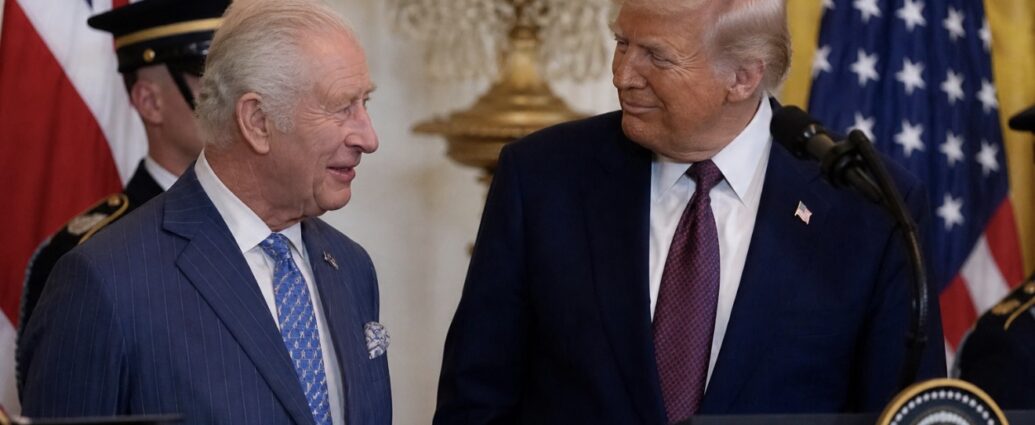
WASHINGTON — King Charles III used his four-day state visit to the United States last week to underscore the enduring “special relationship” between Britain and America while subtly signaling important policy differences on trade, security cooperation and political tone — a delicate diplomatic balancing act that has earned praise from historians and diplomats even as it exposed ongoing trans-Atlantic tensions.
The visit, which ran from April 27 to April 30, 2026, marked the first official state visit by a British monarch to the U.S. since Queen Elizabeth II’s trip in 2007. Hosted by President Donald Trump and First Lady Melania Trump, the trip was timed to coincide with America’s 250th anniversary of independence and included high-profile events in Washington, D.C., New York and Virginia: a White House welcome ceremony, an address to a joint session of Congress, a wreath-laying at Arlington National Cemetery, and a gala in New York promoting cultural and charitable ties.
According to Reuters, the king’s mission was explicitly designed to highlight the deep historic and cultural bonds between the two nations at a time when political and policy rifts have widened. President Trump publicly praised the monarch, calling him “fantastic” and a “great king,” while the visit helped keep diplomatic channels open amid disagreements between the Trump administration and U.K. Prime Minister Keir Starmer’s government.
Kristofer Allerfeldt, a professor of American history at the University of Exeter, told reporters that the monarch “has done us proud.” He noted that the visit could provide short-term benefits in steadying relations but acknowledged that deeper structural tensions — particularly over the recent U.S.-led action against Iran — would be far harder to resolve.
The strains were impossible to ignore. The Trump administration has sharply criticized the U.K. for its cautious stance on military support during the Iran conflict, with the president accusing Prime Minister Starmer of weakness and failing to live up to the legacy of Winston Churchill. Differences also surfaced over trade policy, including disputes involving the U.K.’s digital services tax and broader tariff concerns, as well as NATO burden-sharing, climate priorities, and regulatory alignment.
Despite these frictions, King Charles emphasized unity, cultural bonds and shared democratic values in public remarks, including his address to Congress. The carefully choreographed itinerary allowed the monarch — who operates above partisan politics — to project continuity and goodwill while the elected governments navigated their disagreements.
Historians and diplomats described the trip as a classic example of royal soft power at work: reinforcing long-term institutional ties and public affection between the two peoples even when official government positions diverge. The king’s presence at Arlington National Cemetery and participation in 250th-anniversary commemorations in Virginia underscored the deep military and historical partnership forged over centuries.
For the business and investment community, the visit served as a reminder that the U.S.-U.K. economic relationship remains one of the world’s most robust, with billions in bilateral trade, massive cross-border investment, and close financial-market ties. Yet the underlying policy differences — on tariffs, digital regulation, energy policy and defense spending — continue to create uncertainty for companies operating on both sides of the Atlantic.
As the royal couple departed for Bermuda on April 30, analysts said the visit succeeded in its immediate goal of projecting stability and mutual respect. Whether it translates into lasting progress on the thornier issues of trade and security remains to be seen.
JBizNews will continue to monitor developments in U.S.-U.K. relations as both governments work through their differences.
By JBizNews Staff | May 1, 2026