Benjamin Netanyahu’s attorney, Michael Rabello, has been elected to the position of State Comptroller following the Knesset vote on Wednesday.
The Knesset’s secret-ballot vote to select the country’s next state comptroller ended 61 to 57 after it had broken down into clashes and had to be restarted after concerns were raised that coalition MKs were attempting to document themselves casting their ballots.
The race for state comptroller is between retired Supreme Court Justice Yosef Elron, seen as the opposition’s candidate, and Prime Minister Benjamin Netanyahu’s attorney, Michael Rabello.
Netanyahu’s ruling Likud party reportedly called on its lawmakers to document themselves casting their votes for Rablio, according to an N12 report. This documentation would pressure MKs to vote for Rablio and would also be illegal, as it would compromise the secrecy of the ballot.
There has been criticism of Rablio’s appointment to the role due to his close ties to Netanyahu.
A revote was required after 60 lawmakers favored Elron, while candidate Rabello received the support of 57 lawmakers in the first vote. Since the outcome lacked the majority of 61 MKs, a second vote was required.
However, the revote was halted in the middle after the opposition argued that lawmakers from the coalition were attempting to document their votes to show them
MK Keti Shitrit (Likud) was accused of attempting to film herself casting her ballot, sparking sharp criticism from opposition MKs in the plenum.
She later stated that after the vote was restarted, it was her right to film herself behind the voting booth.
“It’s not that I’m doing election propaganda or anything like that; it is fully my right,” she said.
Knesset Speaker Amir Ohana (Likud) said when the vote was halted that “any instruction from anyone to film inside the ballot box is illegal and not valid,” while noting that it was permitted for the MKs to decide whether or not to film themselves. MKs were still allowed to bring their phones with them into the plenum when the vote was restarted.
Ohana noted that the members of the ballot committee, the coalition whip, the opposition coordinator, the Knesset secretary, and a representative of the Knesset’s legal adviser had convened with him amid the tensions.
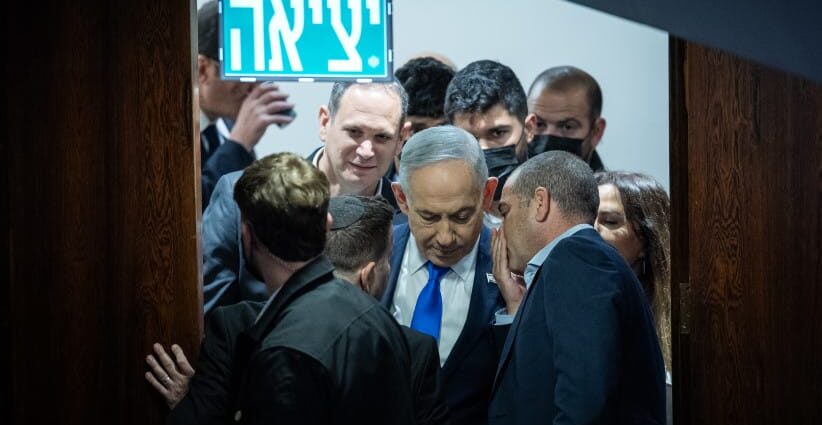
Netanyahu arrived at the Knesset to cast his vote. Some lawmakers from the haredi parties – Shas and United Torah Judaism – have voiced their support for Rabello, despite recent conflict with Netanyahu over the haredi draft bill.
Opposition politicians have sharply criticized Rabello for being set as a state comptroller candidate.
Leader of the Yashar party, Gadi Eisenkot, who is running against Netanyahu in the upcoming elections, called on all MKs not to support Rabello’s appointment.
He warned that it was a corrupt move to appoint the prime minister’s personal attorney as state comptroller.
“Even if he [Rablio] is an honest and upright person and a good lawyer. It would be another stain on Israel’s legislature,” Eisenkot explained.
While plenum votes are usually held openly, a secret ballot has been the standard protocol to minimize direct political pressure on Knesset members, allowing them to vote more independently.
In practice, however, the election process has become known as a political one, amid coaltion pressure and agreements.
The State Comptroller’s Office oversees the country’s public administration, integrity, and service quality. The comptroller has broad access to documents and information, and the authority to publish reports and audit government ministries and other public bodies.
The state comptroller is elected by lawmakers in the Knesset by secret ballot for a single term of seven years. The term of the current state comptroller, Matanyahu Englman, ends officially on July 3.
Under the State Comptroller Law, the candidate who receives the support of a majority of Knesset members in the secret ballot vote will be elected.
If neither candidate receives the support of at least 61 MKs, a second round of voting will be held.
If, in the revote, it is still not possible to obtain a majority of 61 lawmakers, the candidate who received the most votes will be elected as state comptroller, even if the number is below 61.
In the event of a tie, additional rounds of voting and vote counting will be held until a winner is determined.