TIRANA, Albania — Albania’s push to transform its Adriatic coastline into a destination for wealthy international travelers is colliding with a fundamental question for foreign investors: Who actually owns the land?
A planned luxury development backed by Jared Kushner has become the center of an escalating dispute involving villagers claiming ownership of coastal property, an investigation into how some of that land was acquired, environmental concerns and a government determined to accelerate tourism investment.
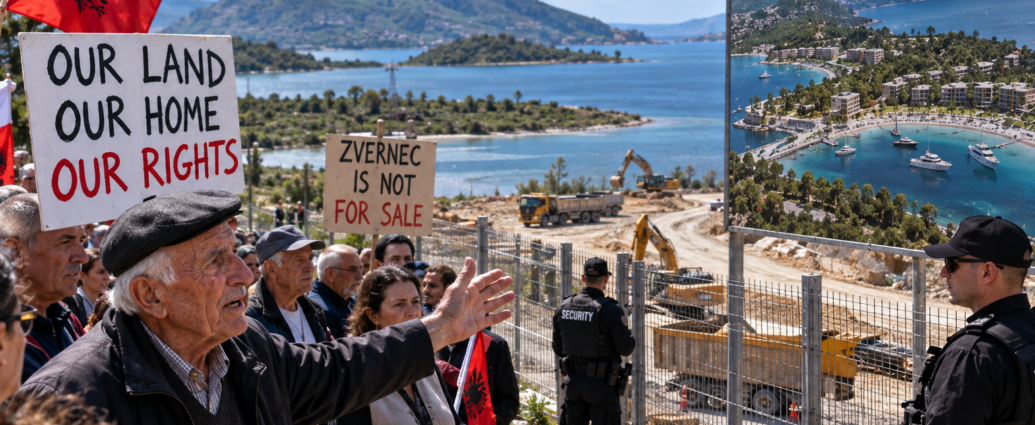
The controversy centers on Zvernec, a small fishing and farming community near the southern port city of Vlora.
Developers envision transforming part of the surrounding coastline into an upscale destination with hotels and other tourism infrastructure.
For Albania, projects like this promise construction jobs, tourism revenue and international investment.
For some Zvernec families, however, the development represents something very different.
They say land their families have claimed for generations is now behind fences — without them being compensated.
A Major Bet on Albania Tourism
Kushner, President Donald Trump’s son-in-law and a former White House senior adviser, has been pursuing luxury tourism investments in Albania since 2024.
Plans have included development around Zvernec as well as nearby Sazan, a former military island off Albania’s coast.
Kushner and his wife, Ivanka Trump, have publicly discussed the tourism potential they see in the country’s largely undeveloped coastline.
The broader business opportunity is substantial.
Albania has emerged as one of Europe’s rapidly developing tourism destinations, attracting travelers with Mediterranean beaches at prices often below those of established destinations such as Italy, Greece and Croatia.
That has created a race to build hotels, resorts, restaurants and supporting infrastructure.
Large international investments could accelerate that transformation.
But Zvernec demonstrates the risks that accompany it.
Villagers Say the Property Is Theirs
Residents challenging the project say portions of the development overlap land belonging to local families.
Some have produced property documents and tax records that they say establish their ownership.
Their dispute is rooted partly in Albania’s complicated history.
During decades of communist rule, private property was confiscated by the state. After communism collapsed in the early 1990s, Albania began returning or compensating former owners.
More than three decades later, some ownership disputes remain unresolved.
That creates a serious business problem when valuable coastal property suddenly attracts international investors.
A parcel can appear ready for development while another family maintains that it holds an older legitimate claim.
Land Deal Under Investigation
The controversy became more serious after Albanian anti-corruption authorities began investigating businessman Artur Shehu, who had been associated with land included in the development area.
Prosecutors have alleged that some property holdings were supported by fraudulent ownership documentation.
Shehu has denied wrongdoing and maintains that his family’s ownership claims are legitimate.
The distinction is critical:
Prosecutors have not accused Kushner or the resort developers of participating in the alleged wrongdoing.
The development company has maintained that its land transactions were conducted lawfully.
That leaves investors caught in a problem familiar in emerging real-estate markets: even when a buyer believes it has purchased property legally, historical ownership disputes can threaten a project years later.
Property Rights Become a Business Issue
That is what makes the dispute significant beyond one Albanian village.
Foreign investors evaluate countries based on more than taxes, wages and potential returns.
They also ask whether contracts will be enforced, whether property titles can be trusted and whether courts can resolve disputes predictably.
A country can offer extraordinary investment opportunities, but unclear land ownership raises the cost of doing business.
Banks can become more cautious about financing projects.
Developers may demand higher returns to compensate for legal risk.
Construction can be delayed.
And international investors can hesitate before committing capital.
For Albania, therefore, resolving the Zvernec dispute transparently could be almost as important economically as the resort itself.
Protected Coastline Adds Another Risk
The project also sits near environmentally sensitive territory.
Zvernec is associated with the Vjosa-Narta lagoon and protected landscape, an important wetland habitat known for bird populations including flamingos.
That creates another balancing act.
Luxury coastal tourism can generate jobs and tax revenue, but excessive construction can damage the natural landscapes that attracted tourists in the first place.
The business challenge is therefore not simply whether Albania should develop.
It is how much development the coastline can absorb without undermining the asset being sold to visitors: its relatively untouched natural beauty.
Government Wants Investment
Prime Minister Edi Rama has strongly promoted Albania as a destination for foreign capital and tourism development.
His government sees international investment as an opportunity to modernize infrastructure, create jobs and move Albania further into Europe’s tourism economy.
Major American investors can also give the country international visibility that traditional advertising campaigns struggle to achieve.
But the Zvernec controversy shows why rapid development needs equally strong legal institutions.
The faster land values rise, the more expensive unresolved ownership disputes become.
Tourism Boom Meets Rule of Law
The project now represents two competing visions of economic development.
One sees underdeveloped coastline capable of attracting billions of dollars in tourism investment, creating jobs and bringing wealth into communities that historically had limited economic opportunities.
The other argues that development cannot come by overriding existing property rights or weakening environmental protections.
Those positions do not necessarily have to be incompatible.
Clear ownership rulings, compensation where legally required, environmental safeguards and transparent permitting could allow investment to proceed while protecting legitimate local interests.
But that requires Albania’s courts and regulators to establish exactly who owns the disputed property.
Bigger Than One Resort
For Kushner and the other investors, the immediate question is whether the legal disputes will delay or alter development.
For villagers, it is whether they will retain property they say belongs to their families.
For Albania, considerably more is at stake.
The country is trying to demonstrate that it can attract sophisticated international capital while providing the property protections and legal certainty expected by those investors.
That reputation can take years to build and only a few controversial transactions to damage.
Luxury hotels can transform a coastline.
But for international investors deciding where to put their next billion dollars, confidence that the land underneath those hotels legally belongs to them may matter even more.
JBizNews Desk | Tirana
© JBizNews.com All Rights Reserved. Reproduction or distribution without written permission is prohibited.