More than a decade after tens of thousands of foreign Islamic State (ISIS) supporters arrived in Syria, some of the last foreigners appear to be leaving, including a group of Australian supporters that has been in the spotlight for months.
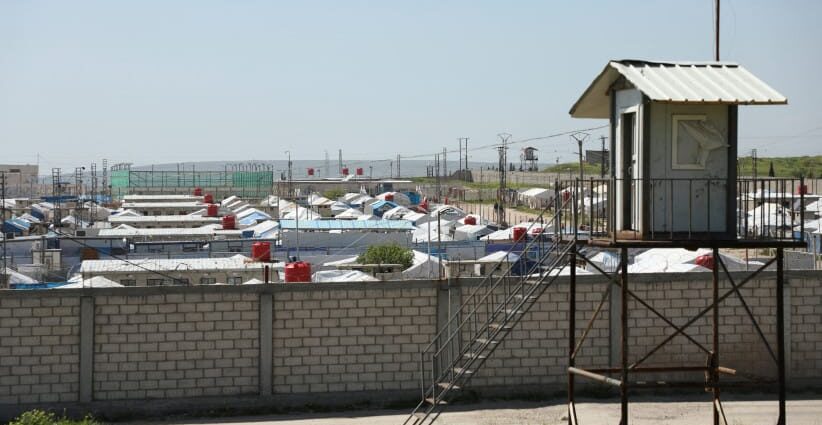
Rudaw Kurdish media reported that seven Australian women and 14 children recently arrived in Damascus from the Roj camp in northeast Syria (Rojava), marking the departure of the last known Australian group from camps housing families linked to ISIS.
ISIS took over part of Syria and Iraq in 2014 and committed a genocide against Yazidis and other groups. Many foreigners flocked to join the group, including many women and men from the West. In some cases, these foreigners raised families in Syria.
When ISIS collapsed in 2019 after years of fighting the US-backed Syrian Democratic Forces, these foreigners ended up in camps. They mostly ended up in Al-Hol and Roj camp, and some 20 detention facilities. Now, as the SDF is integrating with the Syrian security forces, the ISIS families have mostly left eastern Syria.
The Australians have proven a complex case because Australia apparently doesn’t want them back. In February, NPR reported that Australia’s government had banned an Australian citizen with alleged ties to ISIS from returning home from a detention camp in Syria.
NPR also noted that the Australian citizen, a woman, was planning to join another 33 Australians – 10 women and 23 children – in flying to Australia from Damascus. The group tried to leave the Roj camp, only to be sent back by the Australian government.
Australian citizens attempting to return home despite exclusion order
Australian Home Affairs Minister Tony Burke stated that the Australian government had acted on news that the group planned to leave Syria and that the woman, whom he did not identify, had been issued with a temporary exclusion order, and her lawyers had been provided with the paperwork.
Now they are trying to go home again.
“I just don’t know how many of them are going to arrive in Australia,” Jamal Rifi told the Australian Broadcasting Corporation (ABC) on Friday.
“Nobody could stop those kids once they reach adulthood from coming back, because they are Australian citizens and they either come now with their mothers or they come later on their own and then into adulthood, [when it would] be even more difficult for our security and agencies to keep tabs on their behavior, ideology or action,” Rifi noted.
Rudaw reported that the group had been confirmed to have arrived in Damascus, but it was unclear whether they would return to Australia this month.
The report noted that in May, “four women and nine children returned to Australia after spending years in the camp. According to ABC, three of the women were arrested and charged by the Australian Federal Police upon arrival in Melbourne and Sydney.”
Sheikhmous Ahmed, a Kurdish official dealing with the camps, had said they were empty in February.“For this purpose, coordination has taken place with the High Commissioner for Refugees regarding their transfer,” Ahmed said.
As of late February, the Roj camp housed 730 foreign families from around 42 countries, according to Kurdish authorities. The camp also held 15 Iraqi families and 11 Syrian families, with a total population of approximately 2,225 people, Rudaw reported.
Rudaw had previously reported that 11 of the families had tried to go home via Lebanon but had been sent back, despite having been issued Australian passports.
UK arrests ISIS-linked citizens
Australia isn’t the only country to try to keep its citizens away if they have ISIS ties. The UK and others did the same thing.
BBC noted in May that three women were arrested after spending years detained in Syria, reporting that “Australia is not alone in its reluctance to help these women and children: many others, including the UK, have also been wrestling with questions of security, rehabilitation and political responsibility.”
Australia’s prime minister had also spoken about this issue before, stating, “If you make your bed, you have to lie in it.”
However, the issue of the children is more complex. The children are not at fault for their parents’ support of ISIS. In theory, the children should have the right to return to a normal life in their parents’ home country. It remains to be seen how this will play out. What is clear is that now eastern Syria is no longer the dumping ground for ISIS members and their families. They have left the camps and will end up somewhere else. The international community largely ignored them so long as their detention could be outsourced to the SDF.