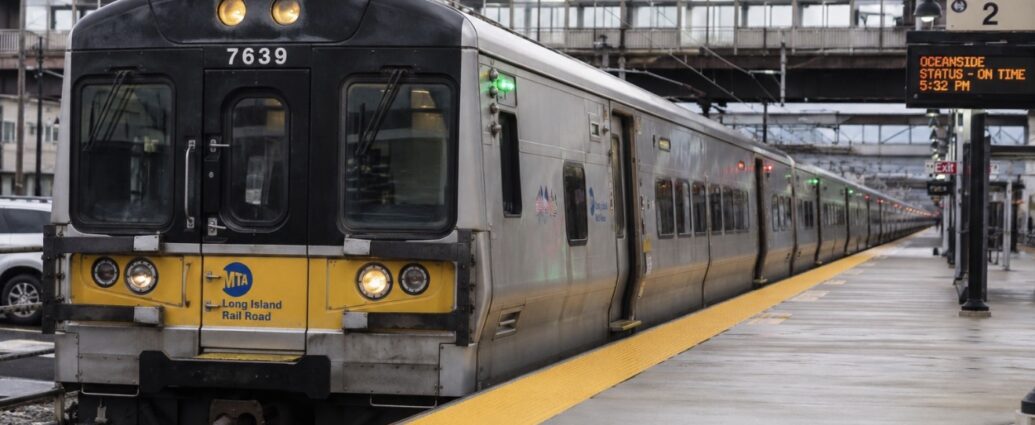
For hundreds of thousands of New Yorkers, the weekend arrived with an unsettling realization: one of the city’s most important transportation lifelines had simply stopped moving.
At 12:01 a.m. Saturday, the Long Island Rail Road officially shut down after five unions representing roughly 3,500 workers walked off the job, triggering the first LIRR strike since 1994 and immediately throwing the region’s commuting system into turmoil.
By sunrise, confusion had already spread across Long Island and New York City.
Penn Station’s normally crowded LIRR concourse sat eerily quiet. Commuters searched phones for alternate routes. Shuttle buses filled quickly. Highways began backing up earlier than normal. Families with weekend travel plans scrambled for options. And with Monday morning approaching, anxiety across the region only intensified.
The strike halts the busiest commuter railroad in North America, which carried roughly 250,000 weekday passengers last year and remains a critical artery connecting Long Island to Manhattan.
“This is not the result we were looking for,” MTA Chair and CEO Janno Lieber said shortly after the shutdown began. “We cannot responsibly make a deal that implodes the MTA’s budget.”
Union leaders blamed management.
“After two days of round-the-clock negotiations, parties were unable to reach a deal,” said Kevin Sexton, national vice president of the Brotherhood of Locomotive Engineers and Trainmen, who accused the MTA of introducing healthcare concessions late in negotiations that unions say were never previously discussed.
The dispute centers largely around wages.
The unions are seeking annual raises of roughly 5%, arguing workers have gone years without meaningful increases while inflation sharply raised living costs across the New York region. The MTA offered approximately 3%, with some proposals potentially reaching 4.5% tied to work-rule changes.
To riders already frustrated by rising fares and service disruptions, the breakdown now leaves the entire region paying the price.
The LIRR generates roughly $636 million annually in fare revenue — approximately $2 million per business day — while ridership has only recently recovered to about 90% of pre-pandemic levels. MTA officials warned earlier this year that fully meeting union demands could force systemwide fare hikes across subways, buses, and Metro-North while also increasing pressure for potential job cuts elsewhere inside the transit system.
But for commuters, the financial debate quickly became secondary to the logistical nightmare unfolding in real time.
The MTA spent Saturday attempting to roll out emergency contingency plans involving shuttle buses from Long Island into Queens and Brooklyn transit hubs. Nassau Inter-County Express buses were redirected toward subway connections. Additional traffic crews and highway support teams were deployed across Long Island.
Even MTA officials acknowledged the replacement network could only absorb a fraction of normal rail traffic.
“We couldn’t possibly accommodate that by buses,” LIRR President Rob Free warned before the strike began.
One test commute from Long Island to Penn Station reportedly stretched to nearly two hours — roughly double a normal trip.
The strike also lands during a packed New York sports and entertainment weekend. Citi Field, hosting the Subway Series between the Mets and Yankees, normally depends heavily on LIRR traffic. Madison Square Garden could soon face additional strain if the Knicks continue their playoff run next week.
Traffic experts already warned Saturday that Monday morning could become one of the worst commuting days the region has faced in years if the strike continues.
“This will mean headaches and more traffic gridlocks in the short term,” said labor historian Jason Russell of SUNY Empire State University, noting that remote work only partially offsets the disruption because large portions of the workforce still commute physically into the city.
The political fallout began almost immediately.
Governor Kathy Hochul blamed what she called premature federal mediation decisions tied to the Trump administration, calling the strike “reckless.” President Donald Trump fired back on Truth Social, directly blaming Hochul for allowing negotiations to collapse and claiming he could “properly” resolve the dispute.
Nassau County Executive Bruce Blakeman, a Republican candidate for governor, accused Hochul of failing Long Island commuters, saying “hundreds of thousands of Long Islanders woke up to chaos.”
Behind the political finger-pointing sits a deeper problem facing not just New York, but public transit systems nationwide.
Transit agencies are struggling to balance rising labor costs, aging infrastructure, post-pandemic ridership shifts, inflation, and mounting financial pressure all at once. Workers argue their wages no longer keep pace with the cost of living in one of the most expensive regions in America. Transit officials argue they cannot absorb significantly higher labor costs without forcing painful fare increases onto already strained riders.
Meanwhile, the people caught in the middle are ordinary commuters.
The office worker in Mineola trying to get to Midtown Monday morning. The nurse commuting from Ronkonkoma. The small-business employee in Hicksville. The family already stretched financially now facing higher gas costs, longer commutes, parking fees, childcare complications, and lost work hours because one of the region’s core transportation systems has ground to a halt.
For now, no additional negotiations have officially been scheduled.
Union picket lines are expected to continue Sunday outside Penn Station and key Long Island stations. The MTA says prorated refunds for monthly pass holders are under consideration.
But unless negotiations resume quickly, the region now faces the possibility of a prolonged transportation crisis with consequences far beyond delayed trains.
Because for New York, the Long Island Rail Road is not simply a commuter system.
It is part of the economic bloodstream of the entire region.
And right now, that bloodstream is frozen.
JBizNews Desk
© JBizNews.com. All rights reserved. This article is original reporting by JBizNews Desk. Unauthorized reproduction or redistribution is strictly prohibited.