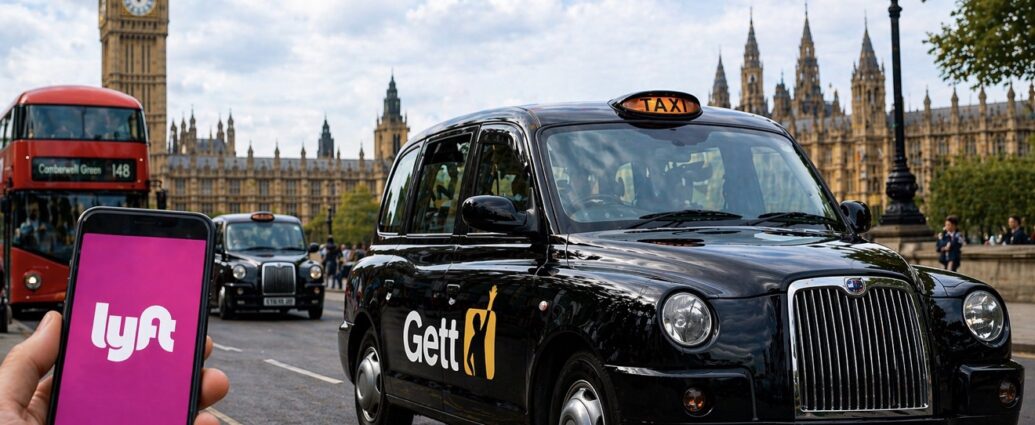
Lyft Inc. is making a decisive push into Europe’s largest ride-hailing market, acquiring the United Kingdom taxi operations of Gett in a deal valued at approximately $50 million — a move that significantly strengthens its position in London and accelerates its international expansion strategy.
The acquisition hands Lyft access to roughly three-quarters of London’s iconic black cab drivers, dramatically expanding its footprint in a market long dominated by Uber Technologies Inc. and local competitors. The deal, which is subject to standard regulatory approvals, is expected to close within the coming weeks, according to people familiar with the transaction.
For Lyft, the move represents a strategic shortcut into a tightly regulated and highly competitive market. By integrating Gett’s established network, the company avoids the years-long process of building driver relationships and navigating London’s complex licensing framework from scratch.
Lyft executives have signaled that the transition for users will be gradual. Existing Gett customers will continue to use the current app in the near term, while Lyft begins integrating operations into its broader European platform. Over time, Gett’s UK business is expected to be folded into Lyft’s Freenow network, which already operates across more than 180 cities in nine European markets.
The combined platform is expected to create one of the most comprehensive urban mobility networks in London, spanning traditional black cabs, ride-hailing vehicles, and micromobility offerings. Lyft already has a foothold in the city through its role powering the Santander Cycles bike-share program, and the company has indicated plans to expand further into next-generation transport.
A key part of that strategy includes autonomous vehicles. Lyft is preparing to launch self-driving ride testing in London later this year in partnership with Chinese technology company Baidu Inc., positioning itself among a small group of global platforms aiming to operate both human-driven and autonomous fleets within the same urban ecosystem.
The competitive implications are significant. With the addition of Gett’s driver base, Lyft will be better positioned to challenge Uber CEO Dara Khosrowshahi’s dominance in London, while also putting pressure on Bolt Technology OU and other regional players. Analysts say the scale of the combined Lyft-Gett-Freenow network could shift pricing power and driver availability in Lyft’s favor.
On the Israeli side, the transaction marks a strategic retreat from international operations for Gett, a company originally founded in Tel Aviv that once pursued aggressive global expansion. The UK business had struggled to achieve consistent profitability, weighed down by high operating costs and intense competition.
The decision to divest aligns with the strategy of Gett’s new ownership group, which acquired the company last year for approximately $188 million. Investors — including Leumi Partners, Mizrahi Tefahot Bank, and Phoenix Financial Ltd. — had reportedly identified the UK unit as a non-core asset even before completing the acquisition.
Following the sale, Gett will refocus exclusively on its Israeli operations, where management sees stronger margins and clearer growth opportunities. The company is expected to expand into adjacent transportation and mobility services within Israel, leveraging its established brand and customer base.
Post-transaction, Gett is projected to retain net assets of roughly $70 million, while significantly reducing its exposure to loss-making international markets. The restructuring effectively transforms the company into a leaner, domestically focused operator — a shift that investors believe will improve profitability and long-term stability.
The deal underscores a broader trend reshaping the global ride-hailing industry: consolidation and strategic retrenchment. As capital becomes more disciplined and profitability takes precedence over rapid expansion, companies are increasingly focusing on core markets while shedding underperforming international assets.
For Lyft, the acquisition signals a renewed willingness to compete aggressively beyond the United States. For Gett, it marks the end of its global ambitions — and the beginning of a more focused, Israel-centered chapter.
JBizNews Desk- London