By JBizNews Desk | May 18, 2026
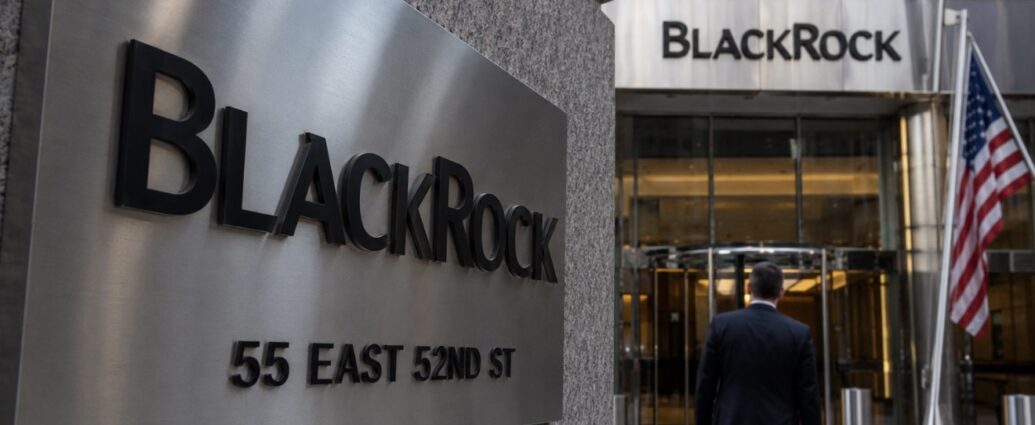
Federal prosecutors at the Manhattan U.S. Attorney’s Office are investigating valuation practices at BlackRock TCP Capital Corp., a publicly traded business development company managed by BlackRock Inc., and have reportedly questioned executives as part of a widening probe into how the fund valued portions of its private-credit portfolio during a sharp collapse in net asset value, according to a Bloomberg News report published Friday citing people familiar with the matter.
The investigation centers on how BlackRock TCP Capital — which trades on Nasdaq under the ticker TCPC — marked the value of its illiquid private loans between late 2024 and early 2026, a period in which the company’s net asset value per share plunged roughly 35% from peak to trough. Bloomberg reported that the federal inquiry has been underway for several months. Both BlackRock and the Manhattan U.S. Attorney’s Office declined to comment.
The scrutiny lands at a sensitive moment for Larry Fink’s BlackRock, which oversees roughly $11.5 trillion in assets and has aggressively expanded into private credit and alternative investments in recent years as traditional asset-management fees compress. The probe also highlights growing concern across Wall Street and Washington over valuation practices inside the rapidly expanding private-credit industry, where funds often rely on internal models rather than transparent market pricing to value loans that rarely trade publicly.
BlackRock TCP Capital, formerly known as TCP Capital Corp. before its 2024 rebranding, operates as a business development company, or BDC — a publicly traded structure designed to lend directly to middle-market private companies while distributing most income back to shareholders. Unlike traditional mutual funds, BDCs hold illiquid loans that are not priced daily in public markets. Instead, managers use quarterly “mark-to-model” valuations that are reviewed internally and approved by boards of directors.
That valuation process is now at the center of both the federal investigation and a growing series of shareholder lawsuits.
The pressure intensified after BlackRock TCP disclosed fourth-quarter and full-year 2024 earnings on Feb. 27, 2025 showing a steep deterioration in portfolio quality. Net asset value per share fell 22.4% year over year to $9.23, while debt investments placed on non-accrual status — meaning borrowers had effectively stopped making scheduled payments — surged from 3.7% of the portfolio to 14.4%. Total realized and unrealized losses ballooned nearly 186% to approximately $194.9 million.
Investors reacted immediately. Shares fell nearly 10% that day, closing at $8.44. At the time, BlackRock TCP maintained that “the vast majority” of its portfolio continued performing as expected.
A second and more damaging disclosure arrived Jan. 23, 2026. In an after-hours SEC filing, the company revealed estimated net asset value per share had fallen further to between $7.05 and $7.09 as of Dec. 31, 2025 — a 19% sequential decline from the prior quarter and more than 23% below year-earlier levels. Management attributed the drop primarily to “issuer-specific developments.”
The market response was brutal. Shares plunged another 13% the next trading day, closing near $5.10.
The disclosures triggered multiple class-action lawsuits led by firms including Kaplan Fox & Kilsheimer, Rosen Law Firm and Federman & Sherwood, alleging BlackRock TCP and certain executives misled investors about portfolio valuations, restructuring efforts and credit deterioration between November 2024 and January 2026.
The lawsuits include details that may explain why federal prosecutors became interested. Plaintiffs allege that roughly 91% of the company’s losses came from investments originated during the low-interest-rate lending boom of 2021 or earlier, while six individual portfolio companies allegedly accounted for nearly two-thirds of the total decline in net asset value.
That type of concentrated loss profile often draws attention from regulators and prosecutors evaluating whether loan marks were delayed, stale or selectively adjusted — particularly in private-credit vehicles where managers retain substantial discretion over quarterly valuations.
The case also expands legal pressure on BlackRock’s broader alternatives platform following its aggressive push into private lending and private markets.
Separately, the U.S. Department of Justice opened a criminal investigation late last year tied to approximately $430 million in loans originated by HPS Investment Partners, the private-credit firm BlackRock acquired in 2024 for roughly $12 billion. According to court filings, the loans were allegedly backed by fraudulent receivables tied to telecom borrowers. The borrower at the center of the case, identified as Bankim Brahmbhatt, reportedly left the United States, while investigators found his New York office locked and vacant.
BlackRock’s flagship HPS Corporate Lending Fund, known as HLEND, also restricted investor withdrawals earlier this year after redemption requests exceeded internal liquidity thresholds, further rattling confidence across portions of the private-credit market.
The broader industry stakes are substantial. Private credit has exploded into a roughly $1.7 trillion global asset class as banks pulled back from certain forms of middle-market lending following post-2008 regulatory reforms. Asset managers including Apollo Global Management, Blackstone, KKR, Ares Management and Blue Owl Capital have all rapidly expanded private-credit businesses, marketing the strategy as a higher-yield alternative to traditional fixed income.
But critics increasingly warn that the industry has not yet faced a true prolonged credit downturn under modern scale conditions.
Wells Fargo banking analyst Mike Mayo wrote in a March note that “private credit’s biggest test is not the next default — it’s the next markdown cycle,” highlighting growing concerns about whether asset values across the sector accurately reflect deteriorating borrower conditions in a higher-rate environment.
BlackRock TCP shares closed Friday at $5.83, down roughly 60% from their February 2025 highs. Shares of parent company BlackRock Inc. finished little changed near $1,047, maintaining a year-to-date gain of roughly 9%.
For BlackRock and the broader private-credit industry, the Manhattan investigation represents something larger than one troubled fund. It signals that regulators and prosecutors are beginning to focus less on whether private credit can grow — and more on how transparently the industry values risk when markets turn against it.
— JBizNews Desk
© JBizNews.com. All rights reserved. This article is original reporting by JBizNews Desk. Unauthorized reproduction or redistribution is strictly prohibited.