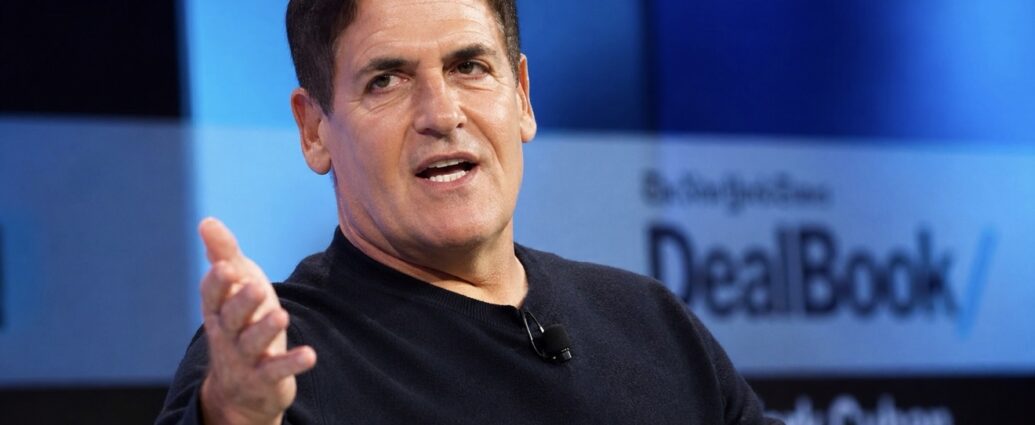
Mark Cuban is intensifying his campaign against the structure of the American healthcare system, arguing that the industry’s profit model is fundamentally misaligned with patient care while advancing a consumer-focused alternative designed to bypass traditional insurers. The billionaire entrepreneur and Cost Plus Drug Company co-founder used a series of public statements and conference remarks to frame the debate not as incremental reform, but as a structural overhaul of how healthcare is financed and delivered in the United States.
In recent posts on X, Mark Cuban sharply criticized major health insurers, arguing they operate less as risk managers and more as financial entities extracting value from system complexity. “Most insurers aren’t insurers,” Cuban wrote, describing large carriers as holding companies that exploit regulatory gaps and contractual inefficiencies across federal, state, and employer-sponsored systems. His comments came in response to healthcare policy expert Larry Levitt of the Kaiser Family Foundation, who questioned what value consumers receive relative to insurer overhead and sustained profitability.
Cuban expanded on these concerns during remarks at the Punchbowl News Conference in Washington, D.C., where he pointed to consolidation across the healthcare ecosystem as a central driver of rising costs. He argued that large insurers’ ownership stakes in pharmacy benefit managers and affiliated services allow them to exert outsized influence over pricing and access. According to Cuban, this structure contributes to high deductibles that leave patients effectively underinsured, forcing hospitals into the role of lenders when individuals cannot meet out-of-pocket obligations.
The critique is paired with a quantitative claim: Cuban has estimated that eliminating insurer-driven administrative complexity and fraud could reduce healthcare costs by 20% to 30%. While that figure remains debated among policy analysts, it underscores his broader argument that inefficiency—not just pricing—is a core driver of U.S. healthcare spending.
To translate that thesis into a practical model, Cuban has outlined a consumer-directed framework informally dubbed “The 10 Plan.” The proposal centers on monthly contributions capped at roughly 10% of household income, designed to mirror the cost of a mid-tier Affordable Care Act plan. Using an example of approximately $2,100 per month for a family of five, Cuban proposes allocating around $300 toward stop-loss insurance with a $30,000 cap, and approximately $200 toward a direct primary care arrangement with a local provider.
The remaining funds—roughly $1,600 in his example—would be directed into a restricted-use medical account, similar to a health savings account but with broader application. Under the model, unused funds would accumulate and earn interest over time, remaining under the control of the account holder until retirement age. For expenses exceeding available balances but falling below catastrophic thresholds, the system would offer a lending mechanism, with future contributions used to repay the borrowed amount.
Cuban’s proposal builds on the transparency-first approach he introduced with the Mark Cuban Cost Plus Drug Company, launched in 2022. That platform bypasses traditional insurance channels, selling medications at cost plus a fixed 15% markup and clearly disclosed fees for pharmacy operations and shipping. By publicly listing drug prices, the company has sought to challenge longstanding opacity in pharmaceutical pricing.
That same transparency principle now extends into his broader healthcare strategy. Through Cost Plus Wellness, Cuban is working to connect self-insured employers directly with healthcare providers via pre-negotiated, publicly available contracts. The platform currently includes dozens of agreements covering thousands of providers and facilities, including participation from Baylor Scott & White Health, one of the largest nonprofit health systems in Texas. Cuban argues that such direct contracting reduces administrative layers while giving employers and patients clearer visibility into pricing.
The timing of Cuban’s renewed push coincides with rising employer healthcare costs, which are projected to increase by more than 9% this year to roughly $17,000 per employee, according to consulting firm Aon. Analysts have pointed to factors such as the rapid adoption of high-cost therapies, including GLP-1 weight-loss drugs, as key contributors to the upward pressure. Against this backdrop, Cuban has called on major insurers to divest non-core assets, arguing that vertical integration has made the market “completely inefficient.”
Cuban has also signaled openness to collaboration with government-led initiatives. He recently commented on the TrumpRx direct-to-consumer drug platform, giving it an “A-” rating as its formulary expanded to include dozens of medications, including fertility treatments and GLP-1 drugs. In remarks to Healthcare Brew, Cuban said, “anything that saves patients money is a good thing,” noting that Cost Plus is working to support broader distribution efforts.
At the center of Cuban’s argument is what he describes as “profit engineering” within the healthcare system—layers of billing practices, coding strategies, and administrative processes that collectively inflate costs. “Healthcare is a simple business that has been made complicated,” he wrote, summarizing his view that systemic complexity, rather than medical necessity, often drives pricing outcomes.
Whether Cuban’s consumer-directed model gains traction will depend on regulatory feasibility, employer adoption, and patient behavior in a system historically anchored in insurance-based risk pooling. Still, his continued push—from pharmaceuticals to primary care financing—signals a sustained effort to reframe healthcare economics around transparency and individual control, challenging one of the largest and most entrenched sectors of the U.S. economy.
JBizNews Desk