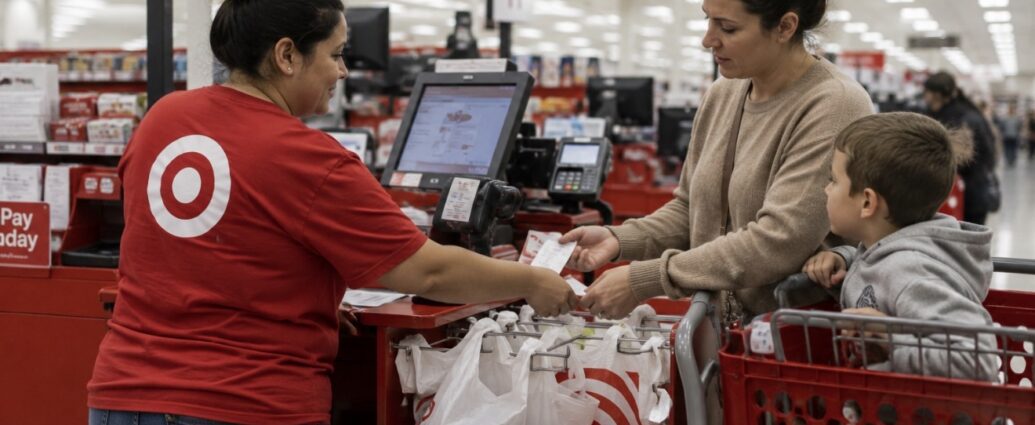
WASHINGTON — One of the clearest reads on how American families are handling rising prices arrives this week. On Wednesday, June 17, the U.S. Census Bureau will release its report on retail sales for May — a monthly tally of what Americans spent at stores, restaurants, gas stations and online. After a long stretch of stubborn inflation and a war that pushed up energy costs, the report will show whether shoppers kept opening their wallets or finally began pulling back.
The recent trend has been resilient. The Census Bureau said retail sales rose 1.7% in March and 0.5% in April, leaving sales up roughly 5.2% from a year earlier. Despite economic strain, American consumers have continued spending at a pace that has surprised many economists.
Retail sales remain one of the most important indicators in the U.S. economy because consumer spending accounts for roughly two-thirds of economic activity. When consumers spend, businesses hire, factories produce and economic growth continues. When consumers pull back, the effects ripple quickly across the economy.
Industry forecasters remain cautiously optimistic. The National Retail Federation expects retail sales growth of 4.4% this year. NRF President and CEO Matthew Shay said he expects “consumer resilience to continue into 2026.” At the same time, the organization’s chief economist, Mark Mathews, warned that renewed Middle East tensions and volatility in global markets continue to create uncertainty.
The backdrop for May was challenging. Consumer prices rose 4.2% year-over-year, the fastest pace since 2023, with much of the increase tied to higher energy costs during the Iran conflict. Gasoline prices climbed to multiyear highs, squeezing household budgets even as the labor market remained healthy and the economy added 172,000 jobs in May.
Economists will be watching where spending occurred. Analysts often strip out gasoline, automobiles and building materials to get a cleaner view of underlying consumer demand. Restaurants and bars will receive special attention because discretionary dining is often among the first categories to weaken when consumers feel financial pressure.
The timing of the report is particularly notable because it arrives in the middle of the Federal Reserve’s policy meeting, the first chaired by Kevin Warsh. While the Fed is widely expected to keep interest rates unchanged, policymakers are watching consumer spending closely as they determine how long borrowing costs need to remain elevated.
Strong retail sales would reinforce the argument that consumers remain healthy and support keeping rates higher for longer. Weak retail sales could strengthen the case for future rate cuts.
There is also a potentially positive development heading into summer. The weekend agreement to end the war in Iran sent oil prices sharply lower on Monday. If those declines hold, households could see lower gasoline prices in the weeks ahead, providing some relief. That benefit would come too late to affect May spending but could improve conditions for June and the second half of the year.
For businesses, the report is more than just a data point. Retailers use it to gauge consumer confidence and determine staffing levels. The industry recently pushed employment to a two-year high, and many companies are using consumer spending trends to guide decisions on hiring, inventory purchases and expansion plans.
For now, Wednesday’s report will provide a snapshot of an American consumer balancing steady employment against higher living costs. Whether households continued spending through May — or finally began showing signs of fatigue — may offer one of the clearest clues yet about where the economy is headed for the remainder of 2026.
JBizNews Desk
© JBizNews.com All Rights Reserved. Reproduction or distribution without written permission is prohibited.