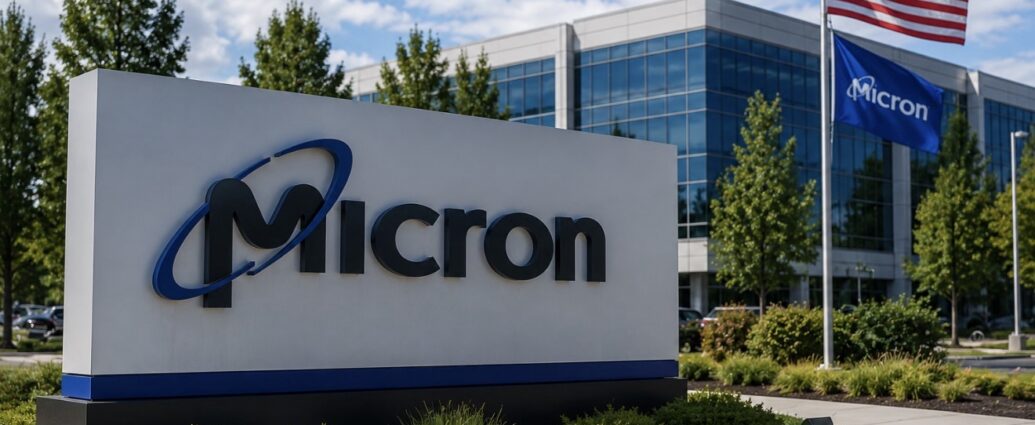
When Micron Technology reported its fiscal third-quarter results on Wednesday after the closing bell, Chief Executive Sanjay Mehrotra delivered a message that has become familiar this year: there are not enough memory chips to go around, and there will not be for a long time. The only American-based maker of memory said demand for the chips that feed artificial-intelligence data centers is running so far ahead of supply that the squeeze will now stretch well beyond 2027, later than the company itself had predicted just months earlier.
The numbers behind that claim were staggering. Micron posted revenue of $41.46 billion for the quarter, far above the roughly $35.6 billion Wall Street had penciled in, and adjusted earnings came in at $25.11 a share, beating estimates by more than 22 percent. Gross margin reached 84.9 percent, a company record, and management guided to a record $50 billion in revenue for the current quarter. Shares of Micron jumped roughly 15 percent after the report.
For now, the story is one of extraordinary pricing power. Micron, along with South Korea’s Samsung and SK Hynix, controls more than 90 percent of the world’s DRAM memory, and all three are pouring their best factory capacity into high-bandwidth memory, or HBM, the specialized chips stacked next to AI processors. Micron’s HBM is sold out through 2027, with demand extending into 2028. The company has signed long-term agreements with major customers worth tens of billions of dollars in committed deposits.
But underneath the record results sits a longer-term question that Micron’s own customers are starting to answer: what happens when buyers decide they would rather not depend on three suppliers who can charge whatever the shortage allows?
That is where the real threat to the memory boom lies. Across the industry, the companies that buy the most memory are quietly engineering ways to need less of it. Advanced Micro Devices recently acquired a startup called MEXT, whose technology lets cheaper NAND flash memory behave more like the scarce, expensive DRAM that Micron sells. Nvidia, the largest buyer of HBM in the world, paid about $20 billion for chip designer Groq, whose approach is built around keeping data on the processor itself and leaning less on outside memory. Smaller firms such as Hailo have designed AI chips that remove the need for DRAM altogether, cutting as much as $100 from the cost of each device.
Software is moving in the same direction. AI researchers are finding ways to compress the data their models hold in memory, shrinking the footprint of large language models without hurting performance. Published work this year has shown memory savings of roughly 25 percent on model weights and nearly 47 percent on the cache that chatbots use to track a conversation. New system designs that pool memory across machines, and emerging memory types still in the lab, all point toward the same goal of squeezing more work out of fewer chips.
None of this threatens Micron‘s next few quarters. The shortage is real, the factories take years to build, and the demand from companies like Microsoft, Amazon, Alphabet and Meta, which have all raised their capital spending plans, shows no sign of slowing. New supply from Micron’s plant in Idaho will not arrive in volume until 2028, and its massive new factory in Clay, New York, is further out still.
The danger is what these workarounds mean once that new capacity finally comes online. Memory has always been a boom-and-bust business. Prices soar when chips are scarce, factories race to expand, and prices crash when the new supply lands all at once. Mehrotra has spent this year arguing that the current shortage is different, a structural shift driven by AI rather than the usual cycle. He may be right for a while. But every dollar that customers like Nvidia and AMD spend learning to live with less memory is a dollar aimed at breaking exactly the pricing power that is making Micron so profitable today.
For ordinary buyers, the effects are already visible. The same factory capacity being funneled into AI memory used to make the chips inside phones, laptops and game consoles, and those products have grown more expensive as a result. Industry estimates put the rise in DRAM cost for a typical smartphone at 15 to 20 percent since the middle of last year.
Micron‘s quarter was, by almost any measure, the best in its history. The harder question for investors is whether the boom contains the seeds of its own slowdown, written not by a competitor’s new factory but by customers who would rather not be at the mercy of one.
JBizNews Desk
© JBizNews.com All Rights Reserved. Reproduction or distribution without written permission is prohibited.