April 26, 2026
New York — The ongoing conflict in the Middle East has triggered a sharp and sustained surge in global air freight rates, with spot prices on key international routes jumping as much as 95% since late February due to skyrocketing jet fuel costs, reduced flight capacity, and major disruptions to Gulf air hubs.
“Airfreight rates have continued to rise in recent weeks despite some capacity recovery, driven primarily by higher fuel costs and rerouting around conflict zones,” noted analysts at WorldACD in their latest weekly report.
International air freight spot rates exploded in March, according to data from Drewry and Freightos. Routes from Shanghai to Dubai soared 95% to approximately $8.60 per kilogram, while South Asia to Europe lanes increased by up to 82%. Even as some Gulf carriers have partially resumed operations, rates remain significantly elevated above pre-conflict levels, with global averages up more than 37% year-over-year as of mid-April 2026.
“The Iran war has slashed available capacity and driven jet fuel prices sharply higher, pushing many shippers toward premium pricing for time-sensitive cargo,” said senior logistics analysts tracking daily market movements.
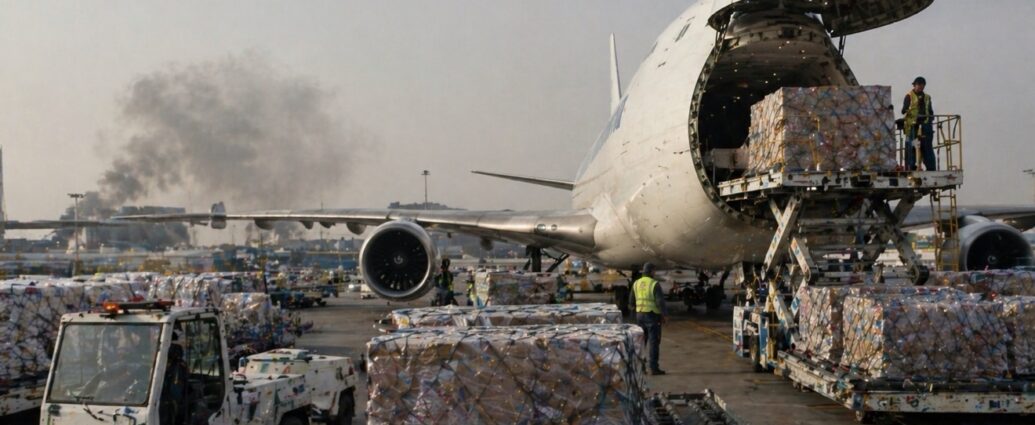
Major Gulf carriers including Emirates, Qatar Airways, and Etihad have been operating at reduced schedules, forcing shippers to reroute cargo through alternative hubs and creating widespread bottlenecks. Jet fuel prices have nearly doubled in key regions since the conflict escalated, leading carriers to impose substantial fuel surcharges on shipments. This has hit hardest sectors that rely heavily on air freight, such as pharmaceuticals from India, high-tech electronics, fashion, perishables, and time-sensitive e-commerce goods.
“Rates from key Asian origins to Europe and North America remain under pressure, with some lanes still showing double-digit increases week-over-week,” reported Freightos analysts in their early April market updates.
Broader Supply Chain and Economic Impact
The disruption is rippling through global supply chains far beyond the Middle East. Airlines have cut both passenger and cargo flights due to fuel availability concerns, higher insurance premiums, and safety considerations. Shippers in Asia and Europe are reporting longer lead times, higher costs, and increased difficulty securing space on flights for urgent shipments.
“Despite some weakness in overall demand, air freight rates have held strong or continued climbing because of persistent supply-side constraints caused by the war,” warned economists at major logistics research firms.
As of April 26, rates have stabilized at these elevated levels rather than continuing their steepest monthly climbs. However, analysts caution that any prolongation of the Middle East conflict or renewed disruptions in the Strait of Hormuz could push air freight prices toward levels last seen during the height of the COVID-19 pandemic.
“Businesses should prepare for continued volatility in air freight pricing through at least the second quarter of 2026,” advised market participants closely monitoring the latest freight indices.
The steep rise in air cargo costs is adding significant pressure across multiple industries. Technology companies shipping high-value components, pharmaceutical firms moving temperature-sensitive drugs, and retailers relying on just-in-time inventory are all facing higher logistics expenses that could eventually flow through to consumer prices.
Some shippers are shifting to multimodal solutions — combining sea and air legs — or booking capacity further in advance to mitigate costs. Others are absorbing the increases for now, hoping for a swift resolution to the conflict that would ease fuel prices and restore capacity on critical Gulf routes.
The situation highlights the fragility of global air cargo networks to geopolitical shocks. Air freight remains essential for high-value, time-sensitive supply chains in technology, healthcare, and e-commerce. The sustained price surge is contributing to broader inflation concerns in logistics-dependent sectors and forcing companies to reassess their sourcing and inventory strategies.
“The Iran conflict has reminded everyone how interconnected and vulnerable global logistics networks truly are,” said one senior supply chain executive at a major multinational firm.
Looking ahead, the duration of the Middle East tensions will be the key variable. A rapid de-escalation could bring relief to jet fuel prices and restore capacity, while a prolonged conflict would likely keep air freight rates elevated well into the second half of the year.
For now, the industry is operating in a high-cost environment with limited flexibility, underscoring the strategic importance of diversified routing options and stronger contingency planning for global shippers.
JbizNews Desk New York