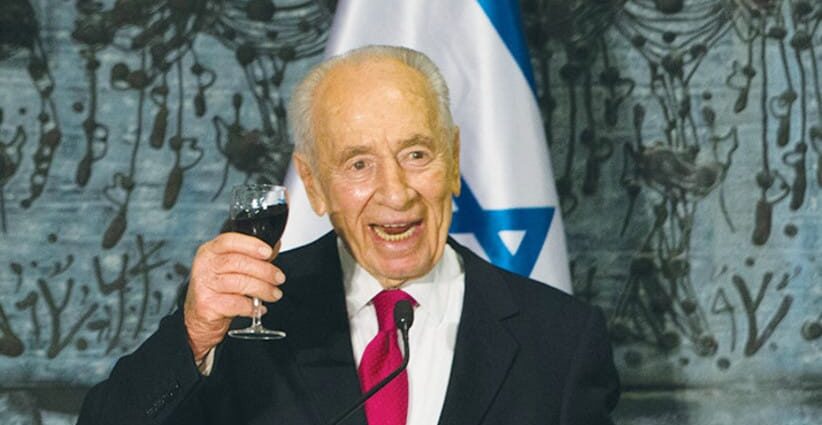
Shimon Peres, the world-renowned statesman who had served in multiple governments for an aggregate 24 years, was dethroned by a political novice nearly three decades his junior, the woefully inexperienced Benjamin Netanyahu, who had not been a minister for one day.
The electoral upset was explained by circumstances – a wave of terror attacks that followed, and mocked Peres’s peace promises. No one understood that a new era in the history of the Jewish state had just begun: the Bibi era, an epoch that has his name written all over it, and our future teetering under its weight.
What was this era about, what were its benefits, what were its costs, and what should follow its steadily approaching end?
Netanyahu’s finest hour came not during his aggregate 18 years as prime minister, but in between them, as Ariel Sharon’s finance minister.
With his first premiership having ended in a ringing defeat, Netanyahu set out to prove he could not only talk, but also do. What he thus did – massive cuts in social spending, sharp tax cuts, a set of privatizations, and a package of financial reforms – helped lead the Israeli economy to international stardom. It also showed that Netanyahu, unlike most politicians, had convictions.
Then again, that achievement was not the Bibi era’s main feature. His economic reforms accelerated, but did not launch, Israel’s journey from socialism to capitalism. That transition had been triggered by the 1985 Stabilization Plan. In fact, reforms mostly starred in Netanyahu’s rhetoric, but not in his deeds.
As prime minister, he delivered some infrastructure development – most notably the Jerusalem-Tel Aviv fast train – but when it came to complex structural problems, he avoided ambitious action. Yes, his open-skies policy cut flight prices, but more urgent issues, like the quality of the school system, the shortage of hospitals and doctors, the political system’s deformities, and the crime crisis in the Arab sector, were accepted fatalistically as fixtures of Israeli life.
As this column claimed already 15 years ago, by the time he returned to the premiership, Netanyahu had “lost his own reformist drive” (“Bibi the third’s failed premiership,” July 1, 2011).
Passivity is not what characterized the Bibi era
Netanyahu’s one attempt to reinvent a domestic sphere, the judiciary, was not about civic reformism, but about political conquest.
Even so, strategic passivity is not what characterized the Bibi era.
Diplomatically, Netanyahu delivered the Abraham Accords. Yes, here too, he did not create the breakthrough. Israel’s presence in the Gulf was engineered by Yitzhak Rabin and Shimon Peres, but Netanyahu did make the process mature. Though that wasn’t passivity.
The same goes for the Palestinian front. Yes, Netanyahu froze diplomatic traffic with the Palestinian Authority, but at the same time, he cultivated Hamas. Though disastrous, that too wasn’t passivity.
It follows that what characterized the Bibi era was not any one policy, but something else – an attitude, a mindset, a psyche, a way of thinking, a manner of speaking, and a mode of action that he inspired and embodied, all of which broke with all his predecessors’ legacies, and set his era apart from Israel’s previous years.
The Netanyahu attitude was apparent from the day he entered the political fray in 1988. His speeches were unique not only for his mastery of the art of the sound bite – a term Israel had previously hardly known – but for his appearance. Netanyahu would carry freshly laundered and ironed shirts in his car so he could replace them between meetings, speeches, and interviews.
A political era of hollow elegance, thick makeup, and unabashed fakeness was thus launched; decades in which words would become more important than deeds, slogans would eclipse ideas, bravado would elbow planning, and sound bites would replace debate.
Beyond that loomed Netanyahu’s quest to promote not a party, an idea, or a plan, but himself. The one bill for which the new lawmaker fought tooth and nail was the direct election of the prime minister, legislation that he backed despite his party’s opposition, and the revulsion of its humble leader, Yitzhak Shamir.
Netanyahu’s aim, as subsequent years proved, was not to change the system. Such reformism would have entailed direct elections of all lawmakers, an idea he never promoted. Instead, the idea was to become prime minister, a stratagem that worked all too well, because without the direct-election law, Netanyahu would not have defeated Peres.
Netanyahu’s new rhetoric
This self-absorption was also apparent in Netanyahu’s rhetoric. Previous Israeli leaders spoke mostly in the plural. “We built a nuclear reactor,” said, for instance, David Ben-Gurion in his dramatic 1960 announcement. That was the style of all pre-Netanyahu prime ministers, from Golda Meir and Yitzhak Rabin to Menachem Begin and Yitzhak Shamir.
Not Netanyahu. He spoke in the first person. “I ordered,” and “I instructed,” and “I resolved,” and “I warned.” And it’s not just rhetorical. It’s the way the era’s political hegemony was run, a one-man party that never bothered asking its king to debate any of his extravagant initiatives, from financing Hamas to disempowering the courts.
The man whose era began before the rise of Vladimir Putin, Xi Jinping, and Mahmoud Abbas, has said “I” so many times that he ended up thinking he is infallible and unimpeachable, so much so that he could wage war on the courts, the prosecution, and the press, and – by torpedoing an inquiry of the worst catastrophe in Israeli history – on truth itself.
Will Netanyahu’s steadily approaching successor change any of this? Only time will tell. But if the next political era is to be better than the Netanyahu years, it should be shaped by people who will do less sound-biting and more listening; team players who will consult rather than impose; modest citizens who will assume responsibility rather than shirk it; idealists who rather than parrot, worship, and embody the lie – will humbly serve, speak, and bow before the truth.
www.MiddleIsrael.net
In memory of my late brother Yaki’s grandson, Capt. Maoz Yisrael Recanati, who fell in Lebanon two weeks ago.