By JBizNews Desk
May 11, 2026
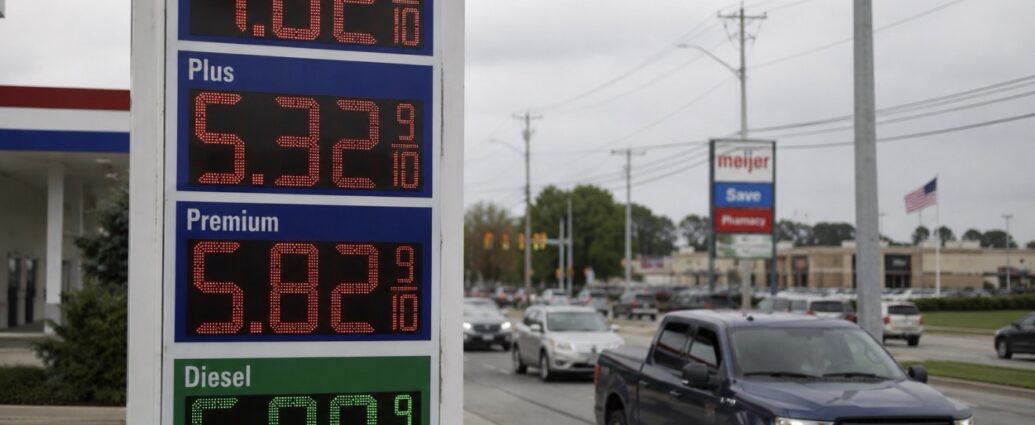
Gasoline prices across the American Midwest are surging at a pace far outstripping the national average, creating a growing economic and political problem for the Trump administration just months before critical midterm elections in some of the country’s most contested battleground states.
New data released this week by GasBuddy and the American Automobile Association showed that all five states recording the sharpest weekly gasoline-price increases nationwide are located in the Midwest — including several states expected to play decisive roles in determining Senate, gubernatorial, and congressional control in November.
Indiana recorded the largest increase in the country, with average gasoline prices jumping 83.2 cents per gallon in a single week to approximately $4.82 per gallon, according to GasBuddy data.
Ohio followed closely behind with a 78.1-cent increase, while Michigan, Illinois, and Wisconsin rounded out the top five.
According to reporting published Sunday by Bloomberg, gasoline prices in Ohio have surged roughly 72% since disruptions in the Strait of Hormuz began earlier this year — approximately double the increase recorded in California over the same period.
Nationally, the average gasoline price stood at approximately $4.52 per gallon as of Sunday, according to AAA, marking an increase of more than $1.30 compared with a year earlier and reaching the highest national level since mid-2022.
Diesel prices have climbed even faster across parts of the region.
Some stations in Illinois, Michigan, and Wisconsin briefly crossed the $6-per-gallon threshold this week as refinery disruptions compounded the broader global oil shock.
“Gasoline prices rose in every state over the last week, with some of the most significant and fastest increases concentrated in the Great Lakes, where states like Michigan, Indiana, Ohio, and Illinois saw sharp spikes, while Wisconsin experienced more modest gains,” said Patrick De Haan, head of petroleum analysis at GasBuddy.
“At the same time, diesel prices surged to new records in parts of the region, with some areas touching the $6-per-gallon mark,” De Haan added.
The Midwest’s outsized price spike is being driven by a combination of global and regional factors converging simultaneously.
The primary pressure remains the ongoing disruption in the Strait of Hormuz, where Iran’s effective closure of the critical shipping corridor has sharply reduced global oil flows and pushed crude prices higher worldwide.
Roughly 20% of the world’s seaborne oil supply normally moves through the strait.
That disruption has forced the United States and other consuming nations to draw down petroleum inventories at an accelerated pace while refiners compete for tighter global supply.
The Midwest, however, is also dealing with a second problem layered on top of the global energy shock.
A temporary outage at a major refinery in northwest Indiana significantly tightened regional fuel supply precisely as crude prices were already surging.
The result has been a particularly severe spike in Midwest pump prices relative to other regions of the country.
De Haan said earlier this week that refinery conditions were beginning to stabilize, potentially allowing prices across Indiana, Illinois, Ohio, Minnesota, and Wisconsin to decline by approximately 20 to 40 cents per gallon in coming days.
Even if that relief materializes, however, prices would still remain dramatically elevated compared with pre-conflict levels.
The economic consequences are increasingly feeding into national politics.
Recent polling suggests rising fuel prices are beginning to erode confidence in Trump’s handling of the economy even among traditionally supportive voters.
An AP-NORC poll released earlier this month showed Trump’s economic approval rating declining between March and April as gasoline and energy costs accelerated higher following the Iran conflict.
Approval among Republicans reportedly fell from approximately 74% to 62% during that period, while independents — particularly important in Midwest swing states — remained substantially negative on the economy.
Bloomberg cited Blake Karras-Johnson, a Dayton, Ohio real estate agent, who said the cost of filling her GMC Terrain had risen to roughly $80 from about $50 before the conflict escalated.
“Everybody’s complaining about it,” she said.
The political implications are especially significant because many of the states experiencing the sharpest fuel-price increases are also among the most competitive on the 2026 electoral map.
Democrats are aggressively targeting a Senate seat in Ohio, where former Democratic Senator Sherrod Brown has made gasoline and diesel prices central themes of his campaign against Republican incumbent Jon Husted.
“All across Ohio, I’m hearing from families and farmers who are struggling as they pay record prices for gas and diesel,” Brown said in recent remarks.
Michigan, another state Trump narrowly flipped in 2024, simultaneously hosts a competitive Senate race, gubernatorial contest, and legislative battles — magnifying the political sensitivity surrounding energy prices there.
The Trump administration has already taken several steps aimed at limiting further price increases.
Officials authorized releases from the Strategic Petroleum Reserve, temporarily eased certain Jones Act shipping restrictions to allow more foreign tankers into U.S. waters, and resisted calls from some congressional Republicans to impose fuel-export bans.
Treasury Secretary Scott Bessent said recently that the administration remains “optimistic” gasoline prices could move back toward the $3-per-gallon range later this summer if the Iran conflict stabilizes and shipping through the Strait of Hormuz resumes normally.
Wall Street analysts remain cautious.
Both Goldman Sachs and Morgan Stanley raised second-quarter gasoline price forecasts this week, warning that Midwest fuel inventories could fall toward multi-year lows by July if supply disruptions persist.
For now, the pressure continues building.
Every additional increase appearing on gas-station signs across Ohio, Indiana, Michigan, Illinois, and Wisconsin carries implications extending far beyond household budgets alone.
It is increasingly shaping the political environment in exactly the states Republicans can least afford to lose.
— JBizNews Desk
© JBizNews.com. All rights reserved. This article is original reporting by JBizNews Desk. Unauthorized reproduction or redistribution is strictly prohibited.