Indian Prime Minister Narendra Modi wrapped a three-nation tour on July 12, returning to New Delhi after sealing a string of energy, defense and critical-minerals agreements across Indonesia, Australia and New Zealand, according to joint statements and remarks from Modi and the host leaders. The trip, which ran July 6 to 12, was designed to deepen India’s economic and strategic ties across the Indo-Pacific and to diversify supply chains away from a heavy reliance on China.
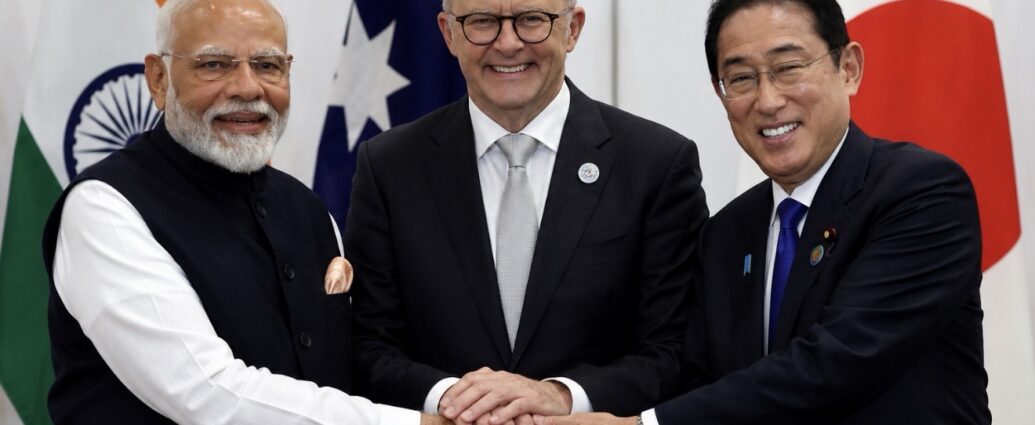
The centerpiece came in Melbourne on July 9, where Modi and Australian Prime Minister Anthony Albanese finalized a deal allowing Australian uranium exports to India for its civilian nuclear program, concluded under the 2015 bilateral nuclear cooperation agreement. Australia holds roughly 28 percent of the world’s uranium reserves, and the supply supports India’s target of 100 gigawatts of nuclear power capacity by 2047. For Australia, the arrangement opens a long-term market while reducing dependence on China, its largest trading partner.
The two governments went well beyond uranium. They launched an India-Australia Critical Minerals Corridor to build resilient supply chains for the metals underpinning clean energy and manufacturing, and an India-Australia Defence Innovation Corridor covering defense startups, shipbuilding and maintenance. Albanese and Modi agreed to advance a bilateral investment treaty, endorsed a trilateral technology partnership with Canada, and cleared a temporary space-tracking terminal on the Cocos (Keeling) Islands to support India’s Gaganyaan human spaceflight program. On the commercial side, AustralianSuper, the country’s largest pension fund, said it would invest an additional A$500 million, about $347 million, in India’s National Investment and Infrastructure Fund. Two-way goods and services trade reached A$54.4 billion, or roughly $37.7 billion, in 2024-25, making India Australia’s fifth-largest trading partner, and Modi used a Melbourne business forum to press Australian investors to back Indian roads, ports, railways, low-carbon aluminium and green hydrogen.
The tour opened in Indonesia, where Modi met President Prabowo Subianto and signed agreements spanning agriculture and defense, headlined by a roughly $200 million deal for the BrahMos supersonic cruise missile system and a strategic port-development pact. The defense sale marks a notable expansion of India’s arms-export ambitions. Indonesia is a major supplier of coal and palm oil to India and holds some of the world’s largest nickel reserves, a key input for electric-vehicle batteries, while its position along the Malacca Strait makes it central to India’s maritime strategy. The two countries had elevated ties to a comprehensive strategic partnership in 2018.
In the final leg, Modi became the first Indian prime minister to visit New Zealand in four decades, and he and Prime Minister Christopher Luxon elevated the relationship to a strategic partnership. The visit built on a free-trade agreement the two signed in April that eliminates tariffs on 95 percent of goods New Zealand exports to India and carries a roughly $20 billion investment commitment, alongside cooperation on agricultural technology, food processing and dairy. India is the world’s largest milk producer and New Zealand among its leading dairy exporters, a sensitivity the deal was structured to manage.
The agreements landed against a tense security backdrop. China tested a nuclear-capable ballistic missile in the Pacific the day before Modi arrived in Indonesia, drawing protests and renewed concern over Beijing’s military reach. The deals also reflect a broader push by Indo-Pacific nations to shoulder more of the region’s security and economic load as Washington presses partners to do more and questions linger over the durability of U.S. engagement. Australia and Fiji signed a defense pact this month dubbed the “Ocean of Peace,” Fiji’s first formal security alliance, with New Zealand signaling it would join. India, Australia and Japan already coordinate with the United States through the Quad grouping.
Energy security ran through the entire itinerary. As Modi courted Pacific partners, Foreign Minister S. Jaishankar fanned out across four Gulf states to lock in oil and gas supplies following the U.S.-Iran memorandum of understanding, a reminder of how exposed India remains to Middle East disruption after the Iran war rattled crude markets. The uranium, nickel and critical-minerals arrangements are aimed squarely at cutting that vulnerability, though India still depends on China for the rare earths and machinery central to its manufacturing goals.
For India, the challenge now shifts from signing to executing. The bilateral investment treaty with Australia, the build-out of the minerals corridor and the flow of promised capital will determine whether the tour translates into durable commercial pipelines rather than headline commitments. As global manufacturers hunt for a China-plus-one base, New Delhi is betting that secured energy, diversified minerals and fresh investment treaties can position India as the region’s next major production hub.
JBizNews Desk | New Delhi © JBizNews.com All Rights Reserved. Reproduction or distribution without written permission is prohibited.