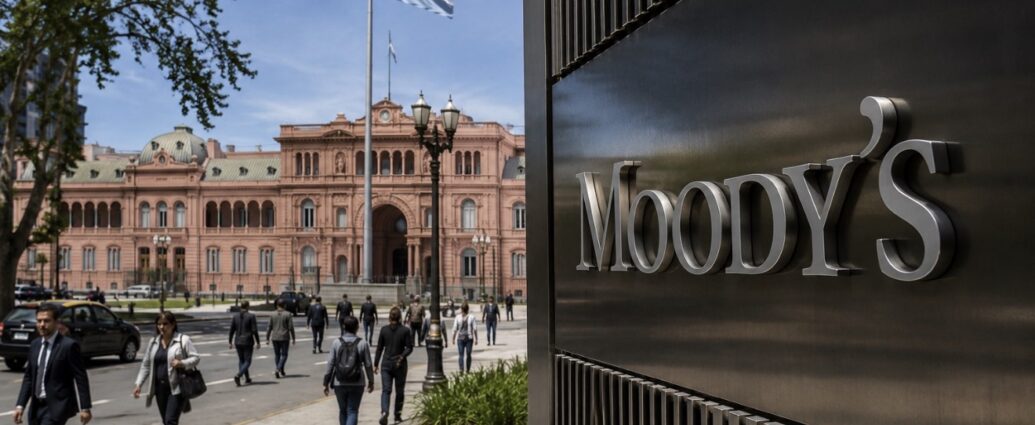
BUENOS AIRES, Tuesday, July 21, 2026 — Moody’s Ratings upgraded Argentina’s long-term sovereign credit rating Tuesday from Caa1 to B3 and revised its outlook to positive from stable, saying the country’s risk of default has fallen significantly as President Javier Milei’s sweeping fiscal and economic reforms continue to stabilize the economy. The decision follows sustained budget surpluses, easing inflation, stronger exports, rising foreign investment, and improved access to international financing.
The upgrade represents another milestone in Argentina’s recovery after years of economic instability marked by repeated debt defaults, runaway inflation, strict currency controls, and shrinking investor confidence. Moody’s said the government’s macroeconomic stabilization has moved beyond an initial adjustment phase into a more durable improvement in the country’s credit fundamentals, increasing confidence that Argentina will be better positioned to meet its financial obligations.
The move also brings Moody’s into alignment with Fitch Ratings and S&P Global Ratings, meaning all three major global credit-rating agencies now assign Argentina similar speculative-grade ratings. While the country remains below investment grade, the consistency among the three agencies is viewed by investors as an important sign that Argentina’s financial outlook has improved materially.
For investors, the upgrade carries tangible financial benefits. A stronger sovereign credit rating generally increases demand for a country’s government bonds, lowers borrowing costs, and expands the number of global pension funds, insurers, and institutional investors permitted to invest. Lower financing costs can eventually filter through the economy by making it less expensive for businesses to borrow, expand operations, hire workers, and invest in new projects. Increased confidence can also support stronger capital inflows into sectors such as energy, mining, manufacturing, and infrastructure.
The decision is also a significant political victory for President Javier Milei. Since taking office, Milei has argued that aggressive spending cuts, fiscal discipline, deregulation, and free-market reforms would restore Argentina’s credibility after decades of economic mismanagement. Moody’s latest action represents one of the strongest endorsements yet from a major international ratings agency that those policies are improving the country’s financial standing. The upgrade is likely to strengthen Milei’s position with investors, international lenders, and business leaders while reinforcing his administration’s message that continued economic reforms are beginning to produce measurable results.
Moody’s also cited improvements in Argentina’s external finances. The agency noted stronger export performance, rising foreign direct investment—particularly in the energy and mining industries—and improved access to external funding. Argentina’s central bank has also increased foreign-exchange reserves without creating significant pressure on the peso, strengthening the country’s financial resilience.
Despite the positive outlook, Moody’s cautioned that challenges remain. Argentina continues to carry a substantial debt burden and faces major refinancing obligations ahead of the 2027 election cycle. While the agency believes policy continuity has become more likely under the current economic framework, any significant reversal of reforms or renewed political instability could weigh on investor confidence and slow further rating improvements.
Markets will now watch whether the improved rating helps reduce Argentina’s country-risk premium, lower future borrowing costs, and attract additional international investment. If those trends continue, the latest upgrade could mark another important step in Argentina’s effort to rebuild its standing in global financial markets after years of economic turmoil.
JBizNews Desk | Wall Street
© JBizNews.com. All Rights Reserved. Reproduction or distribution without written permission is prohibited.