GLOBAL BUSINESS | TRADE & NATIONAL SECURITY
October 14, 2026 | Kuala Lumpur, Malaysia
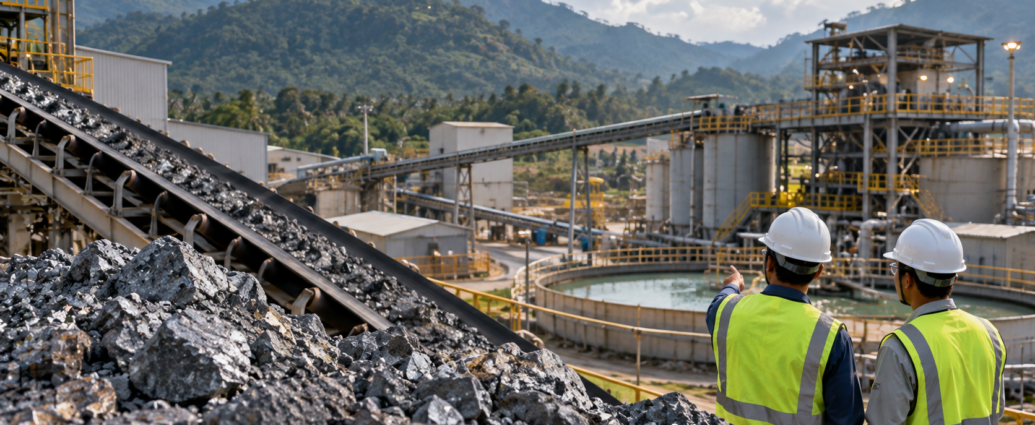
More than a dozen American companies are exploring investments in Malaysia’s rare earth industry, marking another step in Washington’s effort to reduce China’s control over critical minerals used in military equipment, electric vehicles, advanced electronics and industrial manufacturing.
The companies are considering mining partnerships with Malaysian businesses and investments in processing facilities, the U.S. Embassy in Kuala Lumpur announced Wednesday.
The embassy did not identify the companies or disclose potential investment amounts, indicating that the discussions remain exploratory rather than finalized commercial agreements.
The announcement follows an investment forum hosted by the U.S. Embassy Wednesday, bringing together government officials, business executives and investors to examine opportunities in Malaysia’s growing rare earth sector.
The initiative comes as China continues to dominate global rare earth processing, giving Beijing significant influence over industries essential to America’s economy and national security.
Why Malaysia Matters
Malaysia holds substantial rare earth deposits and is already home to one of the world’s most important processing facilities outside China.
Australian mining company Lynas Rare Earths operates a major refinery in Malaysia that processes minerals used in high-performance magnets, electronics and defense applications.
The country is estimated to have approximately 16.1 million metric tons of rare earth deposits, creating opportunities for mining, refining and manufacturing investments.
Malaysia has also restricted exports of unprocessed rare earth materials to encourage companies to build local processing operations rather than simply extract minerals for shipment overseas.
For American businesses, that creates opportunities to invest throughout the supply chain, from mineral extraction to advanced manufacturing.
Trump Administration Accelerates Push Away From China
The latest investment interest builds on a critical minerals cooperation agreement signed by President Donald Trump and Malaysian Prime Minister Anwar Ibrahim in October 2025.
The agreement aims to promote American investment, improve access to critical minerals and develop alternative supply chains less vulnerable to Chinese export restrictions.
China’s dominance extends beyond mining. Its processing capacity and specialized manufacturing expertise give Beijing leverage over the global production of permanent magnets used in fighter jets, missile systems, electric vehicles and industrial equipment.
Beijing has previously restricted exports of certain rare earth products during trade disputes, demonstrating how mineral supplies can become a strategic bargaining tool.
The United States is now seeking to build relationships with resource-rich countries while simultaneously expanding domestic processing capabilities.
David H. Gamble Jr., the U.S. Embassy’s chargé d’affaires in Kuala Lumpur, said Malaysia is seeking international partners capable of supplying the technology and capital needed to establish a competitive rare earth industry.
American companies, he said, are prepared to help develop that capacity.
The Challenge: Mining Is Only Half the Battle
Finding new mineral deposits does not automatically eliminate dependence on China.
Rare earth materials must undergo complex separation, refining and processing before they can be used in industrial components.
China spent decades developing that expertise, leaving competing nations struggling to establish comparable operations at commercially viable costs.
Malaysia offers an important advantage because it already hosts major rare earth processing infrastructure.
However, developing additional facilities will require substantial capital, specialized technology, regulatory approvals and reliable long-term customers.
Even successful new mining projects could take years to reach commercial production.
What’s at Stake for American Businesses
For American manufacturers, access to reliable rare earth supplies has become an increasingly important business consideration.
Automakers require powerful magnets for electric motors. Technology companies depend on specialized mineral components for electronics. Defense contractors need rare earth materials for radar systems, aircraft and precision-guided weapons.
Supply disruptions can delay production, increase manufacturing costs and expose companies to geopolitical risks beyond their control.
Expanding alternative supply chains could also create opportunities for American engineering companies, equipment manufacturers, mining technology providers and financial institutions.
But investors face considerable risks, including fluctuating mineral prices, high development costs and competition from China’s established producers.
Can Washington Break China’s Dominance?
The American push into Malaysia is part of a broader international effort involving Australia, Japan and other strategic partners to reduce dependence on Chinese-controlled mineral supplies.
The challenge is not simply securing more rare earth resources. It is building an entire industrial network capable of extracting, refining and manufacturing critical materials without relying on Chinese facilities.
Wednesday’s announcement represents commercial interest, not yet a breakthrough in production capacity.
The next test will be whether the American companies exploring opportunities in Malaysia commit capital, build processing facilities and establish dependable supply agreements.
For Washington, success would mean more than expanding international trade. It would reduce China’s ability to disrupt American manufacturing and defense production through control of essential minerals.
JBizNews Desk | Kuala Lumpur, Malaysia
© 2026 JBizNews. All Rights Reserved.