By JBizNews Desk | May 5, 2026
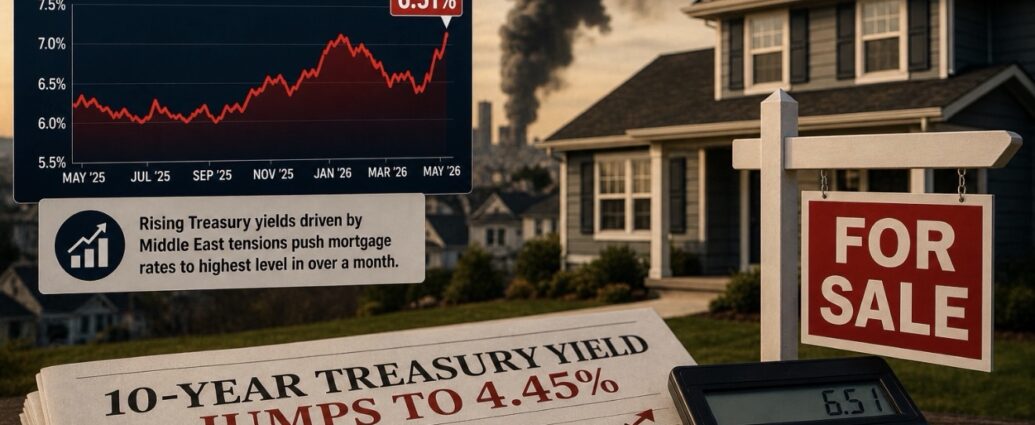
The U.S. housing market is once again feeling the pressure of global instability, as mortgage rates climbed above 6.5% this week, reversing recent declines and tightening affordability for millions of Americans amid rising bond yields triggered by escalating tensions in the Middle East.
The average rate on a 30-year fixed mortgage rose to its highest level in over a month, tracking a sharp move in the 10-year Treasury yield, which climbed to around 4.45% following renewed investor concern over inflation tied to surging oil prices. The shift underscores how quickly geopolitical developments can ripple through domestic financial conditions.
Housing economists say the timing is particularly challenging. After months of gradual improvement, the housing market had begun showing early signs of stabilization, with buyers cautiously returning and sellers adjusting expectations. The latest rate increase threatens to stall that momentum.
“This is exactly the kind of shock the housing market didn’t need,” said Lawrence Yun, Chief Economist at the National Association of Realtors, who noted that higher borrowing costs can quickly sideline potential buyers. “Affordability remains the biggest constraint.”
The connection between global conflict and mortgage rates runs through the bond market. As oil prices rise, investors worry about inflation, prompting them to demand higher yields on Treasury securities. Mortgage rates, which are closely tied to the 10-year Treasury, move in tandem.
That dynamic is already affecting buyer behavior. Mortgage applications have shown signs of slowing, according to industry data, while refinancing activity — which had picked up modestly in recent weeks — is expected to decline again.
For homeowners, the impact is immediate. A half-percentage-point increase in mortgage rates can add hundreds of dollars to monthly payments on a typical home loan, further stretching budgets at a time when home prices remain elevated in many markets.
Builders are also watching closely. Higher rates can dampen demand for new construction, potentially slowing development activity just as the industry works to address a long-standing housing shortage. Robert Dietz, Chief Economist at the National Association of Home Builders, said rising rates “directly impact buyer traffic and sentiment.”
At the policy level, the Federal Reserve now faces a more complicated backdrop. While inflation had been trending lower, the surge in energy prices could reverse that progress, making it harder for policymakers to justify rate cuts in the near term.
“Energy shocks are notoriously difficult for central banks,” said Diane Swonk, Chief Economist at KPMG, noting that the Fed may need to remain cautious even if other parts of the economy show signs of cooling.
Despite the headwinds, some analysts argue that structural demand for housing remains strong, supported by demographics and limited supply. That could provide a floor for the market, even as affordability challenges persist.
Looking ahead, the trajectory of mortgage rates will largely depend on developments in the Middle East and the bond market’s response. If tensions ease and yields stabilize, rates could drift lower again. But if oil prices continue to rise, the housing market may face renewed strain.
For now, buyers and sellers alike are navigating an environment where global events — not just local conditions — are shaping the cost of homeownership in real time.
© JBizNews.com. All rights reserved.