By JBizNews Desk | May 18, 2026
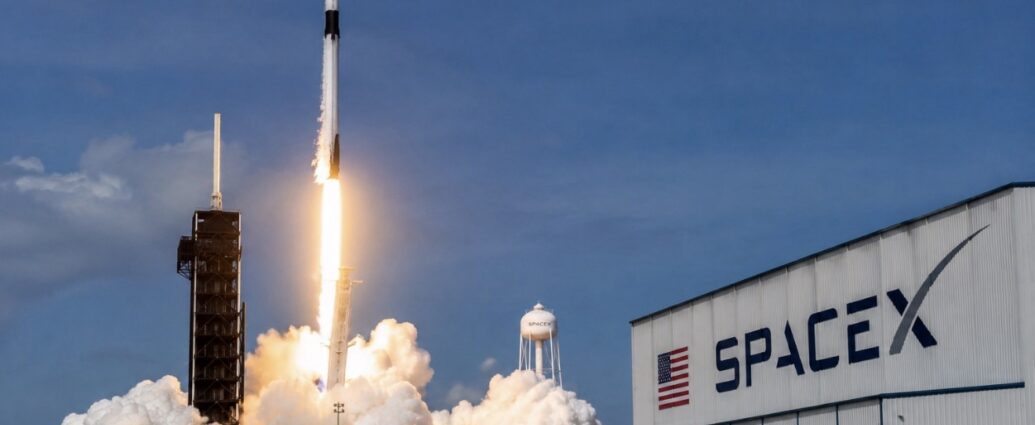
Elon Musk’s SpaceX is preparing to make its public-market debut on Nasdaq on Friday, June 12, in what would be the largest initial public offering in history, according to filings tracked by Bloomberg and Reuters and reporting from CNBC’s David Faber, with the rocket and satellite company seeking a valuation of between $1.75 trillion and $2 trillion and aiming to raise as much as $75 billion in fresh capital. The company filed its registration paperwork confidentially with the U.S. Securities and Exchange Commission in early April and is expected to make the public Form S-1 available the week of May 18, the regulatory minimum 15 days before a roadshow that begins June 8. Shares are expected to trade on Nasdaq under the ticker symbol “SPCX.”
The numbers, if they hold, would dwarf every previous offering. Alibaba Group Holding Ltd. raised $22 billion in 2014, and Visa Inc. raised close to $18 billion in 2008, leaving the U.S. record-holder positioned at less than a third of what SpaceX intends to take down. The combined merger valuation of SpaceX and xAI following their February 2026 tie-up stood at $1.25 trillion at the time, meaning the IPO target represents a 40% to 60% step-up in just four months. Musk, whose Tesla Inc. holdings have pushed his net worth to roughly $840 billion according to Forbes, would become the first person to simultaneously helm two separate publicly traded trillion-dollar companies — Tesla’s market capitalization is currently around $1.4 trillion.
The offering carries unusual structural features that have drawn attention from market structure specialists. SpaceX intends to allocate up to 30% of the offering to retail investors, triple the typical 10% set aside for individuals, a nod to Musk’s retail-heavy shareholder base. The company is also expected to use a dual-class share structure that concentrates voting power with Musk and a small group of insiders, even as it lists only a sliver — roughly 3.75% — of total equity. Marta Khomyn, a finance researcher at the University of Adelaide, said in a published analysis that the low free float “would normally disqualify a company from major indices like the S&P 500 or the Nasdaq-100,” but that index providers are bending those rules to accommodate the listing, exposing passive funds to fast-onboarding price volatility.
SpaceX generated approximately $15 billion in revenue in 2025, a figure that makes the $2 trillion price tag implicit in the deal roughly 133 times trailing sales. Reena Aggarwal, an IPO specialist at Georgetown University’s McDonough School of Business, told CNBC that even with the Musk premium, “you can have a great company with great fundamentals and a lot of investor interest — and an IPO can still flop if the markets have turned south, if there’s too much volatility.” She added that the U.S.-Iran war and the recent Nasdaq Composite selloff — the index logged its steepest weekly drop in nearly a year this week — have raised the bar for what counts as a smooth launch window. Armand Musey, an independent satellite industry analyst, was more pointed in remarks to SpaceNews: “SpaceX is the most anticipated IPO in history. However, there are lots of questions about valuation and how the current company can justify the price talk. It can’t.”
The case for the valuation rests almost entirely on what Musk intends to build next, not what SpaceX is today. The company conducted 165 orbital launches in 2025, more than any other launch provider, and Starlink now serves roughly 10 million customers across 160 countries. SpaceX has collected more than $24.4 billion in federal contracts since 2008, according to FedScout data, including work for NASA, the U.S. Space Force, the Air Force and the Defense Department’s Starshield program for classified satellite communications. But Musk has told private investors that the IPO proceeds will go primarily toward an ambitious push to launch up to one million data-center satellites into orbit, betting that solar-powered, space-based AI compute will eventually undercut terrestrial data centers on cost and water usage. SpaceX is also pursuing a joint venture with Tesla called Terafab to consolidate semiconductor production for Tesla’s autonomous-driving systems, Optimus humanoid robots and space-hardened orbital workloads.
Skeptics flag the gap between mission and metrics. Ross Carmel, a partner at Sichenzia Ross Ference Carmel, defended the price talk, telling SpaceNews that “SpaceX’s valuation is not based on its current business model, but rather what is possible in the future of space, including becoming an interplanetary species through Elon’s vision of going to Mars.” History, however, is unkind to mega-IPOs. Research from TradingKey found that most of the largest U.S. initial offerings trail the S&P 500 in their first year of trading and over the long run, with the notable exceptions of Arm Holdings plc, which gained 189% in its first year, and Airbnb Inc., which gained 167%.
If SpaceX clears the June 12 target, it would set the pace for what could be a trio of mega-IPOs in 2026, with OpenAI and Anthropic also exploring public listings. For Musk, the offering would close a 24-year arc that began with the founding of SpaceX in 2002 — and would mark the public-market arrival of the largest single corporate bet on humanity’s reach beyond Earth.
— JBizNews Desk
© JBizNews.com. All rights reserved. This article is original reporting by JBizNews Desk. Unauthorized reproduction or redistribution is strictly prohibited.