
JBIZNEWS | WALL STREET | OCTOBER 16, 2026
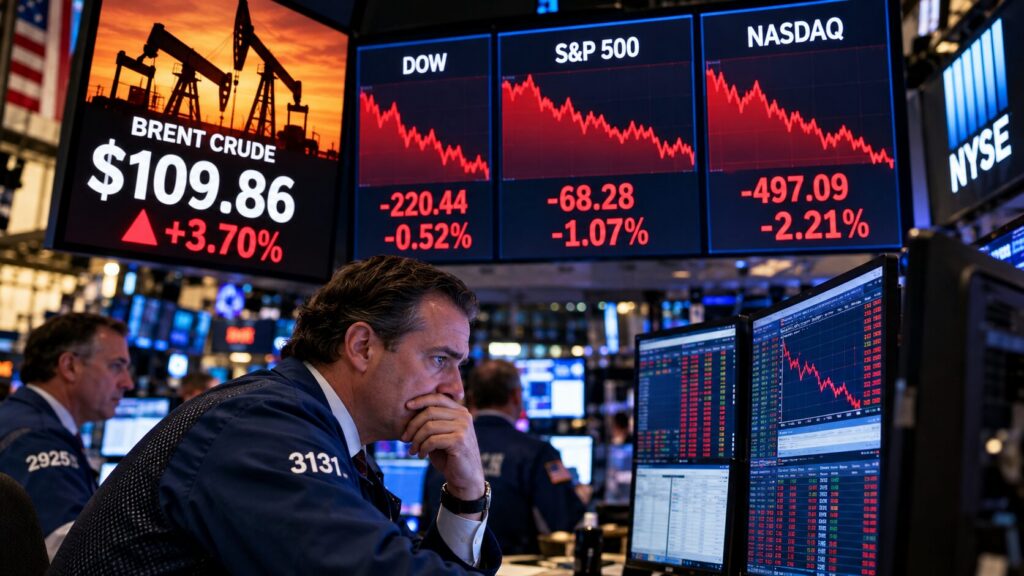
NEW YORK — Wall Street stocks tumbled Friday afternoon as a deepening selloff in artificial intelligence and semiconductor companies pushed the Nasdaq Composite toward its worst weekly performance in more than a year, while oil prices surged toward $110 a barrel and renewed inflation concerns added pressure across financial markets.
As of approximately 3:40 p.m. Eastern, the Nasdaq was down 2.2% and headed for a weekly decline of 4.6%. A weekly loss exceeding 4.68% would mark its steepest drop since April 2025.
The S&P 500 lost more than 1%, while the Dow Jones Industrial Average fell approximately 0.5%, although the blue-chip index remained on track for a weekly gain.
The market’s decline exposed growing concerns about the financial risks underlying the artificial intelligence investment boom, particularly among companies borrowing heavily to finance data centers and computing infrastructure.
AI Investment Boom Faces Growing Financial Pressure
Technology shares led Friday’s losses as investors questioned whether companies investing billions of dollars in artificial intelligence infrastructure could generate sufficient revenue to justify their spending and debt obligations.
CoreWeave, the Nvidia-backed data center company, emerged as one of the most closely watched casualties of the selloff.
Its stock fell approximately 12% Friday, bringing its weekly losses to roughly 25%, as concerns intensified about its borrowing costs and ability to finance continued expansion.
Broadcom declined approximately 3.6%, while the Philadelphia Semiconductor Index extended its losing streak to eight consecutive sessions.
The selloff spread beyond chipmakers to software and communications companies, raising questions about whether investors are beginning to reassess valuations across the broader AI industry.
For much of the past several years, enthusiasm surrounding artificial intelligence has supported major technology stocks and helped drive Wall Street’s gains. Friday’s trading suggested investors are becoming increasingly selective about which businesses can sustain their expansion.
Oil Near $110 Adds Another Threat to the Economy
Energy markets added a second source of pressure.
Brent crude climbed 3.7% to $109.86 a barrel, its highest settlement since May, after reportedly trading above $110 during the session.
The surge reflected continued concern over Middle East energy supplies and shipping security, particularly around the Strait of Hormuz.
Higher oil prices threaten to increase gasoline, diesel, airline fuel and freight expenses, creating additional costs for businesses and consumers.
The combination of falling technology stocks and surging crude prices presents a particularly difficult environment: companies face higher operating and financing costs while investors become less willing to support aggressive expansion.
Federal Reserve Faces Renewed Inflation Pressure
The latest oil rally complicates the outlook for U.S. monetary policy.
Higher energy prices can feed into broader inflation through transportation, manufacturing and consumer goods. If those increases persist, the Federal Reserve could face greater difficulty reducing interest rates.
For technology companies, the consequences are particularly significant. Artificial intelligence infrastructure requires enormous upfront investments, much of which is financed through borrowing or new equity.
Higher financing costs, combined with falling share prices, could make expansion more expensive and place additional pressure on companies that have yet to demonstrate consistent profitability.
Investors are increasingly examining whether the enormous capital commitments supporting the AI boom can deliver returns quickly enough to justify current valuations.
Midterm Elections Add Political Pressure
Friday’s market decline comes just 18 days before the November 3 midterm elections, adding another economic challenge for President Donald Trump and Republican candidates seeking to maintain control of Congress.
The White House has emphasized economic growth, lower energy prices and investment in American technology as central elements of its economic agenda.
However, surging oil prices and renewed stock market volatility risk complicating that message at a politically sensitive moment.
The immediate economic impact extends beyond Wall Street. Higher gasoline and transportation expenses affect household purchasing power, while stock market losses can weaken confidence among investors and businesses.
Democrats have increasingly focused their election messaging on affordability and the cost of living, while Republicans have emphasized tax policy, investment and economic growth.
Although stock market fluctuations do not determine election results, sustained increases in energy prices could become an additional concern for voters already focused on household expenses.
What Wall Street Is Watching Next
Investors enter the coming week confronting several interconnected risks: continued pressure on AI and semiconductor valuations, rising global energy prices, uncertainty surrounding Federal Reserve policy and geopolitical developments affecting oil supplies.
The Nasdaq’s weekly decline is particularly significant because technology companies have been among the strongest contributors to market gains in recent years.
A prolonged retreat in those shares could affect retirement portfolios, institutional investments and companies seeking to raise capital.
The next test will be whether technology stocks can stabilize and whether global energy markets begin to retreat from their latest highs.
With the Nasdaq heading toward its steepest weekly decline since April 2025 and oil again approaching $110, Friday’s trading highlights the growing collision between geopolitical instability, expensive energy and mounting questions about the sustainability of the artificial intelligence investment boom.
JBizNews Desk | New York
© 2026 JBizNews. All rights reserved.









