A Major New Study Finds That 73% of Americans Chasing High-Risk Bets Feel Financially Behind — And Believe They Have No Other Way to Catch Up
By JBizNews Desk | New York — May 6, 2026
A growing share of Americans are turning to high-risk bets — from cryptocurrencies to sports wagering and prediction markets — not out of speculation alone, but out of a sense that traditional paths to financial security are no longer working.
That is the central finding of the Northwestern Mutual 2026 Planning & Progress Study, which reveals a striking contradiction: more Americans say they feel financially secure than in recent years, yet millions are simultaneously embracing riskier strategies to build wealth.
The data suggests those two realities are not in conflict — they are deeply connected.
The Numbers
About half of American adults now say they feel financially secure, up from 44% a year earlier. More than half also describe themselves as disciplined financial planners.
But beneath that surface, a different trend is taking hold.
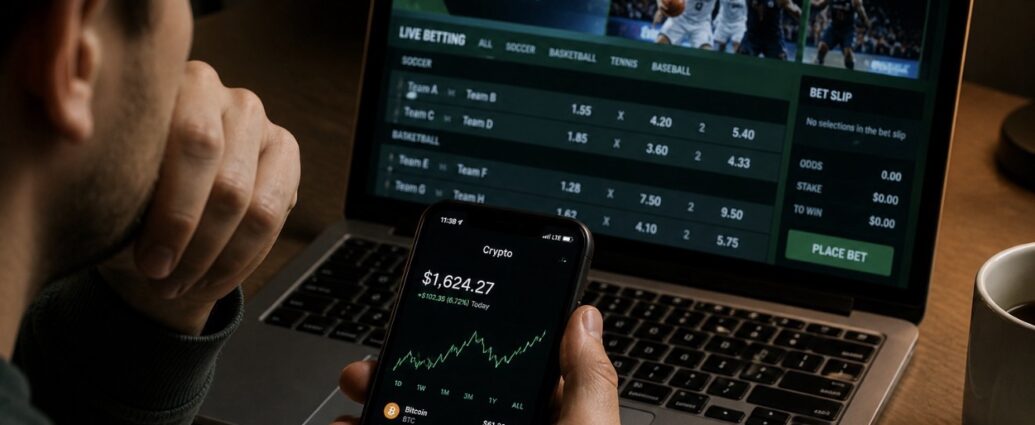
Roughly 40% of Americans are either investing in or considering high-risk assets such as crypto, prediction markets, and sports betting. Among those participants, 73% say they are doing so because they feel financially behind and believe these bets offer a faster path to their goals than traditional saving or investing. Among Gen Z, that figure rises to 80%.
The implication is clear: for a large segment of the population, conventional wealth-building strategies are no longer seen as sufficient.
Why Traditional Saving Feels Broken
The frustration driving that shift is rooted in everyday economics.
Inflation remains the top financial concern for more than four in ten Americans, outpacing worries about savings levels, debt, or healthcare costs. More than half expect inflation to worsen in 2026, and nearly half say their incomes are not keeping up with rising prices.
When living costs increase faster than earnings, the logic of steady, long-term saving becomes harder to sustain — particularly for younger Americans who feel they are starting from behind.
Economic sentiment reflects that pressure. More Americans expect the economy to weaken than improve this year, with pessimism cutting across income levels and age groups.
What the Bets Look Like
The shift toward risk is visible across multiple platforms.
Prediction markets — where users wager on outcomes ranging from elections to economic data — have surged into the mainstream. Trading volume reached tens of billions of dollars in early 2026, with platforms like Polymarket hosting thousands of active contracts tied to real-world events.
At the same time, financial strain is showing up in everyday spending behavior. A third of Americans used Buy Now, Pay Later services for large purchases in 2025, while nearly a quarter relied on them for routine expenses such as groceries and gas.
That overlap — using credit for necessities while taking risks for upside — points to a broader financial squeeze.
The Risk That Gets Overlooked
None of these strategies are designed to reliably build long-term wealth.
Crypto markets remain highly volatile. Betting platforms are structured with odds that favor operators. And retail investors in speculative assets often underperform due to timing and behavioral biases.
But the study suggests the shift is not driven by ignorance of risk — it is driven by a lack of perceived alternatives.
Traditional advice — save consistently, invest conservatively, and wait — assumes a level of financial stability that many Americans no longer feel they have. Rising costs, stagnant real wages, and economic uncertainty have eroded confidence in that model.
Nearly eight in ten Americans report noticing higher grocery prices in recent months, and consumer sentiment remains subdued. In that environment, the appeal of faster, higher-risk returns becomes easier to understand.
What is emerging is not simply a trend in investing behavior, but a broader signal about the state of the American economy — one in which a growing number of people feel that the standard path to financial security is no longer within reach.
And when that belief takes hold, risk stops looking optional.
It starts looking necessary.
JBizNews Desk
© JBizNews.com. All rights reserved.