By JBizNews Desk
May 10, 2026
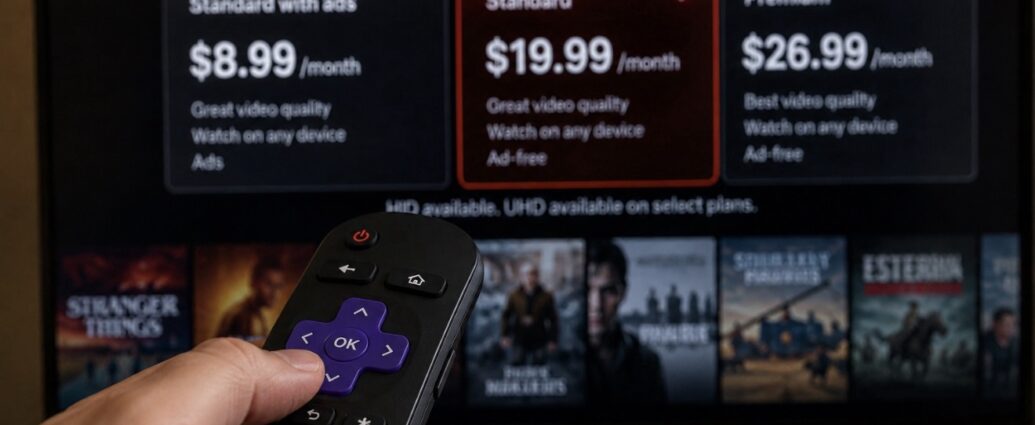
Netflix confirmed in its latest pricing update that its standard ad-free streaming plan in the United States now costs $19.99 per month, while its premium tier has climbed to $26.99 and its advertising-supported plan increased to $8.99 — price moves that underscore how rapidly the economics of the streaming industry are shifting away from the low-cost disruption model that originally fueled its rise. The increases, which began rolling out March 26, mark Netflix’s second broad U.S. pricing increase in just over a year and place the company at the center of a broader transformation reshaping the global streaming business.
For much of the past decade, streaming services positioned themselves as the direct alternative to traditional cable television: cheaper, commercial-free, and entirely consumer-controlled. Increasingly, however, the industry is moving toward a hybrid model built around both rising subscription prices and expanding advertising revenue — a structure that many analysts say now resembles the very cable ecosystem streaming once sought to replace.
Netflix eliminated its lowest-priced ad-free basic tier last year, steering new subscribers toward either higher-priced commercial-free plans or lower-cost ad-supported options. Nearly every major streaming platform has followed a similar path.
Amazon introduced advertising by default inside its base Prime Video experience. Disney+, Hulu, and Max have all expanded ad-supported offerings while steadily raising prices on premium tiers. Max, owned by Warner Bros. Discovery, increased the cost of its standard ad-free plan to $18.49 in late 2025.
The cumulative financial effect on households is becoming increasingly visible.
According to Deloitte’s March 2026 Digital Media Trends report, average household streaming spending has remained roughly flat at approximately $69 per month even as individual platform prices continue climbing — a signal analysts interpret as evidence consumers are becoming increasingly selective about which subscriptions they maintain.
The same report found that 61% of consumers would consider canceling a streaming service if prices rose by $5 or more.
At the same time, the fastest growth across the industry is no longer coming from premium commercial-free subscriptions.
Approximately 68% of streaming subscribers now use ad-supported plans, according to Deloitte, reflecting a major behavioral shift as consumers increasingly accept advertising in exchange for lower monthly costs.
Data from Antenna’s Q2 2025 State of Subscriptions Report showed that roughly 71% of new subscriber growth across major streaming platforms over the past two years came from ad-supported tiers. About 65% of those subscribers were entirely new platform users rather than premium customers downgrading to cheaper plans.
That transition is fundamentally changing how streaming companies measure the value of subscribers.
Instead of focusing solely on monthly subscription fees, platforms are increasingly monetizing viewing time itself, with advertising revenue directly tied to audience engagement and watch duration.
“We’re getting much closer to parity than people think,” said Paul Frampton-Calero, CEO of digital marketing agency Goodway Group, referring to the long-term economics of advertising-supported users versus premium subscribers.
According to Frampton-Calero, ad-supported customers could soon generate between 50% and 75% of the economic value of premium subscribers, with some industry models eventually reaching full parity as advertising technology improves and targeting becomes more sophisticated.
Netflix itself has aggressively expanded its advertising ambitions.
Adrian Zamora, a spokesperson for Netflix, confirmed the company expects advertising revenue to reach approximately $3 billion in 2026, roughly double the prior year’s level. The company also projected total 2026 revenue between $50.7 billion and $51.7 billion, supported by continued subscriber growth, pricing increases, and accelerating advertising sales.
Much of the pricing pressure facing consumers is being driven by the soaring cost of content itself.
Industry analysts estimate Netflix will spend approximately $20 billion on content in 2026, up from roughly $18 billion the previous year, as the company expands deeper into live sports, live entertainment programming, video podcasts, and large-scale event broadcasting.
The company recently expanded sports rights investments, including a new agreement involving Major League Baseball, while continuing to aggressively finance original films, international programming, and prestige television series designed to sustain subscriber engagement globally.
Executives at Netflix have consistently argued that pricing increases are tied directly to content investment and platform value, pointing to the company’s relatively low subscriber churn rates as evidence many consumers remain willing to pay higher prices for premium programming.
Analysts at TD Cowen estimate the latest U.S. pricing changes could increase Netflix’s average revenue per user in the United States and Canada by approximately 6% year over year in 2026, with some premium plans seeing effective increases closer to 11%.
For consumers, however, the broader shift increasingly means uninterrupted low-cost streaming is no longer the default experience.
Many households are now rotating subscriptions month to month, subscribing temporarily for specific shows or sports programming before canceling. Others are increasingly migrating toward entirely free ad-supported platforms including Tubi, Pluto TV, and Roku Channel, which continue gaining market share as streaming costs rise.
Industry analysts see little indication the trend will reverse.
Streaming platforms are increasingly betting that combining subscription revenue with advertising creates a more resilient long-term business model than relying on subscriptions alone. As a result, companies across the sector are redesigning pricing structures, content strategies, and platform experiences around maximizing both viewer engagement and advertising inventory.
For longtime media executives, the irony is difficult to ignore.
The original promise of streaming was liberation from rising cable bills, rigid channel bundles, and forced advertising breaks. A decade later, the industry is steadily rebuilding many of those same economics — only now delivered through apps, algorithms, and internet-connected televisions rather than cable boxes.
JBizNews Desk