Sweetgreen doesn’t use iceberg lettuce, and it doesn’t buy lettuce from Mexico, according to cofounder Nic Jammet, but the salad chain still paid for this summer’s cyclospora outbreak anyway.
Federal investigators tied the outbreak to iceberg lettuce from central Mexico, but fears about produce hit Sweetgreen regardless. The company cut its full-year outlook in August, projecting same-store sales would fall 7% to 8%, down from its earlier forecast of a 2% to 4% decline. The CDC declared the outbreak over on September 11.
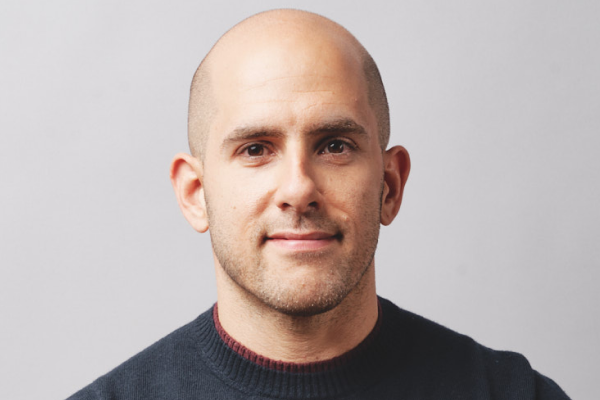
“It was a painful summer because that was like the headline for all summer,” Jammet, who is currently Sweetgreen’s chief concept officer, told Fortune.
He said he worries the headlines and messaging around this summer’s recalls may have nudged people to believe “the safer thing is actually highly processed food.” He’s even watched farmers till fields of greens back into the ground, he added.
The outbreak landed on a chain that was already in a turnaround, as the pre-pandemic desk-salad days have never quite returned. Same-store sales dropped 11.5% year-over-in 2025, but the stock has gained nearly 28% year-to-date as CEO Jonathan Neman has been running a turnaround plan built on tighter operations, marketing, menu changes and pricing.
There’s also evidence that the customers are returning: on Sept. 28, Wells Fargo analyst Anthony Trainor upgraded Sweetgreen’s stock, citing a faster-than-expected recovery, and shares hit their highest intraday level since the outbreak began in mid-July. Foot traffic data from Placer.ai also showed that Sweetgreen’s average visits per location rose 5.6% year over year from July 6 through Sept. 11, while rival Chopt’s fell 7.7%.
“I feel like we’re on the other side of cyclospora, and the world has kind of moved on,” Jammet said. “At the end of the day, we moved past it, and so we’re excited to be on the other side of it.”
On Tuesday, Sweetgreen named cookbook author Molly Baz its first chef-in-residence, the latest in a run of menu launches and collaborations this year. The Molly Baz collab is one of the biggest of the year, he said capping many fun collaborations and an “amazing summer menu.”Jammet said the collabs are “bringing back a bit of that drumbeat that, you know, really built the brand.”
Never waste a crisis
Sweetgreen’s founders have been here before, on a smaller scale. A week before the chain opened its first store in 2007, a break-in cost Jammet and his cofounders, Neman and Nathaniel Ru, the laptop that held their recipes and training materials. There was no cloud backup in those days. The three stayed up all week rebuilding the files from old emails.
“Even though that was a crisis, it really forced us to just think about this idea that, like, never waste a crisis,” Jammet said. “Shit’s always going to happen to you, so you’ve got to be ready to find solutions.”
His advice for other restaurateurs dealing with this summer’s fallout is similar. “Try to stay long-term focused, and honestly, we try to stay as close to the customer as possible,” he said. Customers are changing faster than ever, he added, which makes understanding them more important.
For Sweetgreen, that meant emphasizing its supply chain and staying focused on execution in the stores rather than letting the company “get too distracted by the narrative,” he said.
That narrative also means fighting against a trope. Jammet is the first to say Sweetgreen is more than just a salad chain, and points to Baz’s menu, which includes three limited-edition items: a Caesar wrap, a pickle Caesar salad and a scoop of chicken salad with a pickle spear, now through November 9.
The menu builds on the chain’s push into wraps this year, as bowl chains try to shake the “slop bowl” label, and on summer collaborations with Alice Waters and the tinned-fish brand Fishwife. Jammet said the response to wraps “has been really great.”
He thinks the office-lunch-bowl terminology misses what his brand is. “Sweetgreen is not a slop bowl,” he said. “It is high-quality ingredients composed and cooked from scratch.”
“It really becomes food that you could eat every day,” Jammet said. “It’s not like one specific flavor, one specific cuisine.”
Growing up at La Caravelle
Jammet learned hospitality from his parents, André and Rita Jammet, who ran La Caravelle, one of Manhattan’s great French dining rooms and a Kennedy family favorite. Its head chef recommended the cook Jacqueline Kennedy hired to run the White House kitchen, and it was nominated for the James Beard Foundation’s Outstanding Restaurant award shortly before it closed in 2004.
The restaurant closed during his freshman year of college, but he grew up in it, because that was where his parents were. “My parents ran it together, like mom and pop, there every day. If my dad wasn’t there, they weren’t open. And they worked dinner, so if we wanted to see our parents, we would go there.” His father went to the fish market at 5 a.m. on Tuesdays and the meat market at 5 a.m. on Wednesdays.
“I have two brothers. Three little five-year-old boys sitting in one of the booths at a fine dining restaurant in our little suits and ties,” Jammet recalled, of his twin brother Patrick and his older brother Christophe. “Customers would walk behind me like, ‘Why are these three, like, toddlers sitting here eating canelés and soufflés by themselves?’”
Fine dining and fast casual run on the same principles, he said: high-quality product and “people leaving better than when they came in.”
The Sweetgreen Challenge
Jammet’s case for fresh food goes back to the chain’s founding. When Sweetgreen opened in Washington, D.C., in 2007, Michael Pollan’s books and nutrition scholar Marion Nestle were at their peak, and Morgan Spurlock’s Super Size Me was still fresh, and then two years later, Michelle Obama brought a focus on healthy food to the White House.
“So much of what inspired birthing and growing Sweetgreen was this shift in how people thought about and talked about their food,” Jammet said.
Years later, Super Size Me inspired Tim Donohue, a 27-year-old ad agency copywriter from Hoboken, N.J., and former office fast-food junkie whose coworkers were urging to eat healthier. He ate only from Sweetgreen’s menu, twice a day, for 25 days. He lost nine pounds, though he also stopped drinking, and spent just under $1,000.
Sweetgreen turned Donohue’s video of his personal challenge into the Sweetgreen Challenge, a 30-day version. It gave 30 Sweetgreen fans a credit of $700 a week toward meals, plus $500 to compete.
“We don’t expect people to eat Sweetgreen twice a day, but it just is kind of like the extreme challenge of it all to show you the power of the decisions you make around what you’re eating and how it makes you feel,” Jammet said.
He ate Sweetgreen about once a day and then went to twice a day after turning 40, when he set out to get in the best shape of his life. “I’ve been doing some version of the challenge for 20 years,” he said.
For Donohue, the hardest part wasn’t the food but the logistics. He skipped a concert in Brooklyn and once borrowed a car to drive about an hour after ordering to the wrong store. By day 20, he said, it felt like living on a different planet. The challenge, he said, was a way to “travel without going anywhere, because you can live an entirely different life just by changing what you eat every day.”
Donohue said Sweetgreen never paid him for the video, though it gave him a “generous amount” of reward points after the challenge launched. After the challenge? He still eats there three times a week.
“I actually thought that when this project was done, that I would swear off Sweetgreen and never eat it ever again in my life. And to my surprise, one week after I finished this challenge, I was just genuinely craving it.”
This story was originally featured on Fortune.com