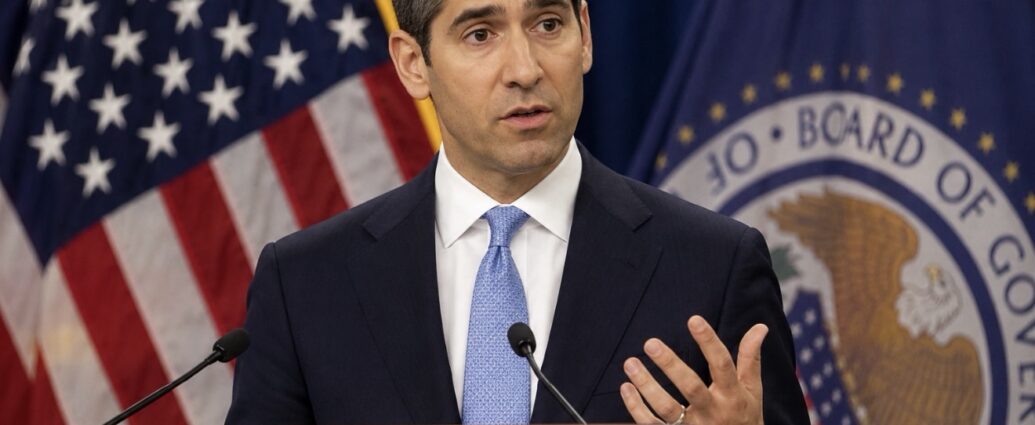
New Federal Reserve Chair Kevin Warsh said Wednesday, July 1, that the central bank will stay independent and focus on bringing inflation down, comments that likely rule out the interest-rate cuts President Trump has repeatedly demanded. Speaking at a central bank forum in Sintra, Portugal, Warsh said that anyone expecting the Fed to tolerate inflation above its 2% target would be disappointed, adding bluntly, “We’re going to deliver price stability.”
The remarks matter to every household because the Fed’s interest-rate decisions ripple straight into the cost of mortgages, car loans, credit-card balances, and the interest people earn on savings. When the Fed wants to cool inflation, it typically keeps borrowing costs high or raises them. So Warsh’s clear signal that fighting inflation comes first means relief on loan rates may not arrive as soon as many borrowers hoped.
The comments also mark a notable shift for Warsh, who took over from Jerome Powell on May 22. While campaigning for the job last year, he had called for lower rates. Since becoming chair, he has moved firmly toward an inflation-fighting stance. Asked directly about Trump’s oft-repeated push for cheaper money, Warsh stressed the Fed’s distance from politics: “We’ve been an independent central bank for a very long time. We’re going to be an independent central bank at this moment, and you’re going to see no changes to that.”
The backdrop is stubborn inflation. Prices rose 4.2% in the year through May, a three-year high, pushed up largely by the U.S.-Iran war’s effect on gasoline. But with a peace agreement now in place, gas prices have been falling, suggesting inflation may have peaked. Warsh himself pointed to encouraging signs, noting that inflation expectations, meaning where households and markets think prices are heading, have eased over the past month in both surveys and bond prices.
That leaves the Fed with a genuine dilemma, and it cuts against the president’s wishes in a striking way. Rather than cutting, Wall Street investors now think the Fed’s next move could be a rate hike, possibly as soon as September, lifting its key rate from about 3.6% to roughly 3.9%. At the Fed’s last meeting on June 16–17, nearly half of the 19 policymakers signaled support for higher rates this year, eight favored no change, and just one penciled in a cut. Warsh, who opposes telegraphing future moves, declined to say what the Fed will actually do. “I’m not going to make a judgment now,” he said. “The tactics, the strategy, and the rest, that’s still to come.”
For businesses, the message is to plan for borrowing costs staying elevated a while longer. Companies that were counting on cheaper financing to fund expansion, hiring, or equipment purchases may need to wait. Small businesses, which often rely on variable-rate loans and credit lines, are especially sensitive to the Fed’s stance. On the flip side, savers earning healthy yields on money-market accounts and certificates of deposit could keep benefiting.
Much depends on what happens next with prices and jobs. If gas prices keep sliding and inflation cools, Warsh may be able to avoid raising rates. Hiring has picked up in recent months, and economists expect the government’s June jobs report on Thursday to show unemployment holding at a low 4.3%. A solid jobs number would ease pressure on the Fed to lower rates, since a strong labor market gives the central bank room to keep fighting inflation without worrying as much about the economy stalling.
Warsh also flagged artificial intelligence as a wild card, one he thinks could eventually help. He has set up five internal task forces to study issues including AI’s impact on productivity, and reiterated his view that over time AI will expand the economy’s capacity to produce goods and services, which would ease inflation pressures. He declined, though, to say whether the current boom in AI spending is itself inflationary right now.
The bottom line for everyday Americans is that the Fed under new leadership is prioritizing lower inflation over cheaper credit, and is publicly resisting political pressure to cut. That means the high rates on mortgages, auto loans, and credit cards that households have been living with may stick around, and could even edge higher, until Warsh is convinced inflation is genuinely under control. For anyone waiting to refinance a home or buy a car on credit, patience may be required a while longer.
JBizNews Desk
© JBizNews.com All Rights Reserved. Reproduction or distribution without written permission is prohibited.