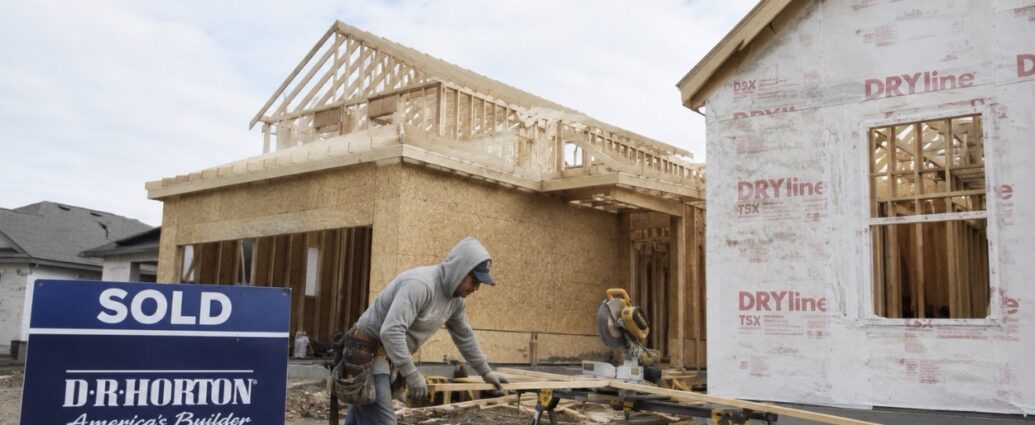
Builders broke ground on far fewer homes in May, sending new construction to its lowest level in six years, according to a report released Tuesday by the Census Bureau and the Department of Housing and Urban Development.
Total housing starts fell 15.4% from April to a seasonally adjusted annual rate of 1.18 million units, the slowest pace since May 2020 and well below the 1.43 million that economists had expected. Starts were also 8.7% lower than a year earlier. April’s figure was revised down to 1.39 million, making the monthly drop even steeper.
The headline number hides an important split. Construction of single-family houses, the kind most American families buy, held up relatively well, slipping just 1.9% to an annual rate of 882,000.
The real collapse was in apartments. Starts of buildings with five or more units fell to 284,000, down from 529,000 in April, nearly cutting the pace of new apartment construction in half in a single month. That part of the market is famously volatile, swinging sharply from month to month, but the size of the drop still stunned forecasters.
The cause is no mystery. Mortgage rates remain high, with the average rate on a 30-year loan sitting near a one-year high, and that keeps would-be buyers on the sidelines and makes builders cautious about starting projects they may struggle to sell.
Construction costs are still elevated, partly because the war with Iran pushed up the price of materials and energy earlier this year. And builder confidence has been sliding; a closely watched measure of homebuilder sentiment fell again this month.
The slump marks a sharp reversal. As recently as March, construction was running at its fastest pace since late 2024, with starts topping 1.5 million. Then activity fell in April and dropped off a cliff in May, a sign that the brief momentum builders had built up has faded under the weight of high borrowing costs.
There is little sign of a quick rebound in the pipeline.
Building permits, which signal future construction, were essentially flat at an annual rate of 1.41 million, down slightly from April and from a year ago. When builders are not pulling permits, they are not planning to ramp up soon.
Completions also fell, dropping 8.1% from April, which means fewer finished homes are reaching the market just as buyers need them most.
Here is why this matters far beyond the construction industry.
The United States has been short of housing for years, and that shortage is the main reason home prices and rents have climbed so far out of reach for so many families.
Every month builders pull back, the gap between the number of homes the country needs and the number it has gets a little wider.
Fewer new apartments today means tighter supply and higher rents tomorrow.
Fewer new houses means continued bidding wars over the limited supply already on the market.
The pullback also ripples through the broader economy.
Homebuilding supports millions of jobs, from carpenters and electricians to the workers who make lumber, drywall and appliances. When construction slows, those jobs and the spending that comes with them slow too.
All of this lands at a delicate moment for interest rates.
The Federal Reserve is meeting this week under its new chair, Kevin Warsh, and is widely expected to hold rates steady, with some officials even leaning toward a hike to fight stubborn inflation.
For the housing market, that is not encouraging news. Mortgage rates tend to follow the Fed’s signals, and as long as borrowing stays expensive, both builders and buyers are likely to stay cautious.
For now, the May report paints a clear picture: the engine that produces the country’s homes is sputtering at exactly the time the nation can least afford it.
Whether construction picks back up depends almost entirely on what happens to mortgage rates in the months ahead, and right now, those rates are not cooperating.
Washington — JBizNews Desk
JBizNews Desk / © JBizNews.com All Rights Reserved. Reproduction or distribution without written permission is prohibited.