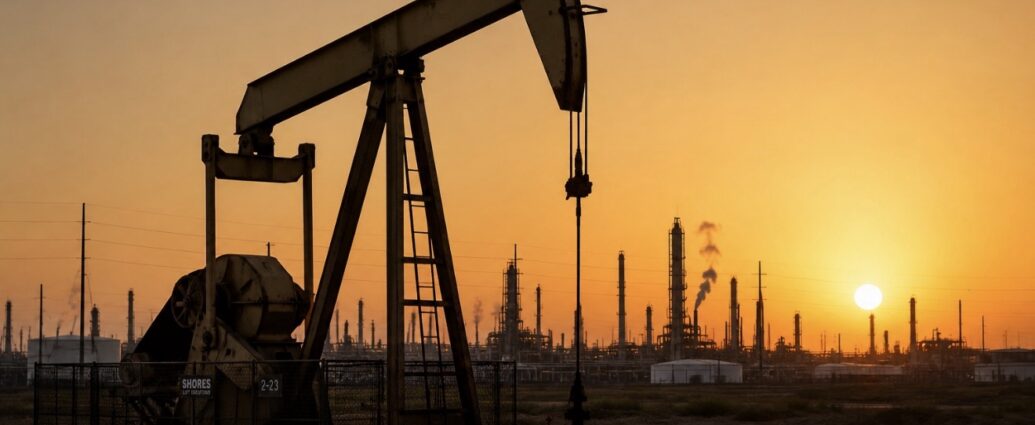
The world could go from scrambling for every barrel to drowning in crude within about a year and a half, the International Energy Agency said Wednesday in its monthly Oil Market Report, the first edition to carry a full-year forecast for 2027.
The Paris-based agency, which advises 32 member countries on energy policy, laid out a sharp reversal. After a brutal stretch in which the U.S.-Iran war knocked millions of barrels a day offline and pushed fuel prices to painful highs, the report said a steady rebound in production — provided the interim peace deal between Washington and Tehran actually holds — would lift global supply far beyond what the world is on track to burn.
The numbers tell the story. The agency expects oil supply to climb by roughly 8 million barrels a day next year, reaching about 110.3 million barrels a day, as Persian Gulf production comes back online and OPEC+ raises its output targets. Demand, by contrast, is seen rising a far more modest 2 million barrels a day, to 105.3 million. That gap points to an enormous glut in 2027 — what the agency called a significant overhang building across the market.
That would be a stunning flip from the shortage gripping the market right now. The IEA again cut its demand outlook for this year, saying the pain from high prices has spread well beyond the regions and industries hit first. It now sees 2026 demand at 103.3 million barrels a day, down from 104 million in its May report and a 3.9 million-barrel drop from 2025 levels.
Second-quarter deliveries were especially weak. Early data showed consumption running 5 million barrels a day below a year earlier — the first global quarterly demand drop since the pandemic year of 2020. The agency said the weakness is carrying into the summer, with shipments of major fuels, gasoil in particular, straining across nearly every region as steep prices and a tougher economy push every product category into decline.
Prices have already started to ease as a result. North Sea Dated crude, a global benchmark, tumbled more than $40 a barrel to around $82 between early May and mid-June as buyers pulled back. That is a long way down from the swings earlier in the war, when the benchmark spiked toward $144 a barrel before sliding below $100 on conflicting signals about whether a deal would get done.
Supply this year is still badly depressed. The agency pegged 2026 output at 102.4 million barrels a day, a small upgrade from its last report but a 3.9 million-barrel fall from 2025. May production came in at 94.5 million barrels a day — down 600,000 from April and a striking 13.6 million below where the world was producing before the conflict began.
The strain shows up clearly in storage. Global oil inventories have been drained by an average of 3.8 million barrels a day since the U.S.-Iran war started, with May alone seeing a 4.6 million-barrel-a-day draw. Government emergency stocks held by IEA member countries fell to their lowest level since December 1990, as nations kept releasing reserves to plug the gap.
For all the optimism about 2027, the agency was careful to flag how fragile the peace is. While the interim agreement clears a path for Middle East exports to recover, it warned that practical and political hurdles — including the slow work of clearing mines from shipping lanes and unresolved arrangements for moving cargoes through the Strait of Hormuz — leave real downside risk. The agency stressed that its 2027 rebound is subject to a substantial level of uncertainty tied directly to whether the proposed deal sticks.
Refineries remain under pressure in the meantime. The report sees crude processing shrinking by 2 million barrels a day this year, to 82 million, led by a steep drop over the spring, before recovering by about 3.1 million barrels a day in 2027 as crude supplies normalize.
If the glut does materialize, the agency framed it as a rare opening. A wave of surplus oil, it said, would give governments and companies a chance to refill drained tanks and even build new strategic reserves — a priority for many countries now rethinking their energy plans after the shock of the past several months. For drivers and households that have been squeezed at the pump and on home heating, a market tipping back toward oversupply would be the clearest sign yet that the worst of the price spike is in the rear-view mirror — so long as the guns stay quiet.
JBizNews Desk
Wall Street
© JBizNews.com All Rights Reserved. Reproduction or distribution without written permission is prohibited.