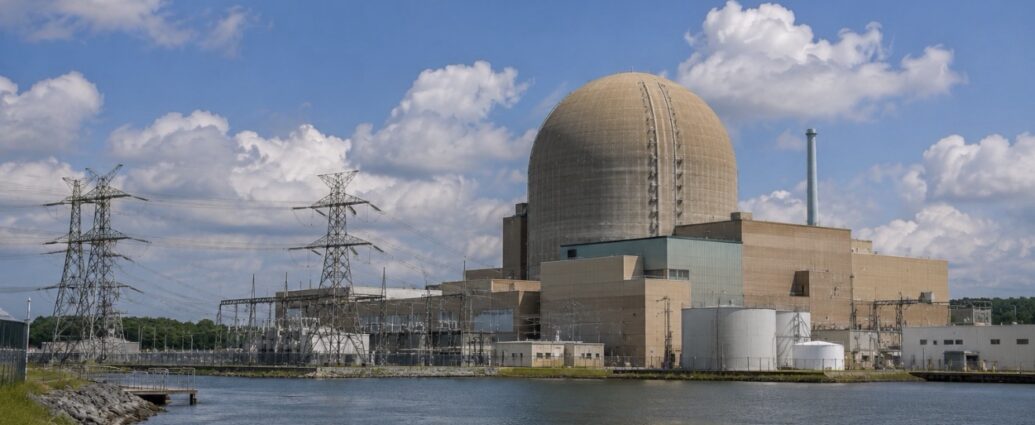
New Jersey’s energy strategy is entering its next phase as state officials begin implementing the Power NJ Act, signed by Governor Mikie Sherrill on July 13, while local opposition to AI data centers continues spreading across the state. The law launched a 180-day process for the New Jersey Board of Public Utilities (NJBPU) to begin soliciting proposals for advanced nuclear generation as municipalities increasingly move to restrict the energy-intensive facilities driving much of the state’s future electricity demand.
The legislation represents one of the most significant changes to New Jersey’s energy policy in decades. Rather than approving a specific nuclear project, the law creates a competitive procurement process designed to identify advanced nuclear technologies capable of supplying reliable electricity as demand continues to rise.
Under the new law, the NJBPU must issue a Request for Expressions of Interest within six months, allowing developers to submit proposals detailing financing, engineering, environmental reviews, workforce development plans, and regulatory approvals. Projects that satisfy the state’s qualifications will advance into negotiations before any final procurement decisions are made.
State officials say the competitive process is intended to avoid many of the financial problems that have affected previous nuclear construction projects around the country. Developers will be required to demonstrate financial viability while providing safeguards designed to protect New Jersey ratepayers from excessive construction costs and delays.
The timing reflects a rapidly changing electricity landscape.
The explosive growth of artificial intelligence, cloud computing, advanced manufacturing, and the continued electrification of transportation are placing unprecedented demands on regional electric grids. Utilities throughout the Northeast have warned that electricity demand is beginning to rise at levels not seen in decades, driven largely by the construction of massive AI computing facilities.
New Jersey’s existing nuclear fleet already provides more than 40% of the state’s electricity and more than 80% of its carbon-free generation, making nuclear energy the foundation of New Jersey’s clean-energy portfolio. State leaders believe expanding reliable baseload generation will be essential if New Jersey hopes to remain competitive while maintaining grid reliability and limiting future electricity price increases.
Governor Sherrill has repeatedly argued that expanding dependable electricity generation must go hand-in-hand with consumer protections. Earlier this month, she also signed legislation aimed at increasing accountability for utilities and ensuring that major electricity users—including large data centers—bear more of the costs associated with the infrastructure needed to serve them.
While the state moves to expand electricity supply, many local communities are taking a different approach.
Municipal opposition to AI data centers continues growing as residents express concerns about electricity consumption, water usage, noise, environmental impacts, traffic, and increased pressure on local infrastructure. Several New Jersey municipalities have already adopted restrictions or zoning changes limiting where data centers may be built, while others continue evaluating similar proposals.
The debate reflects a broader national trend as communities increasingly question whether the economic benefits of large data centers outweigh the impact on neighborhoods, utility systems, and public resources. Although the facilities create construction jobs and generate tax revenue, they also consume enormous amounts of electricity and water while requiring significant upgrades to local transmission infrastructure.
Business leaders argue that reliable electricity has become one of the most important factors companies evaluate when selecting locations for advanced manufacturing, pharmaceutical production, biotechnology, cloud computing, and AI investment. Without additional generating capacity, they warn New Jersey risks losing future economic development opportunities to competing states.
Supporters of the Power NJ Act believe the competitive procurement process offers a balanced path forward by encouraging private investment while requiring strict financial oversight before projects move ahead. They argue advanced nuclear technology can provide the around-the-clock electricity increasingly needed to support economic growth while reducing dependence on fossil fuels.
Environmental groups remain divided. Some support advanced nuclear power as a reliable carbon-free energy source capable of complementing renewable energy, while others continue advocating for greater investment in wind, solar, battery storage, and energy-efficiency measures instead of expanding nuclear generation.
For New Jersey businesses, the stakes extend well beyond energy policy. Stable and affordable electricity is increasingly viewed as essential infrastructure for attracting investment, creating jobs, supporting technological innovation, and maintaining the state’s long-term economic competitiveness.
As implementation of the Power NJ Act begins and additional municipalities debate the future of AI data centers, New Jersey finds itself balancing two competing priorities: providing the electricity needed to power tomorrow’s economy while responding to communities that remain increasingly reluctant to host the infrastructure required to produce it.
JBizNews Desk | Trenton, New Jersey
© JBizNews.com All Rights Reserved. Reproduction or distribution without written permission is prohibited.