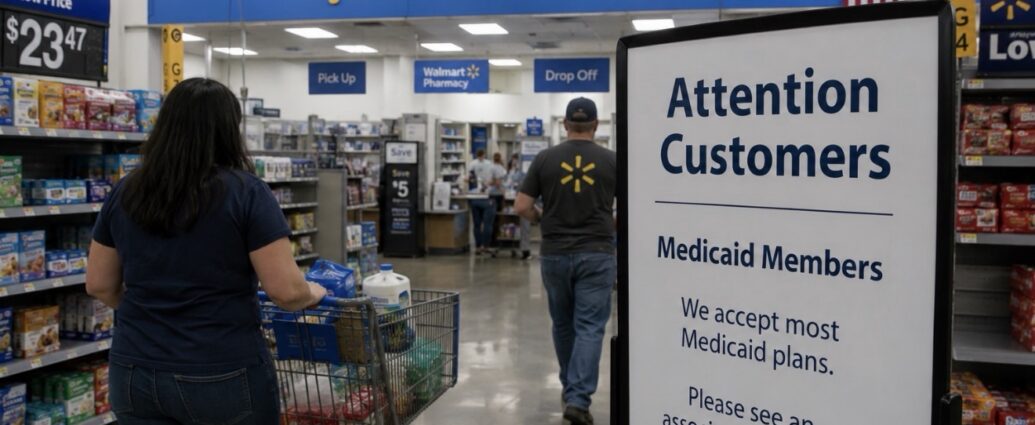
Large employers in New Jersey will soon face a new annual fee if significant numbers of their workers receive health coverage through Medicaid instead of employer-sponsored insurance, creating a new business expense that could cost some companies millions of dollars each year.
Gov. Mikie Sherrill signed the measure Tuesday night as part of the state’s $60.7 billion budget, which took effect Wednesday. State officials estimate the new program will generate approximately $145 million annually.
The law creates what New Jersey calls the Employer Healthcare Assistance Contribution.
Companies with 50 or more employees or dependents enrolled in Medicaid will be required to pay an annual assessment based on how many workers rely on the government-funded health program.
The fee starts at $325 per person for employers with 50 to 249 Medicaid enrollees and rises to $725 per person for companies with 500 or more employees or dependents receiving Medicaid benefits.
State officials have identified large retailers, warehouse operators, and major employers such as Amazon, Walmart, and Target as examples of businesses the law is designed to affect.
During its first year, New Jersey estimates the assessment will apply to roughly 700 to 750 companies.
Sherrill said the policy is intended to ensure that profitable employers contribute more toward healthcare costs when large portions of their workforce rely on taxpayer-funded insurance.
The governor argued that the additional revenue will also help reduce financial pressure on hospitals and emergency rooms, where uncompensated care often creates higher healthcare costs throughout the system.
The new assessment comes as New Jersey prepares for significant changes to Medicaid funding.
State officials project that revisions made under the federal tax-and-policy legislation signed last year by President Donald Trump could eventually remove more than 300,000 New Jersey residents from Medicaid while reducing hospital funding by an estimated $3.3 billion annually.
Assemblyman Avi Schnall, a Democrat representing Ocean County, supported the legislation, noting that New Jersey expects Medicaid spending to total approximately $26 billion during the coming fiscal year.
Business organizations strongly opposed the measure.
The New Jersey Business and Industry Association (NJBIA) called the assessment one of the most concerning provisions included in the new state budget.
Christopher Emigholz, the organization’s Chief Government Affairs Officer, said many employers will be penalized for circumstances they cannot fully control because companies often do not know which employees receive Medicaid benefits.
He also warned the assessment could complicate hiring decisions, particularly for businesses employing seasonal and part-time workers.
Supporters of the legislation included provisions intended to address those concerns.
Temporary, seasonal, and part-time employees are exempt from the assessment, and the law prohibits employers from making hiring or firing decisions based on a worker’s Medicaid status.
Several of the companies expected to be affected also criticized the measure.
A Walmart spokesperson said targeted employer taxes ultimately increase costs throughout the economy, raising prices on groceries and other everyday necessities for consumers.
Amazon responded by highlighting its recent $1 billion investment to increase wages and reduce healthcare costs for warehouse employees and delivery drivers, adding that affordable health coverage is available to entry-level workers.
New Jersey is not the first state to pursue this approach.
Massachusetts briefly imposed a similar employer assessment beginning in 2018, while Maryland’s 2006 law targeting Walmart was later struck down by the courts after conflicting with federal employee benefits law.
New Jersey lawmakers say their version was drafted differently in an effort to avoid the same legal challenges.
Other states are already considering similar policies.
Lawmakers in California have directed state officials to study comparable employer assessments, while policymakers in Connecticut, Colorado, Oregon, and Washington have proposed related legislation.
Much of the renewed interest follows federal Medicaid changes that the nonpartisan Congressional Budget Office estimates could leave more than 10 million Americans without health insurance by 2034.
For employers, the practical impact is immediate.
Beginning with the current fiscal year, qualifying businesses operating in New Jersey will face a new healthcare-related expense tied directly to employee Medicaid enrollment. If additional states adopt similar programs, large national employers could see those costs spread well beyond New Jersey.
JBizNews Desk | Trenton, New Jersey
© JBizNews.com All Rights Reserved. Reproduction or distribution without written permission is prohibited.