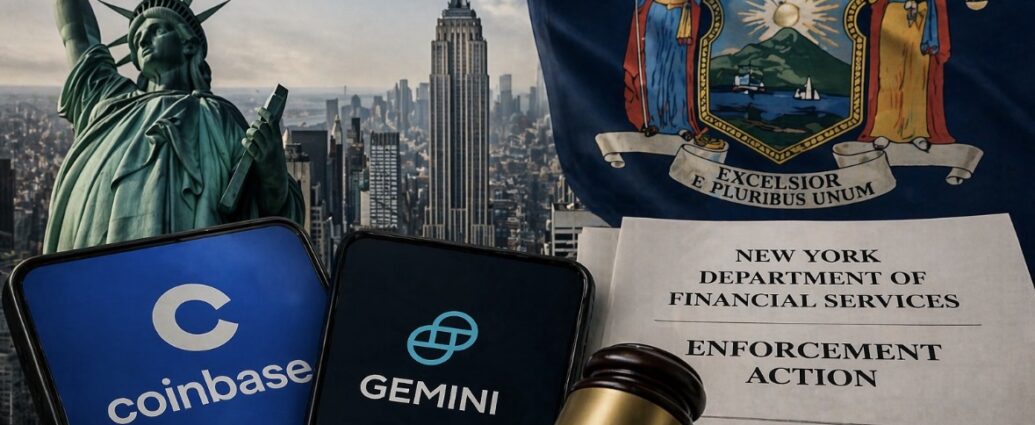
New York Attorney General Letitia James moved to shut down prediction-market offerings tied to Coinbase Financial Markets and Gemini, escalating a broader fight over whether event contracts belong under financial regulation or state gambling law. In statements released by the New York Attorney General’s Office on April 21, James said the platforms offered products that “allow users to wager on the outcome of future events” without the licenses New York requires for gambling activity, putting two prominent crypto-linked firms into a fresh legal and regulatory spotlight.
According to court petitions filed in New York state court by the Office of the Attorney General, the state argues that the companies’ so-called event contracts function like bets on real-world outcomes, including sports, elections and other public events. In the filings, cited by the attorney general’s office, James said New York law “prohibits risking something of value upon the outcome of a contest of chance or a future contingent event not under the actor’s control,” framing the products as unlawful gambling rather than permissible financial instruments.
The case lands at a sensitive moment for prediction markets, which have drawn rising interest from traders, crypto firms and political observers as platforms package binary contracts into an easy-to-use retail product. The Commodity Futures Trading Commission has said in prior public orders and litigation involving other event-contract venues that certain contracts can fall under federal commodities law, while state officials continue to assert their own authority where products resemble wagering. That tension, legal experts told outlets including Reuters and Bloomberg in earlier coverage of the sector, has left the industry operating in a patchwork of overlapping rules.
In its petition against Coinbase Financial Markets, New York said the company offered contracts that let users buy “yes” or “no” positions priced to reflect implied odds and receive a payout if the event occurred, according to the filing. The state said that structure mirrors a wager because the result depends on an external event outside the customer’s control. Coinbase has not publicly embraced the gambling label; in prior public statements about derivatives and event contracts, the company has said it seeks to expand access to regulated markets and work with U.S. authorities, according to company materials and regulatory disclosures.
The petition involving Gemini Titan makes a similar argument, with the attorney general’s office saying the exchange operator enabled New York users to participate in event-based contracts without obtaining state gambling approvals. In the office’s public statement, James said companies “cannot evade the law simply by calling gambling something else,” underscoring the state’s position that branding the products as contracts or market instruments does not change their legal character under New York statutes. Gemini, founded by Cameron Winklevoss and Tyler Winklevoss, has frequently said in public communications that it supports rules for digital-asset markets and favors clear oversight.
The dispute matters beyond two companies because event contracts have become one of the fastest-growing corners of retail trading, attracting users who treat elections, sports and economic releases like investable outcomes. In public commentary on the sector, analysts cited by Bloomberg and CNBC have said the appeal lies in simple, binary pricing and the perception that prediction markets aggregate information efficiently. Critics, including some state regulators and anti-gambling advocates quoted in those reports, argue the products can sidestep consumer protections and invite speculation under the veneer of financial innovation.
New York’s action also adds to the compliance burden facing crypto firms that already contend with a dense state-by-state framework. The state’s financial regime, administered separately by the New York State Department of Financial Services, already ranks among the toughest in the U.S. for digital-asset businesses. While this case centers on gambling law rather than virtual-currency licensing, the message from James remains broad: companies serving New York residents need to match product design with local legal requirements, the attorney general’s office said in its release.
The legal theory could test how far states can go when products sit near the boundary between derivatives trading and gaming. The CFTC has faced its own battles over event contracts, including disputes over whether contracts tied to political outcomes or sports should trade on federally regulated venues. In prior public orders, the agency said certain event contracts may involve gaming or activity contrary to the public interest, while market operators have argued that properly structured contracts serve hedging and price-discovery functions. That unresolved federal debate gives New York’s case broader significance for exchanges, brokers and fintech firms exploring similar products.
What comes next likely turns on whether the companies fight the petitions, restrict access in New York, or seek a licensing or structural workaround. For executives across crypto, brokerage and online trading, the signal from Letitia James and the New York Attorney General’s Office looks clear: products tied to real-world outcomes face scrutiny not only from Washington but from aggressive state enforcers prepared to classify them as gambling. That matters because the outcome could shape where event contracts trade, who can offer them, and whether one of finance’s most talked-about new products scales nationally or fragments under local law.
JBizNews Desk