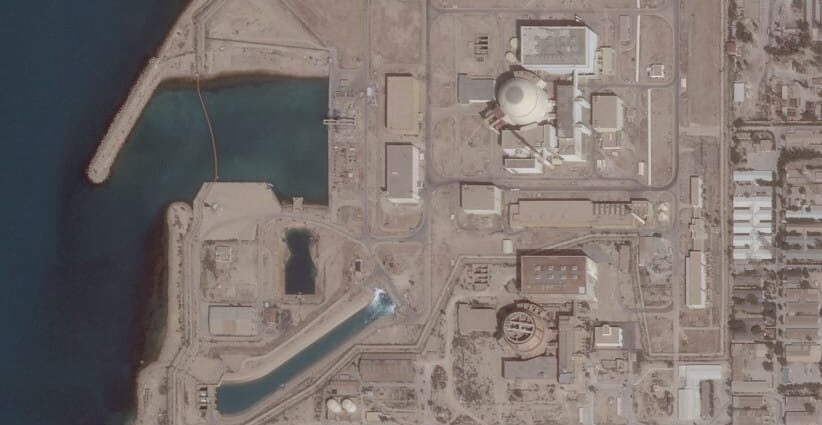
On and off for around 20 years I called for Israel or the US or both to bomb Iran’s nuclear weapons program, or to “Target Tehran” as my 2023 book was titled.
Then an incredible series of events happened since October 2024: Israel bombed Iran three times (there was also a fourth symbolic strike in April 2024), including its ballistic missiles program all three times, and its nuclear program twice.
With all of the angst about what the new likely US President Donald Trump Iran deal will and will not include, it is critical to recall the game-changing achievements that cannot be taken away.
The piece of paper that US President Donald Trump signs will doubtless include some additional new achievements that the 2015 Obama nuclear deal did not include, and will doubtless fall short of regime change.
Experts said that Iran’s nuclear program could not be bombed
For decades, many top experts said that Iran’s nuclear program could not be bombed. Unlike Iraq’s nuclear program in 1981 and Syria’s in 2007, both of which Israel bombed, the Islamic Republic had been too smart by distributing its program around in dozens of different locations in a country three times the size of France.
There could be no targeted strike and this made the risk to pilots too great, and the chances of success too low.
For decades, many top experts said Israel could not bomb Iran’s nuclear program because it was too far and would require unrealistic risky midair fueling scenarios.
For decades, many top experts said that Israel could not bomb Iran’s nuclear program because it would face 150,000 rockets from Hezbollah, rockets from Hamas, attacks from militias in Syria and Iraq, and a wave of West Bank palestinian terror.
Then Israel bombed dozens of Iranian nuclear sites in spite of all of those challenges – twice!
One year after the June 2025 operation, even if Trump was not signing a deal, Iran’s nuclear program has been so heavily damaged that they made no real progress in rebuilding it for this whole period.
Any deal will add on to those accomplishments.
It is overwhelmingly likely that the end result of the deal over a period of months (it appears to be split into stages) will be that Iran’s 60% enriched uranium will be either removed from the country or diluted to a completely non-threatening level, and that the Islamic Republic will freeze its new uranium enrichment for 15-20 years.
The deal will probably not lead to taking apart Iranian nuclear facilities.
But the vast majority of Iran’s nuclear facilities have already been bombed.
This means that the deal does not really need to demand that bombed facilities get dismantled as much as it does that they not be rebuilt.
Likewise, if in past deals, one of the hardest negotiating terms was how many centrifuges, especially advanced ones, would need to be placed in storage or dismantled, now nearly all of the pre-war 20,000 or so centrifuges have already been attacked.
The deal will probably not stipulate an eternal pause on uranium enrichment. But if all the machines are blown up, then the Islamic Republic cannot carry out new enrichment for some period of time.
It would also have been helpful to Israel to include ballistic missiles and Iran’s proxies in the deal.
But regarding the ballistic missiles, 2,600 Iranian targets were bombed by Israel and the US over 40 days, devastating both existing missiles, future production, and the supply chain for potential future production.
In addition, Israel has battered Iran’s top proxy Hezbollah down from 150,000 rockets to maybe as few as 10,000, and has jackhammered Hamas in Gaza into being unable to attack Israeli territory with any meaningful long-range threat.
Anything can be rebuilt over time.
Can the ballistic missiles and the proxy network be rebuilt? Of course, anything can be rebuilt over time.
But the proxy network which led to the Hamas October 7 invasion and to possible additional invasion threats is gone for now, and likely delayed for years from returning to its 2023 strength.
And the massive scale of damage to every piece of the missile supply chain will also delay Iranian recovery for years.
What might have the best chance of deterring Iran from pushing these various threats back to their limits is probably not any piece of paper, but the irreversible fact that Israel showed its clear willingness and readiness to attack three times.
It seems that Iran believed that the June 2025 operation was super unique and the moment that war was over, they were racing ahead with replacing everything that was attacked.
But the 2026 war showed them that Israel’s attack was not a one-time gesture, and the sheer number of bombs was several times more than in 2025, showing an Israeli brazenness in terms of readiness to destroy Tehran’s military industrial complex.
Rather, Israel has now clearly messaged to Iran and the region that it will do everything it can to prevent the rebuilding of the missile threat beyond a certain volume, even if it means repeated large scale attacks on the Islamic Republic’ soil.
If Israel has achieved so much in its attacks and likely gotten some new concessions in the impending Trump Iran deal, why do so many commentators believe Israel should have gotten more?
Many commentators seem confused in the post October 7 era about the basic rules of war and physics, such as unchanging rules like gravity.
One unchanging rule is that Israel (and most countries) never achieve more at the diplomacy stage than it did at the military stage. The diplomacy stage for Israel is about consolidating and not losing gains which were achieved.
Iran did not agree to an eternal end to uranium enrichment, to capping its ballistic missiles program, and to rolling back its terror proxies in order to get Israel and the Us to stop bombing them on April 7.
Essentially, they made no concessions other than quiet for quiet.
The reason that the US is likely to get some major concessions on the nuclear issues is because the Islamic Republic was not far from these concessions even before the war, and with so much of its nuclear program out of order, concessions now coUld even be seen as easier to make.
If this deal was only after the 12-day war of June 2025, some could argue that all that needed to be done was to bomb Iran more and for longer.
Once again, the bombing was so heavy against Iran for 2026, around 30,000 attacks, and over six weeks, with the IDSF already having destroyed all “essential” and “critical” targets within about a month, that it is far from clear that more and longer would have achieved great new strategic gains.
Add in that Iran’s economy has been continually hounded for an additional six weeks since the April 7 ceasefire, and it is even harder to say how much of a better deal could have been achieved.
Some commentators like to point to 1988 when the first Ayatollah Ruhollah Kohmeini drank from the “poison chalice” to end a war with Iraq.
But everyone leaves out that this only took place after eight years of Khomeini refusing peace overtures and hundreds of thousands of Iranians being killed – far worse and longer than what the US and Israel just did to the country.
Of course, if the US had been willing to stage a large-scale ground invasion like it did in Iraq in 2003, it could have toppled the regime likely in a matter of weeks, but that was never on the table.
If so, why are so many commentators despondent?
Some of it is because both Prime Minister Benjamin Netanyahu and Us President Donald Trump unwisely invoked a likely regime change in the early euphoric days of the war after Ayatollah Ali Khamenei was assassinated.
No top Mossad or IDF officials ever thought regime change would happen that fast, rather predicting it as being an increasing possibility more around one year from the war.
And if there was a chance for a sooner regime change, while Israel credits Trump for pressing forward with this war strongly, top officials have faulted him for blocking the Iraqi-Iranian Kurds from their own ground assault on the regime. Even no fly zones were not imposed, missing a chance to let the Kurds and other groups break off from Tehran in a slower, but dramatic path to upending the regime.
Finally, both Israel and the US missed the critical January 8-9 moment when one million Iranians suddenly came out to protest.
They were simply caught by surprise at the speed at which the protests grew.
Had Israel and the US intervened at that moment, regime change also might have been given a significant push. Missing that moment carried high costs.
When you set the bar for success as regime change, and miss that bar, then all of the threats Iran poses become intolerable.
But the lesson of October 7 should not be that Israel can eliminate every threat against it by endless war.
Rather, it has been that Israel regained the initiative from its enemies on every front, and on the Iranian front, pushed off the nuclear and ballistic missile threats for at least a period of years.
No piece of paper is going to keep Israel from attacking again some years down the road if Iran makes the mistake of crossing one of those redlines again.