Since the ceasefire with Iran was announced, the world has entered a strange and almost paradoxical reality. The headlines are dramatic, markets remain tense, leaders exchange threats daily, and global energy systems are on edge, yet almost no shots have been fired.
That may be the clearest indication that the conflict of 2026 is no longer purely military. It has evolved into a psychological, economic, and strategic war of perception.
In previous generations, wars were conducted behind closed doors. Military operations were planned in secrecy, intelligence was hidden, and the public learned about attacks only after aircraft were already airborne.
Today, conflict unfolds in real time, on television screens, social media platforms, and financial markets. Leaders publicly signal intentions, announce red lines, threaten retaliation, and shape narratives before events even occur. Increasingly, the audience is not only the enemy, it is also investors, allies, domestic populations, and the global economy itself.
The confrontation with Iran has demonstrated this transformation with remarkable clarity.
On one side, US President Donald Trump repeatedly used language of overwhelming force, such as: “We will crush them”; “There is almost nothing left to strike”; and “Victory is near.”
On the other side, senior Iranian officials answered with equally repetitive messaging: “We will not surrender”; “Iran will determine when this war ends”; and “Not a single drop of oil will leave the Gulf if aggression continues.”
Yet behind the rhetoric lies a far more cautious reality.
The ceasefire has largely held. Both sides appear careful not to cross certain thresholds. And the world is discovering that the most powerful weapon in modern conflict may no longer be missiles but economic disruption.
Oil: The new battlefield
If the wars of the 20th century were defined by territorial conquest, modern conflicts can destabilize the world economy without a single division crossing a border.
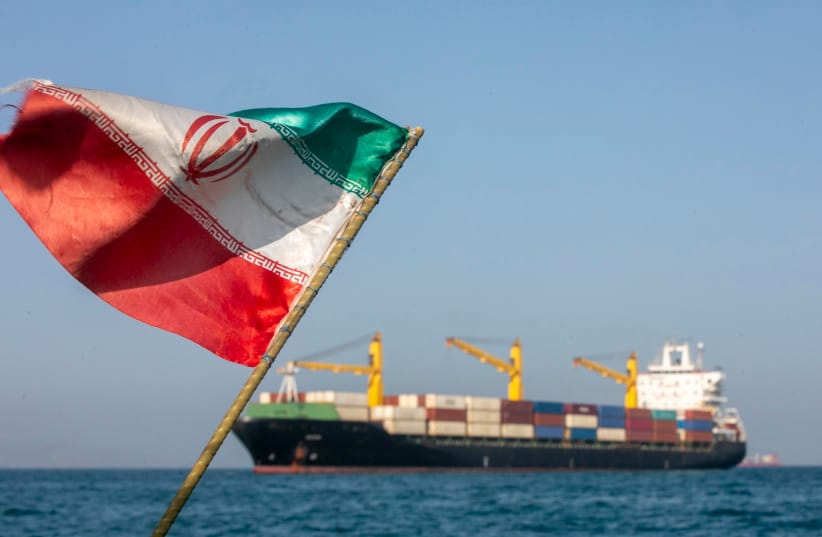
The Strait of Hormuz has become the center of gravity.
Roughly one-fifth of global oil consumption passes through this narrow maritime corridor. Even the suggestion of disruption is enough to send oil prices soaring, increase shipping insurance costs, shake financial markets, and trigger inflationary pressure across continents.
This is the new paradox of modern warfare: Almost no shots were fired, yet the entire world pays the price.
Fuel becomes more expensive. Shipping costs rise. Supply chains weaken.
Inflation spreads. Energy-importing nations from China and India to Europe and East Asia enter a state of economic anxiety.
The conflict is no longer confined to Tehran, Jerusalem, and Washington. It reaches ports, stock exchanges, fuel stations, factories, and household budgets worldwide.
Iran’s strategy: Not necessarily a military victory
Iran understands the balance of power. It does not seek a conventional military victory against the United States or Israel in the traditional sense.
Instead, Tehran’s strategy appears designed to impose an unbearable strategic cost on its adversaries: destabilizing energy markets, creating global uncertainty, activating regional proxies, conducting psychological warfare, and slowly eroding the confidence of its opponents.
This is deterrence through disruption.
At the same time, economic pressure on Iran itself does not necessarily produce surrender. History shows that sanctioned regimes often become more rigid, not more conciliatory, when they perceive existential pressure.
Iran’s leadership understands that appearing weak domestically could be more dangerous than external confrontation. As a result, economic hardship simultaneously restrains escalation and encourages defiant rhetoric.
That contradiction defines the current moment.
Israel, the US, and the limits of escalation
Israel and the United States also recognize that a full regional war could rapidly evolve into a global economic crisis.
This is no longer only a security issue. It is an energy issue, a trade issue, a financial issue, and ultimately a political stability issue for much of the world.
That is why, beneath the aggressive public statements, there are visible signs of restraint. Washington and Jerusalem appear to be attempting a delicate balance: maintaining deterrence without triggering uncontrollable escalation.
And this may be the central lesson of the current era.
The conflict with Iran differs fundamentally from the Russia-Ukraine war, which is a largely conventional conflict, with trenches, artillery, armored maneuver, territorial control, and prolonged attrition.
The Middle East confrontation, by contrast, operates across multiple dimensions simultaneously with missiles, cyber operations, energy leverage, proxy warfare, economic pressure, and strategic messaging.
In this environment, a single statement can move global oil markets more dramatically than a squadron of fighter jets.
The new nature of war
Perhaps this is the defining characteristic of 21sttwenty-first- -century conflict: a military victory is no longer the sole measure of strategic influence.
Sometimes, shaping fear is enough. Disrupting markets is enough. Creating uncertainty is enough.
Therefore that is why the fact that almost no shots have been fired since the ceasefire should not necessarily be interpreted as peace.
It may simply mean that war has changed form.